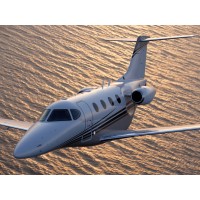


Beechcraft private jet charter
A search for Beechcraft private jet charter deserves a direct answer before anything else. Beechcraft has not built a business jet since 2013. The only Beechcraft jet ever produced in meaningful numbers was the Premier I and IA, of which 292 were built between 2001 and 2013, with roughly 150 still flying. Everything else the company makes, and everything else you will actually be offered when you request a Beechcraft charter, is a turboprop or a piston aircraft.
That is not a limitation. The Beechcraft King Air is the best-selling business turboprop in history, with close to 7,600 delivered since 1964 and more than 62 million flight hours accumulated across the worldwide fleet. Textron Aviation reports over 460 King Airs based in Europe, and states that nearly half of all European King Airs are owned and operated in France, Germany and the United Kingdom. For a large share of British charter missions, particularly short sectors, regional airfields and unpaved surfaces, a King Air is the correct aircraft rather than a compromise.
Charter cost depends on the model, route, date and passenger count. Get a quote via WhatsApp on +44 204 577-31-19 or by email at flight@private-jets.co.uk
Does Beechcraft still build private jets?
No. The position is worth setting out clearly, because a number of charter sites still describe the Premier IA as current and one of them lists it alongside the Gulfstream V as a comparable aircraft, which is roughly the difference between a hatchback and a long-wheelbase limousine.
- Beechcraft jets. Production ended in 2013. The Premier I ran from 2001 to 2005 and the Premier IA from 2006 to 2013, 292 aircraft in total. The planned successor, announced as the Premier II and later rebranded the Hawker 200, never reached production;
- What ended it. Hawker Beechcraft filed for Chapter 11 in 2012 and emerged as Beechcraft Corporation, having discontinued all business jet lines. Textron announced the acquisition of Beechcraft for 1.4 billion dollars on 26 December 2013 and closed the deal in early 2014, folding Beechcraft and Cessna into Textron Aviation;
- What Beechcraft builds now. Two twin turboprops, the King Air 260 and the King Air 360/360ER, both certified by EASA in September 2021 for European delivery. Two piston aircraft, the Baron G58 twin and the Bonanza G36 single. One clean-sheet turboprop in final flight test, the Denali;
- Support for the discontinued jets. Textron Aviation supplies parts and engineering for the Premier fleet through the same service network that supports current Cessna and Beechcraft aircraft. Premier IA charter remains available and is covered further down this page.
If a jet is genuinely required for your sector, the Cessna Citation range sits under the same Textron Aviation ownership and covers the light through super-midsize categories. See our Cessna charter page.
When a King Air beats a light jet, and when it does not
Turboprops are frequently presented as the budget option. That framing is wrong. On a defined set of missions a King Air arrives sooner, costs less and reaches airfields a jet cannot use. On another set it is simply the slower aircraft. The dividing lines are specific enough to be useful.
| Factor | 350 / 360 | Typical light jet |
| Takeoff distance, sea level | 3,300 ft | 3,138 ft (Phenom 300) to 3,560 ft (Citation XLS+) |
| Landing distance, four passengers | 2,390 ft | Typically 3,000 ft or more |
| Grass, gravel and unpaved surfaces | Yes | Effectively no |
| High-speed cruise | 303-312 kt | 440-465 kt |
| Cabin | Stand-up on the 350 and 360; 4 ft 10 in high | Comparable or better; XLS+ 5 ft 8 in |
| Typical UK hourly rate | £1,200 to £2,000 | £2,500 to £3,200 |
Choose a King Air when:
- The destination has a short, wet, grass or unpaved runway. This is the categorical difference rather than a marginal one. A King Air operates from surfaces that no light jet in the UK charter fleet is certified to use, which opens private estates, farm strips and regional airfields that would otherwise mean an hour by road from the nearest jet-capable runway;
- The sector is under about 300 nautical miles. London to Manchester, Edinburgh to Aberdeen, Birmingham to Dublin. On legs this short a jet spends most of the flight climbing and descending and never settles into efficient cruise. Block time difference against a King Air narrows to a few minutes while the cost difference stays wide;
- Budget governs and the group is six to nine. At £1,200 to £2,000 per hour against £2,500 to £3,200 for a light jet, a King Air can halve the cost of a UK domestic day return;
- The mission involves bulky or awkward loads. The 350 cabin runs 19 ft 6 in with an airstair door, and the C variants add a cargo door.
Choose a jet when:
- The sector exceeds roughly two hours. At 303 kt against 450 kt the arithmetic turns decisively. London to Nice takes about 2 hours 45 minutes in a 360 against roughly 2 hours in a light jet, and the gap widens with distance;
- Cabin altitude and noise matter over a long leg. A 360 pressurises to 5,960 ft at 27,000 ft cruise, which is respectable, but a jet at 41,000 ft is above most weather and noticeably quieter in the cruise;
- The destination is a major airport with a long runway anyway. If that field performance is not being used, its principal advantage is unspent.
The King Air range in UK charter
King Airs in British charter service span five decades of production. Model number alone is not enough to judge what you are being offered, because a 1980s B200 and a 2024 King Air 260 share an airframe lineage but very little else in cabin, avionics or noise level.
C90 and C90GTx
The smallest King Air in general charter use. Six to seven passengers, around 1,000 to 1,250 nm of range and the shortest field requirement in the family. Cabin height is below stand-up. For two to four passengers on a short regional sector at the lowest twin-turbine rate available, it does the job. From £900 per flight hour.
200, B200, 250 and 260
The volume seller and the aircraft most people picture when they hear King Air. Eight passengers in charter configuration, twin Pratt and Whitney Canada PT6A engines, and the short-field performance the family is known for. The B200 and 250 dominate the pre-owned charter fleet; the 260, certified by the FAA in March 2021 and by EASA in September 2021, is the current production model.
The 260 is worth distinguishing. It carries the Innovative Solutions and Support ThrustSense autothrottle as standard, a digital pressurisation controller and Collins Aerospace Multi-Scan weather radar, and it is single-pilot certified under Part 23 with no separate type rating required. Range is 1,720 nm, enough for Rome to Madrid or Paris to Stockholm non-stop with four passengers. Older 200 series aircraft from £1,200 per flight hour; a 260 from £1,800.
350, 350i and 360
The largest King Airs and the ones that genuinely compete with light jets on cabin. Eight to nine passengers in charter layout, occasionally eleven. The cabin is 19 ft 6 in long with seven windows per side, dual climate zones and an enclosed rear lavatory, and it is stand-up at 4 ft 10 in. Twin PT6A-60A engines at 1,050 shp each give 303 to 312 kt cruise.
Field performance is the headline: 3,300 ft to take off at sea level and 2,390 ft to land with four passengers, from an aircraft carrying nine people. The 360, FAA certified in October 2020 and EASA certified in September 2021, adds Collins Pro Line Fusion with three 14-inch touchscreens, the ThrustSense autothrottle as standard and a redesigned cabin. Range is 1,806 nm, which Textron Aviation illustrates as London to Athens without a fuel stop. 350 from £1,600 per flight hour; 360 from £2,000.
360ER
The extended-range variant, built primarily for special mission work: maritime patrol, surveillance and air ambulance. Extra fuel raises maximum range to between 2,539 and 2,692 nm depending on the source and configuration, against 1,806 nm for the standard aircraft, and maximum takeoff weight rises to 16,500 lb. Note that unlike the 260, the 360ER requires a King Air 300 series type rating. Charter availability in passenger configuration is limited because most airframes are in mission roles. From £2,200 per flight hour on request.
The only Beechcraft jet: Premier I and Premier IA
This aircraft deserves proper treatment rather than the afterthought it usually receives. It was the first business jet with an all-composite fuselage to gain FAA certification, using carbon fibre and honeycomb sandwich construction that allowed a noticeably larger cabin than aluminium would have permitted within the same external dimensions. Type certification was granted on 23 March 2001.
Two Williams International FJ44-2A turbofans at 2,300 lbf each give 451 kt maximum cruise and a 41,000 ft ceiling, reached in 23 minutes. Range is around 1,340 to 1,365 nm with four passengers. The cabin seats six, with Rockwell Collins Pro Line 21 avionics and single-pilot certification. Beechcraft claimed direct operating cost 11 per cent per nautical mile below the Cessna Citation CJ2+, its direct competitor.
Honest limitations: the 41,000 ft ceiling sits below the 51,000 ft of Learjet competitors, early production aircraft had teething problems, and the brand behind it no longer exists as a jet manufacturer. Against that, pre-owned values of 1.2 to 2.6 million dollars keep operator costs low, and that feeds directly into charter rates. Around 150 aircraft remain in operation. From £2,400 per flight hour.
Beechcraft pistons: Baron G58 and Bonanza G36
Both remain in production and both appear occasionally in UK charter, usually with operators running flight training or private hire alongside charter work. The Baron G58 is a twin-engine piston seating up to six with Continental engines and Garmin G1000 NXi avionics; practical range with reserves runs in the 600 to 1,200 nm band depending on payload. The Bonanza G36 is the single-engine equivalent, in continuous production in one form or another since 1947, which makes it the longest continuously produced aircraft in history.
For commercial charter purposes the Baron is the more relevant of the two, as a twin-engine aircraft for short regional sectors where a turboprop would be over-specified. Availability is thin and these aircraft are not pressurised, which caps practical cruising altitude and makes weather avoidance harder. From £700 per flight hour for a Baron.
Arriving in 2027: the Beechcraft Denali
Worth knowing about if you charter turboprops regularly. Denali is a clean-sheet single-engine turboprop first announced at Oshkosh in 2016 and originally branded as a Cessna before being moved to the Beechcraft line. It is powered by the GE Catalyst, a 1,300 shp engine notable for the proportion of its parts made by additive manufacturing, and carries the Garmin G3000 flight deck with autothrottle and Emergency Autoland.
Textron Aviation confirmed at Oshkosh in July 2026 that flight testing is in its final phase and scheduled for completion in October 2026, with three test aircraft having accumulated more than 4,100 flight hours across 1,650 flights. FAA certification is expected in the fourth quarter of 2026 and entry into service in the first quarter of 2027. Published targets are 1,600 nm range, 285 kt cruise and six to nine passengers, positioning it between the Pilatus PC-12 and the King Air 260. It will not be available for charter before 2027 at the earliest.
Beechcraft charter rates from UK airports
Indicative hourly rates in GBP for UK departures. Rates reflect the active charter market. Final pricing depends on sector length, date, aircraft age and operator.
| Model | Type | Seats | Range | Status | From |
| Baron G58 | Twin piston | 4-5 | ~1,100 nm | In production | £700/hr |
| C90 / C90GTx | Twin turboprop | 6-7 | ~1,250 nm | Out of production | £900/hr |
| 100 | Twin turboprop | 8 | ~1,200 nm | Out of production | £1,100/hr |
| 200 / B200 / 250 | Twin turboprop | 8 | ~1,500 nm | Out of production | £1,200/hr |
| 350 / 350i | Twin turboprop | 8-9 | 1,556 nm | Out of production | £1,600/hr |
| 260 | Twin turboprop | 8 | 1,720 nm | Current production | £1,800/hr |
| 360 | Twin turboprop | 8-9 | 1,806 nm | Current production | £2,000/hr |
| 360ER | Twin turboprop | 8-11 | 2,539 nm | Current; mostly mission-role | £2,200/hr |
| Premier I / IA | Light jet | 6 | 1,365 nm | Out of production; 292 built | £2,400/hr |
Repositioning flights on empty legs cut these figures by 25 to 75 per cent. For rates across every manufacturer see the private jet price guide or browse the complete fleet.
Indicative Beechcraft route prices
One-way prices for the aircraft noted, departing UK airports. Quotes vary with date, availability and operator.
- London to Edinburgh - from £2,600 (350, 8 passengers, approximately 1 hour 40 minutes);
- Edinburgh to Islay - from £1,800 (200, 8 passengers, approximately 55 minutes);
- London to Dublin - from £2,400 (350, 8 passengers, approximately 1 hour 25 minutes);
- Manchester to Jersey - from £2,200 (250, 8 passengers, approximately 1 hour 20 minutes);
- London to Paris - from £2,800 (360, 8 passengers, approximately 1 hour 30 minutes);
- Glasgow to Stornoway - from £1,700 (200, 8 passengers, approximately 1 hour);
- London to Amsterdam - from £2,900 (360, 8 passengers, approximately 1 hour 35 minutes);
- Inverness to London - from £3,400 (350, 8 passengers, approximately 2 hours 10 minutes);
- London to Geneva - from £5,600 (Premier IA, 6 passengers, approximately 1 hour 40 minutes);
- Aberdeen to Bergen - from £2,600 (350, 8 passengers, approximately 1 hour 15 minutes).
Short Scottish and island sectors are where the economics favour a King Air most heavily. On an Edinburgh to Islay run, the aircraft is on the ground before a light jet would have finished its climb, at roughly half the hourly rate.
Frequently asked questions
Can I charter a Beechcraft private jet?
Only one Beechcraft jet type is available: the Premier I or Premier IA light jet, from approximately £2,400 per flight hour for six passengers. Production ended in 2013 and around 150 aircraft remain in service. Every other Beechcraft available for charter is a turboprop or piston aircraft, with the King Air family accounting for the overwhelming majority of bookings.
Why did Beechcraft stop making jets?
Hawker Beechcraft filed for Chapter 11 bankruptcy protection in 2012 after the business jet market collapsed following the 2008 financial crisis. The company emerged as Beechcraft Corporation having discontinued all jet lines, including the Premier IA and the unbuilt Premier II. Textron acquired Beechcraft for 1.4 billion dollars in a deal announced in December 2013 and completed in early 2014, and chose to concentrate its jet development on the Cessna Citation range rather than restart Beechcraft jet production.
Is a King Air a private jet?
No, it is a twin-engine turboprop. Turboprops use propellers driven by turbine engines rather than turbofan thrust. In practice the passenger experience is close to that of a light jet on short sectors, with a pressurised cabin, an enclosed lavatory on the larger models and private terminal access. What differs is speed, roughly 303 kt against 450 kt for a light jet, and altitude. What differs in the King Air's favour is runway access, unpaved surface capability and cost.
Which King Air should I charter?
For two to four passengers on a short regional sector, the C90 from £900 per hour. For eight passengers on UK domestic and short European routes, the 200 or 250 from £1,200. For a stand-up cabin, an enclosed lavatory and up to nine passengers, the 350 from £1,600 or the current-production 360 from £2,000. Beyond about two hours of flying, compare against a light jet before committing.
Can a King Air land on a grass runway?
Yes, subject to the specific strip and the operator's approval, which is the single clearest advantage a King Air holds over any light jet in the UK charter fleet. The 350 needs 3,300 ft to take off at sea level and 2,390 ft to land with four passengers, and the type is routinely operated from unpaved surfaces worldwide. Grass strip operations always require confirmation of surface condition, weight and operator authorisation before booking.
How many King Airs are there in Europe?
Textron Aviation reports more than 460 King Airs based in Europe, and states that nearly half of the European fleet is owned and operated in France, Germany and the United Kingdom. Worldwide, close to 7,600 have been delivered since 1964, making it the best-selling business turboprop family ever built, with over 62 million accumulated flight hours.
When can I charter the Beechcraft Denali?
Not before 2027. Textron Aviation confirmed in July 2026 that flight testing would conclude in October 2026, with FAA certification expected in the fourth quarter of 2026 and entry into service in the first quarter of 2027. Charter availability normally follows entry into service by a further period as operators take delivery and complete their own approvals.
Page last updated: July 2026. Beechcraft business jet production ended in 2013; the King Air 260 and 360/360ER remain in production, with the Denali in final flight test. Parts and engineering support for all types is provided by Textron Aviation. Charter availability is confirmed at the time of enquiry.
Beechcraft aircraft available for charter:
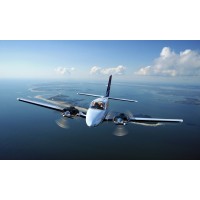
Beechcraft Baron 58
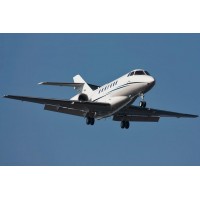
Beechcraft Hawker 1000
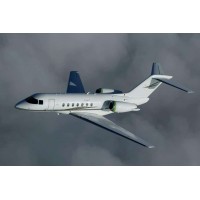
Beechcraft Hawker 4000

Beechcraft Hawker 700
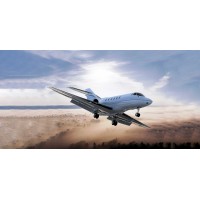
Beechcraft Hawker 750
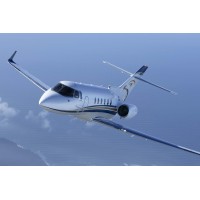
Beechcraft Hawker 800 XP
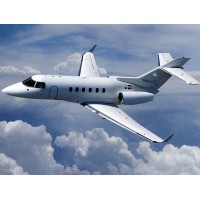
Beechcraft Hawker 850 XP
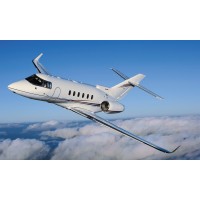
Beechcraft Hawker 900 XP
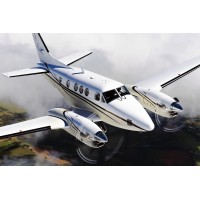
Beechcraft King Air 100
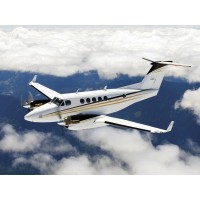
Beechcraft King Air 200
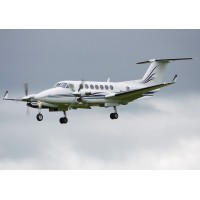
Beechcraft King Air 300
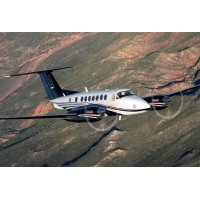
Beechcraft King Air 350
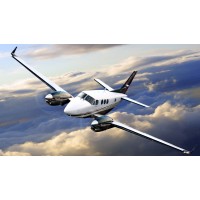
Beechcraft King Air 90