

Private jet charter in South Korea
A Korean charter is won or lost on the permit, the curfew and the choice of Seoul airport, long before anyone argues about the cabin. From a London airfield the planned flight to Seoul takes 13 hours 15 minutes, a stop in Baku included, and Private Jets UK builds the whole chain around that single technical landing. Our customers have access to 6,500 jets of all types and configurations available for rent. We will help you choose the best option based on your needs and objectives. Our catalog contains the models from the largest manufacturers: Gulfstream, Dassault, Embraer, Airbus, Boeing, Bombardier, Learjet, Cessna, Beechcraft, Pilatus, HondaJet, etc. We have established partnerships with the world's largest airlines and VIP terminals, which means we can offer you favourable flight conditions and a high level of service. Our experts will manage the organization of your flight - starting with paperwork, agreements, etc., and ending with a transfer and meeting at the airport. Our company provides a full range of business aviation and concierge services. In South Korea that means three Seoul airports with three different sets of rules, a separate permit for every landing, an aircraft that cannot take you from Seoul to Busan once it has brought you from Britain, and a calendar in which Chuseok, Seollal and the cherry blossom weeks take the hotels and the slots at the same moment.

At your request, the aviation consultants of Private Jets UK will help you choose the jet with the suitable technical parameters (production year, flight hours, and home base). The cost of the private jet charter to South Korea depends on many factors, such as the model of the business jet, the number of passengers, departure and destination airports, type of flight, duration of parking, additional services, etc. Therefore, we calculate the price of each order individually taking into account your wishes. You can use an online calculator to get an instant charter quote. Please indicate your real contact details to get the final calculation.
You can calculate the cost of your flight in several ways:
- using an online calculator on the website (however, it shows only the approximate price);
- via Messenger (WhatsApp or Telegram);
- by landline or cell phone;
- via e-mail (jets@private-jets.co.uk).
Please note that the above-mentioned price is indicative only. It is calculated on this basis: a departure from London Biggin Hill, a Bombardier Global 6000 to Seoul Gimpo with one technical stop in Baku, and two passengers aboard. If you want to get a personal quote, just fill out the online booking form below. Our aviation consultant will make the calculation within 20 minutes, and then contact you to specify the details of the flight.
How long does it take to fly to South Korea?
Korea keeps one time all year, nine hours ahead of Greenwich Mean Time and eight hours ahead of British Summer Time. Leave a London airfield at nine in the evening and the Global 6000 lands in the early evening of the next day by the Korean clock; leave at nine in the morning and you arrive in the small hours, which matters because Gimpo and Gimhae do not accept private flights between 23:00 and 06:00. These are the sectors from London Biggin Hill, gate to gate, with an hour on the ground at the stop:
6,006 nautical miles planned, the city's business jet airport, with a purpose-built FBOabout 13 h 15 min
5,992 nautical miles planned, the airport that never closesabout 13 h 15 min
6,168 nautical miles planned, the second city and the port, in the south-eastabout 13 h 35 min
6,109 nautical miles planned, the holiday island off the south coastabout 13 h 30 min
Why the line on the map is not the route
As the crow flies London to Seoul is about 4,800 nautical miles. We do not fly that line. The planned track bends south through Turkey and the Caucasus, crosses the Caspian Sea and Central Asia, runs over north-western China and reaches the peninsula from the west, and that makes the sector 6,006 nautical miles to Gimpo. Every state under the track gives its own overflight approval, and the operator or its trip-support company asks for it together with the landing permits.
Quotes carry the planned distance and never the map distance, so the number you see belongs to the flight that will actually be flown. The corridor is agreed with the operator at the planning stage, and we do not promise it earlier.
The same sum fixes the stop. A Global 6000 is rated at about 6,000 nautical miles, and we plan each leg at no more than about 85 percent of a published range, so it lands in Baku after 2,392 nautical miles and flies the remaining 3,614 to Seoul. A Gulfstream G650ER, rated at 7,500 nautical miles, can plan the whole sector without landing in about 12 hours. It costs more per hour, and winds, reserves and payload are checked before a single leg is promised.
The exact flight time depends on the model of the business jet, as well as the speed of the tail or head wind. Our consultant will make a detailed calculation of the flight time for the chosen business jet.
Prices for the private jet flights to South Korea
Typical one-way prices from Britain, cheapest first. The Global 6000 sets the standard because it is the aircraft we plan for this sector with a single stop, and the larger cabins and the ultra-long-range jets in the lower rows buy cabin space or a nonstop at a higher hourly rate. Every figure includes the technical stop shown in its row:
| Route | Aircraft | Price, one way |
|---|---|---|
| London Biggin Hill - Seoul Gimpo 6,006 nm / 11,123 km, via Baku |
Global 6000 up to 13 |
from £161,350 |
| London Farnborough - Seoul Incheon 6,022 nm / 11,153 km, via Baku |
Global 6000 up to 13 |
from £161,800 |
| London Luton - Seoul Gimpo 6,031 nm / 11,169 km, via Baku |
Global 6000 up to 13 |
from £162,000 |
| London Biggin Hill - Jeju 6,109 nm / 11,314 km, via Baku |
Global 6000 up to 13 |
from £164,050 |
| Manchester - Seoul Gimpo 6,128 nm / 11,349 km, via Baku |
Global 6000 up to 13 |
from £164,550 |
| Southampton - Jeju 6,156 nm / 11,401 km, via Baku |
Global 6000 up to 13 |
from £165,300 |
| London Biggin Hill - Busan Gimhae 6,168 nm / 11,423 km, via Baku |
Global 6000 up to 13 |
from £165,600 |
| Edinburgh - Seoul Gimpo 6,221 nm / 11,521 km, via Baku |
Global 6000 up to 13 |
from £167,000 |
| London Stansted - Seoul Gimpo 6,009 nm / 11,129 km, via Baku |
Gulfstream G550 up to 16 |
from £169,000 |
| Birmingham - Seoul Incheon 6,078 nm / 11,256 km, via Baku |
Gulfstream G550 up to 16 |
from £170,900 |
| London Luton - Busan Gimhae 6,193 nm / 11,469 km, via Baku |
Gulfstream G550 up to 16 |
from £174,050 |
| London Biggin Hill - Seoul Gimpo 6,006 nm / 11,123 km, nonstop |
Gulfstream G650ER up to 14 |
from £190,350 |
| London Biggin Hill - Seoul Incheon 5,992 nm / 11,097 km, nonstop |
Global 7500 up to 14 |
from £204,750 |
What these figures leave out
– The choice of Seoul airport barely moves the price, whereas the choice of aircraft does. From London Biggin Hill the Global 6000 to Gimpo starts at £161,350, the Gulfstream G650ER flying the same sector nonstop is about £190,350, a difference of about £29,000 for roughly 1 hours 15 minutes less on the clock. Busan costs about £165,600 on the Global 6000 and Jeju about £164,050;
– The permits, landing and handling charges at Baku and in Korea, parking and catering are quoted on top once the dates are fixed. The prices are one-way, and on a sector this long a one-way price includes the empty positioning flight home, because an aircraft that delivers a party to Korea seldom waits there for the return.
Private jet flights within South Korea and to its neighbours
Korea is compact. Seoul to Busan is 183 nautical miles and Seoul to Jeju 253, while Tokyo, Beijing and Taipei are the regional neighbours that clients most often add to a Korean trip. Typical one-way prices from the main Korean airports:
| Route | Aircraft | Flight time | Price, one way |
|---|---|---|---|
| Seoul Gimpo - Busan Gimhae 183 nm / 339 km |
Pilatus PC-12 NGX up to 9 |
about 1 h 10 min | from £3,100 |
| Busan Gimhae - Fukuoka 126 nm / 233 km |
Citation CJ3+ up to 7 |
about 50 min | from £5,300 |
| Busan Gimhae - Jeju 164 nm / 304 km |
Citation CJ3+ up to 7 |
about 55 min | from £5,300 |
| Seoul Gimpo - Jeju 253 nm / 469 km |
Citation CJ3+ up to 7 |
about 1 h 05 min | from £5,300 |
| Busan Gimhae - Osaka Kansai 327 nm / 606 km |
Phenom 300E up to 8 |
about 1 h 15 min | from £5,700 |
| Jeju - Shanghai Pudong 288 nm / 533 km |
Citation XLS+ up to 9 |
about 1 h 10 min | from £6,800 |
| Seoul Gimpo - Tokyo Haneda 663 nm / 1,228 km |
Phenom 300E up to 8 |
about 2 h | from £9,500 |
| Seoul Gimpo - Beijing Capital 520 nm / 963 km |
Citation XLS+ up to 9 |
about 1 h 45 min | from £9,650 |
| Seoul Gimpo - Taipei Songshan 828 nm / 1,533 km |
Challenger 350 up to 9 |
about 2 h 20 min | from £17,500 |
| Seoul Gimpo - Hong Kong 1,177 nm / 2,180 km |
Challenger 350 up to 9 |
about 3 h 05 min | from £23,700 |
Before you plan a Korean itinerary
– A jet that arrives from Britain is a foreign-registered aircraft, and the Korean aviation business law contains an article on the prohibition of paid air transport within Korea by foreign aircraft. In practice the domestic hops, Seoul to Busan or Seoul to Jeju, are flown by a Korean-registered operator, and we confirm who flies each one before the quote is accepted;
– The international legs, for example Busan to Fukuoka, Seoul to Tokyo or Jeju to Shanghai, follow the normal permit routine with an application for every landing. A single itinerary booked in one piece is cheaper and quicker to approve than three separate bookings.
We can arrange the flights from any cities in the UK (England, Scotland, Wales and Northern Ireland) and European countries. Due to a large database of available business jets, we can help you find an optimal jet and crew. If you have any questions about the departure or the flight itself, you can ask them using the form below:
Prices depending on the type of business jet
We can clearly show the high dependence of the cost of the flight, on the type of aircraft - we have collected approximate data, at the price of 1 flight hour, for various types of business jets:
The cost per hour indicated in the table is preliminary and does not constitute an offer or a commercial offer. Exact prices are available from the managers of the company.
Online Calculator
If you want to make an urgent calculation of the cost of a private plane flight, use our online calculator. Just fill in all the fields of the form with a note that you are interested in a specific model of the aircraft and get the final price. NB! - the figures are sent to you by email or messenger, please carefully fill in the contact details to get the calculation.
All our calculations are as transparent as possible for you. After receiving the request, we will prepare a beautiful offer - where the costs and the final price will be clearly described. The exact price is agreed in advance and is written in the contract, so you can be sure of the final cost.
Private jets are ready to take off
Our database contains over 6,500 business jets (about 3,500 in Europe and 3,000 in the rest of the world) of different configurations and production years. The list of models is constantly updated. Unfortunately, we can't post a full list of available jets on our website due to confidentiality issues. Please contact the managers of the company for more accurate information. We will help you choose a suitable model taking into account your wishes. These are the typical choices for South Korea:
Long range
The working class for the flight from Britain. The Global 6000 and the G550 fly the two legs through Baku inside our planning margin, and the Global 6000 is the aircraft behind the prices on this page.
Ultra-long range
The cabins that can plan the whole sector without landing. The saving is an hour on the ground, the cost is a higher hourly rate.
Super-midsize and midsize
Not for the flight from Britain, but the right size for Seoul to Tokyo, Beijing or Taipei once you are in the region, and for Busan to Japan.
Light jets
The aircraft for the short international hops from Busan and Jeju to Japan and China, where a small cabin keeps the price down.
Turboprops
The aircraft for the domestic runs such as Seoul to Busan, flown by a Korean operator. Short sectors and a small price.
A long-range jet is rarely waiting in Korea, so a charter normally starts with an aircraft positioned from Europe, the Gulf or elsewhere in Asia. Dates that reach us while they can still move give us the widest choice.
How to book a private jet?
You can book a private jet flight to South Korea in 6 easy steps:
- Flight request - indicating the route and your preferences for the model of business jet and other points.
- Coordination of flight details - our consultant will contact you to offer the possible flight options and answer all your questions.
- Commercial offer - we will send you a final offer on a specific model taking into account all your wishes.
- Signing of the contract.
- Payment for the flight and booking a business jet.
- Departure at the agreed time and date. Assistance during the whole flight.
In addition to renting the private jets and arranging the flights, we provide concierge services, premium transfer, security, exclusive catering, etc. We have learned to solve problems of any complexity, offering the service of the European level. Our experts will be happy to answer your questions and help you arrange your flight.
How to rent a business jet with a crew
5 main stages:
-

Sending an application
-

Clarification of details and search for options
-

Preparation and coordination of optimal options
-

Registration of documents. Payment of the invoice.
-

Departure on the route.
Business aviation airports in South Korea
Korea has no network of FBOs. It has one purpose-built executive terminal, at Gimpo, and elsewhere a private jet is looked after by a flight-support company and parked on the ordinary apron. That makes the airport the first decision of the trip. The first three rows are Seoul's; the others serve the south and the mountains:
| Airport | Ground | How it operates |
|---|---|---|
| Seoul Incheon ICN / RKSI |
on the coast west of the city, about 49 km from Seoul City Hall; the road to Gangnam is about 65 km and takes 70 to 90 minutes | Never closes: customs, immigration, fuelling and handling are listed round the clock. Four runways, three of 3,750 metres and one of 4,000. It is a slot-coordinated airport, so every private arrival and departure needs a slot, which general and business aviation request by GCR message. There is no hangar for visiting aircraft and no dedicated business jet terminal that we can name with confidence, so passengers usually clear in the main terminal and the aircraft stands on a remote apron. Flight-support firms with offices in the terminal buildings include AvJet Asia, AA Corporation and Korea Business Air Service. This is the airport for a night arrival and for the largest aircraft |
| Seoul Gimpo GMP / RKSS |
about 16 km west of City Hall; a car reaches the centre in around half an hour | Runways of 3,600 and 3,200 metres and Seoul Gimpo Business Aviation Center, described as the first purpose-built FBO in Korea: a terminal with VIP clearance, executive lounges and a hangar for about eight large-cabin jets. The catch is the night. Take-off and landing are restricted from 23:00 to 06:00 local for noise, international private flights are permitted only inside the 06:00 to 23:00 window, and the airport may refuse a flight on grounds of capacity, safety or security. Operators call airside operations about a day before filing the flight plan. A handler guide lists customs, immigration and quarantine as running from about 06:30 to 23:00 and the general aviation terminal as taking aircraft of up to 50 seats |
| Seongnam Seoul Air Base SSN / RKSM |
south-east of the city, 1.5 km from Seongnam City Hall | An air force base with runways of 2,957 and 2,743 metres. Civil aircraft may use it, but military traffic comes first, the permit is a military one and takes longer, and the opening hours are 06:00 to 22:00 local with strict quiet hours outside them. There is no hangar for visiting aircraft. Think of it as the field for official arrivals or for meetings in Seongnam, not as an alternative to Gimpo |
| Busan Gimhae PUS / RKPK |
12 km west of Busan City Hall, in Gangseo District | A civil airport sharing the field with a Korean air force wing. Runways of 3,200 and 2,743 metres, with the longer civil runway the one for jets, and Jet A-1 from a hydrant system. The aerodrome operator is listed from 06:00 to 23:00 local, and civil take-offs and landings are restricted from 23:00 to 06:00 with narrow exceptions, so a late arrival is rerouted to Seoul or timed earlier. Customs, immigration, fuelling and handling are listed for office hours, not round the clock. We have not found a dedicated business jet terminal, and the handler is named in the quote for the date |
| Jeju CJU / RKPC |
3.8 km from Jeju City Hall, on the north coast of the island | A main runway of 3,180 metres. The aerodrome operator is listed round the clock and the airport is among the busiest in Asia, with the Gimpo to Jeju route described as the busiest in the world, so the apron is crowded and the traffic is above what the airport was designed for. Customs, immigration, fuelling and handling are listed for office hours, not round the clock. Parking for a private jet is agreed with the handler for the date, and in the main holiday weeks it is the first thing to go |
| Yangyang YNY / RKNY |
on the east coast of Gangwon Province, about 175 km from Gimpo | A small airport for the ski country and the nearest to the mountain resorts, with about an hour by road to the main venues according to a handler guide. Normal hours are listed as 08:00 to 16:00 local, overtime customs clearance may need officers sent from another airport, and parking for private aircraft is very limited, so an aircraft usually drops its passengers and repositions to Gimpo or Incheon. Slots are required |
Four rules decide almost every Korean schedule:
A permit for every landing
The Korean AIP lists the permit for a foreign private flight at not less than two days before operation, and for a non-scheduled commercial flight, which is what a charter is, not less than 10 days. Military airfields add time: 16 days in both cases. A change of aircraft nationality or call sign needs a new permit, and the permit is valid for 24 hours either side of the approved time.
An overflight approval besides
A flight that crosses the Incheon flight information region needs an overflight permit from the Korean air traffic management office, requested at least two days ahead and quoted in the flight plan. The operator files it with the landing permit.
Slots and curfews
Incheon needs a slot for every movement. Gimpo and Gimhae close to private flights between 23:00 and 06:00, which is why an arrival timed for 22:50 is a risk and a morning arrival is safer.
Health papers before arrival
The quarantine station receives the flight health declaration, the crew and passenger lists and a health questionnaire before the aircraft lands, and the commander presents them on arrival.
Where the aircraft waits
There is no hangar for visiting aircraft at Incheon, and the hangar at Gimpo holds about eight large-cabin jets, so a long stay in Seoul means parking on the apron, sending the aircraft to another airport or flying it home. A late evening arrival that misses the Gimpo window diverts to Incheon, and the cost of positioning is part of the quote, agreed before the price of the trip is.
Arriving from Britain: visa, K-ETA and customs
A British passport holder does not need a visa for a short visit, the aircraft needs its permits in its own name, and every arrival ends with a check of people, cabin and catering. None of it is hard, but all of it has to be in the handler's hands before the aircraft leaves Britain.
Visa-free for up to 90 days for tourism or short business visits, with an onward or return ticket. Work of any kind, teaching included, is not allowed on a visa-free entryup to 90 days
Visa-free visitors usually need an electronic travel authorisation before departure, and British citizens are listed as temporarily exempt. The exemption has an end date on the official advice page, so we check the position for your date of travelcheck for your date
Valid beyond the date you leave Korea; no extra months are required for a stay of up to 90 daysevery passenger
Submitted online up to 72 hours before arrival, free of charge; a paper form is also availablebefore arrival
Britain is listed as a quarantine inspection area, so a passenger with symptoms must submit a Q-Code or a paper questionnaire on arrival; failure to complete a required screening can bring a fine of up to 10 million wonif unwell
What the handler files before the aircraft leaves
The landing permit and the overflight approval, with the passenger names and nationalities, the crew details and the full route including the stop in Baku. A change of route, time or aircraft reopens the permit.
The slot or parking request where the airport needs one, and the flight health declaration with the crew and passenger lists for the quarantine station.
The catering order, which the handler arranges locally, because food from the flight is inspected like any other food.
Customs is the second check, and the reports we rely on describe it as strict. Every arriving passenger completes a traveller declaration, on paper, by app or on the web. Cash and cash equivalents above US$10,000 must be reported, and failure to report is a criminal offence. The duty-free allowance is listed at US$800 of personal goods, with 2 litres of alcohol worth up to US$400 and 200 cigarettes on top. Medicines that are not controlled are accepted in a quantity of up to about three months' supply, carried with the original prescription and a doctor's letter, while a medicine that contains a narcotic or psychoactive substance needs approval from the Ministry of Food and Drug Safety in advance, and the advice is to allow at least 10 business days. Meat, sausage, eggs and dairy must be declared, nearly all fresh fruit and vegetables are prohibited, and undeclared food is confiscated.
Coming home is a flight into Britain: a General Aviation Report goes to the border authorities not earlier than 48 hours and not later than two hours before departure, and British and Irish citizens need no electronic travel authorisation for Britain. The technical stop is in Azerbaijan, so the passengers' paperwork is checked for that country as well, even when the aircraft stays on the ramp.

Which airport for which part of South Korea
Choose the airport by the address you are going to, and check it against the clock. These are the usual pairings:
Gimpo is about 16 km from City Hall and has the Business Aviation Center, but only between 06:00 and 23:00; Incheon takes everything that arrives laterGimpo
Incheon never closes, though the road to Gangnam is about 65 km and takes 70 to 90 minutesIncheon
Seongnam is an air force base with a military permit, useful when the meetings are in Seongnam itselfSeongnam
Gimhae is 12 km from City Hall and the fast train links Busan and Seoul in a little over two hours on the fastest services, so one long flight from Britain can serve bothBusan Gimhae
The holiday island is a separate airport, a short flight from Seoul or Busan, and in the holiday weeks the apron is fullJeju
Yongpyong, Alpensia and High1 are about three hours from Seoul by road; Yangyang is the nearer airport but parking there is very limitedGimpo, or Yangyang
Seoul, Busan, Jeju and the mountains: what our clients go for
Seoul is where the diary sits. Business centres on Gangnam and on the island of Yeouido in the Han river, the main Korean groups have their head offices in the city, and the airports are close enough that a meeting can follow a morning landing.
Busan is where the ships are. It is the country's second city, with about 3.3 million people and the country's main container port, and it is also a beach city: Haeundae is the country's largest beach, and Centum City behind it holds the BEXCO convention centre and the Busan Cinema Center, the home of the film festival. The Gamcheon hillside village is the postcard.
Jeju is where Koreans go for a holiday. Hallasan, the highest point in South Korea, stands in the middle of a volcanic island that holds a World Heritage site, Jeju Volcanic Island and Lava Tubes, and the women divers of the haenyeo tradition still work the coast. Most visitors can stay without a visa for 30 days on the island itself, though British passport holders already have 90 days on the mainland.
Gangwon is where the snow is. The resorts of Yongpyong, Alpensia and High1 lie in the mountains east of Seoul, Yongpyong and Alpensia served as venues for the winter Olympic Games, and the ski season runs roughly from early December to the end of March or early April, with Hwacheon holding its ice festival in January.
Korean seasons: cold winters, a wet summer and typhoons
Korea has four distinct seasons, and the month decides the airport as much as the address does:
Seoul averages between about -3 and 4 degrees in December and between about -6 and 2 in January, while Busan stays milder, at about 8 degrees by day in January. The ski resorts open, and Seollal can fall at the end of January or in Februarycold, with snow in the mountains
cherry blossom opens in the south first, in Jeju from mid-March and at Jinhae in the last days of March, and reaches Seoul at the turn of March and April; the Lotus Lantern festival follows in Mayblossom moves north
the rains and the heat arrive together; Busan averages about 29 degrees by day in August, and August and September are the months of typhoon risk, which can close airports and stop helicopters on days when the forecast is poorhot, humid, rainy
Chuseok falls in September or October and empties Seoul; the film festival and the fireworks festival fill Busan in October, and the autumn colour makes November another busy monthclear, then cold
The holiday weeks that close the gaps
Chuseok lasts three days, and Korean airline tickets are usually sold out about three months ahead. Seollal behaves in the same way. In those weeks roads, hotels and the airport slots tighten together, and the advice for Seoul and Jeju is to fix the date a month ahead rather than a week.
The Korean calendar: lunar new year, blossom, mud, film and a three-day harvest holiday
A handful of dates matter a great deal, and each one pulls on a different airport:
What a Korean holiday does to a flight plan
Dates like these fill hotels, trains and slots at the same time. A private jet is not subject to the airline sell-outs, but the airport, the handler and the car at the kerb are, and a curfew leaves little room to absorb a delay. We fix the dates, the permits and the arrival hour together, aiming for a landing well before 23:00.
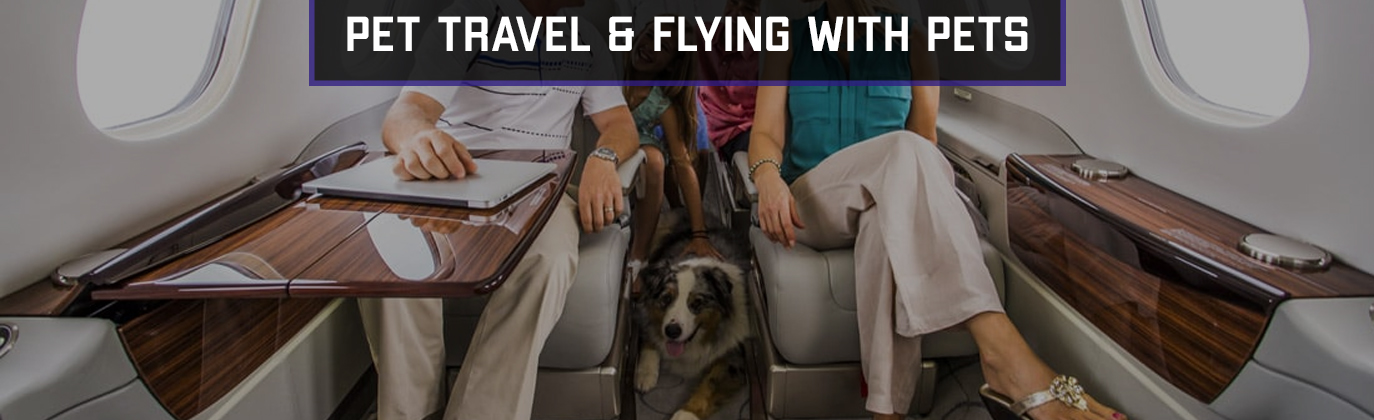
Flying to South Korea with a dog or a cat
Korea asks little of an animal arriving from Britain and a great deal on the way home, and the hard half is the one that has to be planned before the aircraft leaves Britain. Read the two directions separately.
What Korea asks for on the way in
The animal carries an ISO 11784 or 11785 microchip, implanted before the rabies vaccination, and has a valid rabies vaccination if it is 90 days old or more; a younger animal needs the microchip only. Britain appears on the Korean list of rabies-free regions as reported by pet-travel specialists, which means no rabies antibody test is asked for on a journey from Britain. A health certificate issued by the British authorities, showing the microchip number and the date of birth, travels with the animal.
On arrival a veterinarian of the Korean animal quarantine agency reviews the papers and examines the animal. With the papers in order the animal is normally released the same day; a missing or unreadable microchip, or a missing certificate, means an extended quarantine of about 10 days at the owner's expense or a return flight. Animals are inspected at designated airports, which a pet-travel guide names as Incheon, Gimpo, Gimhae, Jeju, Muan, Cheongju and Daegu, and a party of 10 or more animals has to notify the agency in advance. Several breeds of dog, among them the Rottweiler, the American Pit Bull Terrier and the Staffordshire Bull Terrier, are regulated as dangerous dogs in Korea, so tell us the breed before we plan.
For a private flight we confirm the entry point and the paperwork in writing before the flight.
The way home is where the clock starts. South Korea is not on the list of countries from which Britain accepts a pet on the simpler terms, so the animal needs a Great Britain pet health certificate and a rabies blood test:
- A rabies blood test with a result of at least 0.5 IU/ml, taken at least 30 days after the vaccination, followed by a wait of three months from the date of the sample before the animal travels;
- A Great Britain pet health certificate for the journey;
- For a dog, a tapeworm treatment from a vet between 24 and 120 hours before arrival in Britain;
- A microchip and a rabies vaccination that are valid, with no more than five animals per traveller;
- Quarantine for up to four months if the rules are not met.
The practical consequence is that the three months decide the trip. A blood sample taken after arrival in Korea would keep the animal there until the wait is over, so we agree the vaccination and testing dates with the owner and the vet before the outward flight is booked.
Other destinations, and the general rules for travelling with an animal on a private jet, are set out on our flying with pets guide.
Empty Legs
An empty leg is a flight the operator has to make anyway, with the cabin vacant, and so it is priced low rather than flown for nothing. The saving on this route is large in cash, and so is the catch.
Why empty legs to Korea are scarce
– An aircraft that delivers a party to Seoul has to leave again, and parking at Gimpo is limited by the hangar, so operators usually fly out within a day or two. The legs that appear most often are the ones heading home to Britain;
– The aircraft is seldom in the right place: a leg from Busan to Southampton suits a client in Busan and not one in Seoul, so a match needs the right city as well as the right week;
– A permit goes with the date, so a leg that moves by a day moves the permit and sometimes the slot.
Clients who offer a week instead of a day match most often, although the operator owns the date and a leg can vanish when the original booking changes. Whatever is free is listed on our empty legs page. A selection of Korean empty legs follows, at roughly 40 percent of a fresh charter:
| Route | Aircraft | Capacity | Whole aircraft |
|---|---|---|---|
| UK (London Biggin Hill) - South Korea (Seoul) | Global 6000 | 13 seats | £67,750 |
| South Korea (Seoul) - UK (London Luton) | Global 6000 | 13 seats | £68,050 |
| South Korea (Jeju) - UK (London Biggin Hill) | Global 6000 | 13 seats | £68,900 |
| UK (Manchester) - South Korea (Seoul) | Global 6000 | 13 seats | £69,100 |
| UK (London Stansted) - South Korea (Seoul) | Gulfstream G550 | 16 seats | £71,000 |
| South Korea (Busan) - UK (Southampton) | Gulfstream G550 | 16 seats | £73,350 |
| South Korea (Seoul) - UK (London Biggin Hill) | Global 7500 | 14 seats | £86,000 |
Reading the empty-leg prices
– The price covers the whole aircraft, not a seat. A Gulfstream G550 from Busan to Southampton with eight aboard comes to about £9,150 a head;
– The cost to you is flexibility: the date, often the hour, sometimes the airport. The saving looks large only because the fresh charter it is measured against is large.
Helicopter charter
In Korea a helicopter solves one problem, the road, and it does not solve the other, the airspace. The centre of Seoul lies under prohibited and restricted zones, so a helicopter does not land on an arbitrary roof, and every site has to be agreed in advance:
a Korean start-up sells a helicopter taxi between Gangnam and an airport and gives the time as about 20 minutes against nearly two hours by roadabout 15 to 25 minutes by our estimate
prohibited and restricted zones surround the centre of the city, with an approval from air traffic control required for the restricted area west of Seoul; a landing site is cleared before the quoteby arrangement
helicopter transfers on request through licensed Korean operators; we confirm availability and the landing site for your dateby arrangement
A helicopter suits the first stretch out of the airport on a night when the road from Incheon takes two hours, and it does not replace the fast train between Seoul and Busan. The rotary leg is booked with the rest of the itinerary so that the crews work to one schedule. Fog, summer storms and typhoons stop helicopters on days when a jet still lands, so keep a car in reserve.

Flights from the UK to South Korea
London sends most of the traffic on this route, with Manchester, Birmingham and the Scottish airfields behind it; the price table higher up covers thirteen pairings across Gimpo, Incheon, Busan and Jeju. Our clients have access to all airports of the UK and Europe. Due to the unique partnership conditions, we can offer our clients the best prices for business aviation services. Our experts will consult you on the availability of private jets in a particular city and help you choose the best option.
List of TOP 25 business aviation airports:
| Airport | Country | ICAO | IATA |
|---|---|---|---|
 London Heathrow Airport |
England | EGLL | LHR |
| Birmingham Airport |
England | EGBB | BHX |
| London Gatwick |
England | EGKK | LGW |
| London City Airport |
England | EGLC | LCY |
| London Luton |
England | EGGW | LTN |
| Edinburgh Airport |
Scotland | EGPH | EDI |
| Leeds Airport |
England | EGNM | LBA |
| Manchester Airport |
England | EGCC | MAN |
| London Stansted |
England | EGSS | STN |
| Liverpool John Lennon Airport |
England | EGGP | LPL |
| Newcastle Airport |
England | EGNT | NCL |
| Bristol Airport |
England | EGGD | BRS |
| Glasgow Airport |
Scotland | EGPF | GLA |
| East Midlands Airport |
England | EGNX | EMA |
| Southampton Airport |
England | EGHI | SOU |
| Jersey Airport |
Channel Islands | EGJJ | JER |
| Cardiff International Airport |
Wales | EGFF | CWL |
| Inverness Airport |
Scotland | EGPE | INV |
| Bournemouth Airport |
England | EGHH | BOH |
| London Farnborough Airport |
England | EGLF | FAB |
| Oxford Airport |
England | EGTK | OXF |
| London Biggin Hill |
England | EGKB | BQH |
| Belfast Airport |
Northern Ireland | EGAA | BFS |
| Gibraltar Airport |
Gibraltar | LXGB | GIB |
| Aberdeen Airport |
Scotland | EGPD | ABZ |
Korean charters from the booking notes: six typical trips
The six trips below are typical jobs assembled from booking notes with the details changed, so none of them is one named client or one date.
SEOUL · THE STANDARD PLAN
Two directors with a meeting in Gangnam
London Biggin Hill - Seoul Gimpo, Global 6000 via Baku, about 13 h 15 min · 4 pax
They left London in the evening and landed at Gimpo in the early evening of the next day by the Korean clock, well before the 23:00 line, with the Business Aviation Center and a car waiting. The permits had gone in a week earlier.
SEOUL · THE NIGHT ARRIVAL
A founder landing after the Gimpo curfew
London Farnborough - Seoul Incheon, Global 6000 via Baku, about 13 h 15 min · 5 pax
The plan landed after midnight local time, so it was written for Incheon from the start, with the passengers clearing in the main terminal and the drive into Gangnam taking over an hour.
BUSAN · FILM FESTIVAL WEEK
A party for the October festival
London Biggin Hill - Busan Gimhae, Global 6000 via Baku, about 13 h 35 min · 6 pax
Busan fills up for ten days in October, so the hotel in Haeundae was booked before the aircraft. Gimhae is 12 km from City Hall and does not accept private flights between 23:00 and 06:00.
JEJU · A FAMILY WEEK
Three generations on the island
Southampton - Jeju, Global 6000 via Baku, about 13 h 35 min · 8 pax
Jeju is a separate airport with a crowded apron, so the aircraft was planned to leave after the drop-off and come back for the return, with the parking question settled with the handler before the price was agreed.
GANGWON · THE SKI WEEK
A group heading for Yongpyong in January
London Stansted - Seoul Gimpo, Gulfstream G550 via Baku, about 13 h 15 min · 10 pax
The mountains are about three hours from Seoul by road, so the party landed in Seoul and drove, and the aircraft waited in the Gimpo hangar. Yangyang is nearer, but its parking is so limited that it would have meant flying the aircraft away.
EMPTY LEG · HOMEWARD FROM JEJU
A flexible return after a long stay
Jeju - London Biggin Hill, Global 6000 empty leg, about 13 h 30 min · 5 pax
Offering a week in place of a date is what made this one work. The client paid about £68,900, roughly 40 percent of a fresh one-way charter on the same sector, and left when the aircraft was ready to leave.
Frequently asked questions about flying to South Korea
1Can a private jet fly from London to Seoul nonstop?
Yes, on paper, with an ultra-long-range aircraft. The planned route is 6,006 nautical miles, which a Gulfstream G650ER (rated at 7,500 nautical miles) can plan as one leg, in about 12 hours. A Global 6000 is rated at about 6,000 nautical miles and plans a stop in Baku, after 2,392 nautical miles. Winds, reserves and payload are checked before a nonstop is promised.
2How long does a private jet take from the UK to South Korea?
About 13 hours 15 minutes from London Biggin Hill to Seoul Gimpo in a Global 6000 with a stop in Baku, including an hour on the ground. Korea is nine hours ahead of Greenwich Mean Time and eight ahead of British Summer Time, so an evening departure lands in the evening of the next day, and a morning departure lands in the small hours, when Gimpo is closed to private flights.
3How much does a private jet to South Korea cost?
From about £161,350 one way from London Biggin Hill to Seoul Gimpo on a Global 6000 with a stop in Baku. A Gulfstream G650ER nonstop costs about £190,350, Busan about £165,600 and Jeju about £164,050 on the Global 6000. Permits, handling at the stop and in Korea, parking and catering are quoted on top, and an empty leg in the right direction costs roughly 40 percent of a fresh charter.
4What do passengers need to enter South Korea on a private flight?
British citizens can stay up to 90 days visa-free for tourism or short business visits, with an onward or return ticket and a passport that expires after the departure date. K-ETA is usually required for visa-free visitors, but British citizens are listed as temporarily exempt, and we check the position for your date. Each passenger submits an e-Arrival card online up to 72 hours before arrival and completes a customs declaration on landing. The landing permit and the overflight approval are applied for by the operator and the handler.
5Can my dog or cat travel with me to South Korea on a private jet?
Yes. The animal needs an ISO microchip implanted before the rabies vaccination, a valid rabies vaccination if it is 90 days old or more, and a health certificate from the British authorities. Britain appears on Korea's list of rabies-free regions, so no antibody test is reported as necessary on the way in. Coming home is stricter: South Korea is not on Britain's list of simpler countries, so the animal needs a Great Britain pet health certificate and a rabies blood test, with a three-month wait from the sample, and a dog needs a tapeworm treatment 24 to 120 hours before arrival.
6Which airport should a private jet use in Seoul?
Gimpo is the usual choice: about 16 km from the centre, with a purpose-built business aviation terminal and a hangar, but private flights are limited to the hours between 06:00 and 23:00 local. Incheon is open round the clock and takes night arrivals, though it is about 65 km from Gangnam and has no hangar for visiting aircraft. Seongnam is an air force base for official visits. A foreign private flight needs a permit at least two days ahead, a charter at least 10 days, and military airfields need 16.