


Private jet charter in Japan
Seventeen hours is what the cheapest cabin that can reach Tokyo needs from the south of England, two fuel stops in the Caucasus and Central Asia included, and the flying is the smaller part of the planning. Private Jets UK builds a Japanese charter around the slot first and the aircraft second. Our customers have access to 6,500 jets of all types and configurations available for rent. We will help you choose the best option based on your needs and objectives. Our catalog contains the models from the largest manufacturers: Gulfstream, Dassault, Embraer, Airbus, Boeing, Bombardier, Learjet, Cessna, Beechcraft, Pilatus, HondaJet, etc. We have established partnerships with the world's largest airlines and VIP terminals, which means we can offer you favourable flight conditions and a high level of service. Our experts will manage the organization of your flight - starting with paperwork, agreements, etc., and ending with a transfer and meeting at the airport. Our company provides a full range of business aviation and concierge services. In Japan that means a landing slot that has to be won before the date is final, a permit for a charter, a handler on the apron at every airport and a parking approval that is granted separately, because these four things decide the airport, the date and the price long before anyone discusses the cabin.

At your request, the aviation consultants of Private Jets UK will help you choose the jet with the suitable technical parameters (production year, flight hours, and home base). The cost of the private jet charter to Japan depends on many factors, such as the model of the business jet, the number of passengers, departure and destination airports, type of flight, duration of parking, additional services, etc. Therefore, we calculate the price of each order individually taking into account your wishes. You can use an online calculator to get an instant charter quote. Please indicate your real contact details to get the final calculation.
You can calculate the cost of your flight in several ways:
- using an online calculator on the website (however, it shows only the approximate price);
- via Messenger (WhatsApp or Telegram);
- by landline or cell phone;
- via e-mail (jets@private-jets.co.uk).
Please note that the above-mentioned price is indicative only. It is calculated on this basis: a departure from London Biggin Hill, a Bombardier Challenger 605 to Tokyo Haneda with two technical stops, in Baku and in Almaty, and two passengers aboard. If you want to get a personal quote, just fill out the online booking form below. Our aviation consultant will make the calculation within 20 minutes, and then contact you to specify the details of the flight.
How long does it take to fly to Japan?
Japan keeps one time all year, nine hours ahead of Greenwich Mean Time and eight hours ahead of British Summer Time. A morning departure from a London airfield lands before lunch on the following day by the Japanese clock, and an evening departure puts you on the ground late the next evening. These are the sectors from London Biggin Hill on the lowest-priced aircraft that can fly them, gate to gate, including about an hour on the ground for every fuel stop:
6,655 nautical miles planned, the capital, entered at Haneda or Naritaabout 17 h 10 min
6,485 nautical miles planned, Kansai, with Kyoto and Nara an hour or so away by railabout 16 h 45 min
6,542 nautical miles planned, the airport that Tokyo traffic spills into when Haneda is fullabout 16 h 55 min
6,295 nautical miles planned, Kyushu, the nearest major Japanese city to the Asian mainlandabout 16 h 20 min
6,550 nautical miles planned, Hokkaido, the gateway to the Niseko ski resortsabout 16 h 55 min
6,433 nautical miles planned, the southern islands, a long way from Tokyoabout 16 h 40 min
Why the line on the map is not the route
The shortest line from London to Tokyo is about 5,200 nautical miles. Our aircraft do not fly it. The planned track runs to the south, over Turkey, the Caucasus and Central Asia, crosses northern China and arrives at Japan from the west, which makes the Tokyo sector 6,655 nautical miles as planned. Every state on the way has its own overflight rules, and the operator or its trip-support company requests the permits together with the passenger and crew details.
We quote the planned distance and never the map distance, so the figure in a quote is the price of the flight that will actually be flown. The corridor itself is fixed with the operator at the planning stage, and we do not promise it before the operator has agreed it.
The same sum decides the stops. The Challenger 605 is rated at 4,000 nautical miles and we plan every leg at about 85 percent of a published range, so it lands in Baku, 2,397 nautical miles from Biggin Hill, and again in Almaty, 1,262 miles further on, with 2,996 left to Haneda. A Global 6000 manages with one stop in Baku and a final leg of 4,258 miles. Even a Gulfstream G650ER plans one stop on the way to Tokyo, because 6,655 miles is more than 85 percent of its range; to Fukuoka, 6,295 miles away, it can plan without landing, though a full cabin or a headwind can put a stop back into the plan on the day.
The exact flight time depends on the model of the business jet, as well as the speed of the tail or head wind. Our consultant will make a detailed calculation of the flight time for the chosen business jet.
Prices for the private jet flights to Japan
Typical one-way prices from Britain, cheapest first. The Challenger 605 leads the table because it is the lowest-priced aircraft that can be planned to Tokyo at all, and the larger cabins below it save a stop or two and a good deal of time. Every figure includes the technical stops shown in the row:
| Route | Aircraft | Price, one way |
|---|---|---|
| London Biggin Hill - Tokyo Haneda 6,655 nm / 12,325 km, via Baku and Almaty |
Challenger 605 up to 12 |
from £131,700 |
| London Luton - Tokyo Haneda 6,678 nm / 12,368 km, via Almaty |
Falcon 900LX up to 12 |
from £164,050 |
| Birmingham - Fukuoka 6,378 nm / 11,812 km, via Baku |
Global 6000 up to 13 |
from £171,100 |
| London Stansted - Tokyo Narita 6,676 nm / 12,364 km, via Almaty |
Gulfstream G450 up to 13 |
from £172,400 |
| London Biggin Hill - Okinawa Naha 6,433 nm / 11,914 km, via Baku |
Global 6000 up to 13 |
from £172,550 |
| London Biggin Hill - Nagoya Chubu 6,542 nm / 12,116 km, via Baku |
Global 6000 up to 13 |
from £175,350 |
| London Stansted - Sapporo New Chitose 6,551 nm / 12,132 km, via Baku |
Global 6000 up to 13 |
from £175,600 |
| London Farnborough - Tokyo Haneda 6,685 nm / 12,381 km, via Baku |
Global 6000 up to 13 |
from £179,100 |
| Southampton - Osaka Kansai 6,533 nm / 12,099 km, via Baku |
Gulfstream G550 up to 16 |
from £183,350 |
| Manchester - Tokyo Haneda 6,772 nm / 12,542 km, via Baku |
Gulfstream G550 up to 16 |
from £189,900 |
| London Biggin Hill - Fukuoka 6,295 nm / 11,658 km, nonstop |
Gulfstream G650ER up to 14 |
from £199,300 |
| Edinburgh - Tokyo Haneda 6,856 nm / 12,697 km, via Baku |
Gulfstream G650ER up to 14 |
from £216,550 |
| London Luton - Sapporo New Chitose 6,573 nm / 12,173 km, via Baku |
Global 7500 up to 14 |
from £224,050 |
What these figures leave out
– Time is what separates the first row from the others. From London Biggin Hill a Challenger 605 reaches Tokyo Haneda for about £131,700 with two stops, while a Global 6000 flies it with one stop and costs about £178,300, a difference of about £46,600 for roughly 2 h 15 min less on the clock. The same Challenger 605 would fly to Fukuoka for about £124,750, but Fukuoka is the airport of Kyushu and not of the capital, and its apron holds a single general aviation aircraft at a time;
– Landing and handling charges at the technical stops, the Japanese permits where the flight is a charter, parking and the extra fee for express customs and immigration are quoted on top. The figures are one-way, and on a sector this long a one-way price includes the empty flight home, since an aircraft that delivers a party to Japan can seldom wait there for the return.
Private jet flights within Japan and to its neighbours
Distances inside Japan are short by the standard of the journey that brought you there: Tokyo Haneda to Osaka Kansai is 243 nautical miles, Tokyo to Sapporo 460, and Tokyo to Fukuoka 495. These are the hops we are asked for, with Seoul, Shanghai, Taipei and Hong Kong as the neighbours that clients most often add to a Japanese itinerary:
| Route | Aircraft | Flight time | Price, one way |
|---|---|---|---|
| Tokyo Haneda - Nagoya Chubu 158 nm / 293 km |
Citation XLS+ up to 9 |
about 50 min | from £6,800 |
| Osaka Kansai - Fukuoka 254 nm / 470 km |
Citation XLS+ up to 9 |
about 1 h 05 min | from £6,800 |
| Tokyo Haneda - Osaka Kansai 243 nm / 450 km |
Citation XLS+ up to 9 |
about 1 h 05 min | from £6,800 |
| Tokyo Haneda - Sapporo New Chitose 460 nm / 852 km |
Citation XLS+ up to 9 |
about 1 h 35 min | from £8,800 |
| Tokyo Haneda - Fukuoka 495 nm / 917 km |
Citation XLS+ up to 9 |
about 1 h 40 min | from £9,300 |
| Tokyo Haneda - Seoul Gimpo 663 nm / 1,228 km |
Citation Latitude up to 9 |
about 2 h | from £14,500 |
| Osaka Kansai - Shanghai Pudong 734 nm / 1,359 km |
Citation Latitude up to 9 |
about 2 h 10 min | from £15,750 |
| Tokyo Haneda - Okinawa Naha 873 nm / 1,617 km |
Challenger 605 up to 12 |
about 2 h 25 min | from £19,900 |
| Tokyo Haneda - Taipei Songshan 1,178 nm / 2,182 km |
Challenger 605 up to 12 |
about 3 h 05 min | from £25,800 |
| Tokyo Haneda - Hong Kong 1,630 nm / 3,019 km |
Gulfstream G450 up to 13 |
about 4 h 05 min | from £45,150 |
Before you plan a Japanese itinerary
– A charter operator may not fly a domestic-only journey for Japanese nationals. Domestic legs are allowed when the passengers arrived internationally on the same aircraft or will leave internationally on it, and the passenger details are written into the charter agreement. Every domestic charter leg is also a separate permit application;
– Each leg is a separate slot request, and at Haneda the slot, the parking and the customs arrangement are tied together. Between Tokyo and Osaka the Shinkansen, at about two hours and twenty minutes to Shin-Osaka, is often the simpler answer, and we say so when it is.
We can arrange the flights from any cities in the UK (England, Scotland, Wales and Northern Ireland) and European countries. Due to a large database of available business jets, we can help you find an optimal jet and crew. If you have any questions about the departure or the flight itself, you can ask them using the form below:
Prices depending on the type of business jet
We can clearly show the high dependence of the cost of the flight, on the type of aircraft - we have collected approximate data, at the price of 1 flight hour, for various types of business jets:

The cost per hour indicated in the table is preliminary and does not constitute an offer or a commercial offer. Exact prices are available from the managers of the company.
Online Calculator
If you want to make an urgent calculation of the cost of a private plane flight, use our online calculator. Just fill in all the fields of the form with a note that you are interested in a specific model of the aircraft and get the final price. NB! - the figures are sent to you by email or messenger, please carefully fill in the contact details to get the calculation.
All our calculations are as transparent as possible for you. After receiving the request, we will prepare a beautiful offer - where the costs and the final price will be clearly described. The exact price is agreed in advance and is written in the contract, so you can be sure of the final cost.
Private jets are ready to take off
Our database contains over 6,500 business jets (about 3,500 in Europe and 3,000 in the rest of the world) of different configurations and production years. The list of models is constantly updated. Unfortunately, we can't post a full list of available jets on our website due to confidentiality issues. Please contact the managers of the company for more accurate information. We will help you choose a suitable model taking into account your wishes. These are the typical choices for Japan:
Long range and ultra-long range
The cabins that fly Britain to Japan with one stop at most, and to Fukuoka without landing. Fourteen hours in the air is long enough that a flat bed is the reason to choose them.
Large cabins
The right size for a party of ten with luggage. The Challenger 605 is the lowest-priced aircraft we plan to Tokyo, with stops in Baku and Almaty, and the Falcon 900LX and the G450 trade one stop for a higher price.
Super-midsize
Not for the journey from Britain, but the right size for Tokyo to Osaka, Fukuoka or Sapporo once you are in the country.
Light jets
The aircraft for the short hops, for example Tokyo to Nagoya. Haneda slots are scarce, so a small aircraft takes a slot that a larger one could use for more people.
Turboprops
Rarely the answer in Japan, where the slot counts for more than the miles. Worth asking about only for a short sector to a regional airfield.
For a sector this long we look for an aircraft positioned in the Gulf or in Asia as well as in Britain, so the dates should reach us while they can still move.
How to book a private jet?
You can book a private jet flight to Japan in 6 easy steps:
- Flight request - indicating the route and your preferences for the model of business jet and other points.
- Coordination of flight details - our consultant will contact you to offer the possible flight options and answer all your questions.
- Commercial offer - we will send you a final offer on a specific model taking into account all your wishes.
- Signing of the contract.
- Payment for the flight and booking a business jet.
- Departure at the agreed time and date. Assistance during the whole flight.
In addition to renting the private jets and arranging the flights, we provide concierge services, premium transfer, security, exclusive catering, etc. We have learned to solve problems of any complexity, offering the service of the European level. Our experts will be happy to answer your questions and help you arrange your flight.
How to rent a business jet with a crew
5 main stages:
-

Sending an application
-

Clarification of details and search for options
-

Preparation and coordination of optimal options
-

Registration of documents. Payment of the invoice.
-

Departure on the route.
Business aviation airports in Japan
Japan has no Western-style FBO network. Business jets park on the general airport apron and are looked after by approved handling companies, which is why the handler we choose matters more here than in most countries. The first rows of the table are the airports our flights use most; the later rows matter for the regions:
| Airport | Ground | How it operates |
|---|---|---|
| Tokyo Haneda HND / RJTT |
in Ota ward, about 15 km south of Tokyo Station; 15 to 40 minutes by road depending on traffic | Open to general aviation 24 hours a day, with four runways of 3,360, 3,000, 2,500 and 2,500 metres. Business jets use a dedicated international gate at Terminal 3 with its own security checkpoint, customs, immigration and quarantine channel, a lounge, a drop-off area and short-term parking, open round the clock. The airport lists a dozen handling companies at that gate, among them Universal Aviation, JAL Business Aviation and ANA. The constraint is the slot: general aviation is listed with 16 day slots between 06:00 and 23:00 local, inside the hourly and three-hourly capacity limits that apply to the airlines as well, and the airlines come first. Parking is a separate approval, typically four nights and in some guides five days, and the apron has no hangar for general aviation |
| Tokyo Narita NRT / RJAA |
in Chiba prefecture, about 60 to 65 km east of the city; one to one and a half hours by road | Runways of 4,000 and 2,500 metres. The airport has a night curfew, listed as 23:00 to 05:59 local, with a limited allowance for movements between 23:00 and 23:59 on a valid noise certificate filed through the handler. Slots and parking are described as far easier than at Haneda, with about 18 general aviation positions, stays of up to about 30 days subject to availability, and hangar space at a high price. Jetex has an FBO at Terminal 2 and Universal Aviation also works here. Customs and immigration can take up to 90 minutes in busy periods unless express clearance is booked. Narita is the usual choice when Haneda has no slot |
| Nagoya Chubu Centrair NGO / RJGG |
central Japan between Tokyo and Osaka; Suzuka Circuit lies about 50 km to the south | Customs, immigration and quarantine staffed 24 hours. Handlers describe it as the pressure valve when Tokyo is constrained, with workable slots, parking and efficient clearance, and it is a regular technical-stop airport on long-range routes. It does not use the monthly slot cycle of Haneda: requests are made at the daily coordination times, and Nagoya is where an aircraft is sent to wait when Haneda parking runs out |
| Osaka Kansai KIX / RJBB |
on an artificial island in Osaka Bay, about 50 minutes by road from the centre | Open 24 hours with customs, immigration and quarantine, a dedicated business jet gate in Terminal 2 and handlers on the apron including Jetex and Universal Aviation. Slots are required round the clock. Parking is capped at 72 hours. Itami, closer to the city, takes domestic traffic, and Kobe is a small airport on an island near Sannomiya |
| Fukuoka FUK / RJFF |
Kyushu, the island of the south-west | A regional alternative with the shortest flying time from Britain of any Japanese city on our list. The apron has a single general aviation parking position, with a maximum stay of 48 hours, so the aircraft is planned to leave or to move on. Handling and clearance are arranged by the ground handler for each flight. Kitakyushu is the other Kyushu airport with 24-hour clearance by prior arrangement |
| Sapporo New Chitose CTS / RJCC |
Hokkaido; the road to the Niseko resorts takes about two and a half to three hours by shuttle | Customs, immigration and quarantine are staffed 24 hours by prior coordination, and Universal Aviation supervises operations here. The rule that decides every ski trip is on the parking side: general aviation parking is not available from 1 December to 31 March, so a winter aircraft drops its passengers and flies away, and the cost of positioning it to another airfield is part of the quote. Winter snow also brings de-icing delays |
| Okinawa Naha OKA / ROAH |
Okinawa, in the far south | Customs, immigration and quarantine are staffed 24 hours by prior coordination. Naha is the entry point for the southern islands. We confirm the handler and the parking position for the date in the quote |
Four constraints shape every schedule into Tokyo:
The slot comes first
Slots are mandatory at all major Japanese airports and the Tokyo area is the tightest. A change to an approved slot usually reopens the parking and the customs arrangement, and a variation of more than 30 minutes from the approved time has to be reported through the handler.
A monthly cycle at Haneda
General aviation requests for Haneda are submitted around the tenth of each month for the following month, and the results are normally announced around the twentieth. What is left goes to daily coordination, where airlines, general aviation and government flights compete. Nagoya Chubu does not use this cycle.
Permit for a charter
A private flight with no payment needs no landing permit, but a charter does. The handler files it with the Japan Civil Aviation Bureau, typically about three business days ahead, with the passenger names for every leg. Domestic charter legs need their own applications.
No refuelling with passengers aboard
Japanese airports do not allow refuelling with passengers on the aircraft, anywhere in the country.
Where the aircraft waits
Haneda has about 17 general aviation positions, often full, so a long Japanese stay means flying the aircraft to Narita or Nagoya and back. Narita allows up to about 30 days, Kansai 72 hours and Fukuoka 48, and New Chitose has no general aviation parking from December to March. The cost of that positioning is agreed before the price of the trip is.
Arriving from Britain: visa, permit and customs
A British passport holder does not apply for a visa in advance, the aircraft needs its permissions in its own name, and every arrival is a check of people, cabin and catering. None of it is hard. All of it needs the paperwork in the handler's hands before the aircraft leaves Britain.
A stay of up to 90 days for tourism or business is granted on arrival, with a further 90 days possible at an immigration office. A passenger of another nationality should check the position in advance, because a visa cannot be obtained on arrivalup to 90 days
Valid for the length of the stay, with no extra months required, and with a blank page for the stampevery passenger
The government service where each passenger registers the details for the immigration check and the customs declaration before departurebefore departure
Crew need no visa whatever their nationality. They receive a shore pass on showing a passport and crew identity card, which can limit them to 100 km from the airport of entryshore pass
What the handler files before the aircraft leaves
The general declaration, the full passenger manifest, the immigration cards and the customs declaration, with the passenger names, nationalities, dates of birth and passport numbers sent as advance passenger information before arrival. The handler can prepare the cards, leaving only the signatures.
The slot and the parking approval, requested together. A slot with no parking behind it can still be refused, and the other way round.
The landing permit, if the flight is a charter, with the charter agreement and the details of every passenger on every leg. A change of airport, of aircraft or of schedule is a revision with the handler.
Customs rules are strict, and the first surprise for a British traveller is the medicine cabinet. Medicines that contain pseudoephedrine, such as Sudafed or Actifed, Vicks inhalers and anything containing codeine are illegal to bring in. Prescription medicines are allowed for up to a month's supply and ordinary over-the-counter medicines for up to two months, and a larger quantity or an injectable needs an import certificate issued by the Japanese authorities before the trip. Meat products, including sausages, bacon and ham, may not be brought in without permission, and the same suspicion falls on catering: leftovers and large quantities of food are generally refused, so the handler arranges approved catering and delivers it airside.
Coming home is a flight into Britain: a General Aviation Report goes to the border authorities not earlier than 48 hours and not later than two hours before departure, and British and Irish citizens need no electronic travel authorisation for Britain. The technical stops are in Azerbaijan and Kazakhstan, so the passengers' paperwork is checked for both, even when the aircraft stays on the ramp.

Which airport for which part of Japan
Choose the airport by the address you are going to, and then check it against the slot. These are the usual pairings:
Haneda is 15 to 40 minutes from the centre and has the dedicated business jet gate; a slot there is hard to win, so Narita is planned as the second choiceHaneda
The Shinkansen covers the 515 km from Tokyo to Shin-Osaka in about two hours and twenty minutes, so the long leg from Britain is flown once and the railway links the twojet, then train
Kansai is open round the clock, and the Haruka express reaches Kyoto in about 75 minutesKansai
Chubu is the technical-stop airport for the long-range routes and the pressure valve for Tokyo; Suzuka Circuit lies about 50 km to the southNagoya Chubu
Fukuoka has one general aviation position and a 48-hour limit, so the aircraft does not wait for youFukuoka
The shuttle to the Niseko resorts takes about two and a half to three hours; no parking is available at New Chitose in winterSapporo New Chitose
Naha is 24-hour by prior coordination and the southernmost airport on this pageOkinawa Naha
Tokyo, Kansai, Hokkaido and Okinawa: what our clients go for
Tokyo is where the diary sits. The metropolis has about 14.25 million people, and the three central wards of Chiyoda, Chuo and Minato form its business core, with the Imperial Palace, the former Edo Castle, in Chiyoda and the head office of the Tokyo government in Shinjuku.
Kansai is where the temples are. From Osaka, Kyoto is 28 minutes by JR, Nara 35 to 50 minutes and Kobe about 25, and Himeji Castle is about 45 minutes away on the Shinkansen.
Hokkaido is where the snow is. The Niseko resorts get 10 to 15 metres of snow a year, according to a ski-travel guide, carried by cold winds across the Sea of Japan, and the season runs from early December to early May. Chinese New Year in February fills the resorts again.
Nagoya and Suzuka are where the motor racing is. The Japanese Grand Prix runs on the Suzuka circuit in Mie prefecture, about 50 km south of Nagoya, and has been moved to the cherry-blossom season in early April. Okinawa, at the far south, is the leisure end of the country.
Japanese seasons: snow in the north, a wet summer and typhoons
Japan runs through all four seasons in the same year, and the month decides the airport as much as the address does:
Tokyo averages 5.4 degrees in January; snow can restrict parking at the northern airports and sometimes at Narita, where de-icing queues are the usual reason for an exception to the curfewcold, with snow in the north
cherry blossom reaches its best viewing window in Tokyo in about the last days of March and the first days of April, Kyoto in about the same week, Osaka in the first week of April and Sapporo in late April; hotels in Tokyo sell out in the blossom weeksblossom moves north
the rainy season runs from June to the middle of July, typhoons are possible from June to October, and August is both the hottest month, at 26.9 degrees on average in Tokyo, and the summer holidayrain, then heat
October is the wettest month in Tokyo, with about 235 mm, and September follows with about 225; typhoon risk moves to the north of the country, and the autumn leaves from late October make November another sold-out monthwet, then red leaves
The holiday weeks that close the gaps
Handlers list the New Year holiday, the cherry blossom weeks, Golden Week, the summer holidays, the autumn foliage and Christmas as the busy times. Slots, parking and hotels tighten together, and the advice for Tokyo is to start a month ahead.
The Japanese calendar: new year, snow, blossom, a grand prix and the autumn leaves
Few dates matter, but they matter a great deal, and each one pulls on a different airport:
What a Japanese event does to a flight plan
Dates like these fill hotels and slots at the same moment. A slot outside the Haneda monthly cycle has to be fought for day by day, and an aircraft that has to wait for you is moved to Narita or Nagoya before the holiday starts. We fix the dates, the slot request and the parking together.
Flying to Japan with a dog or a cat
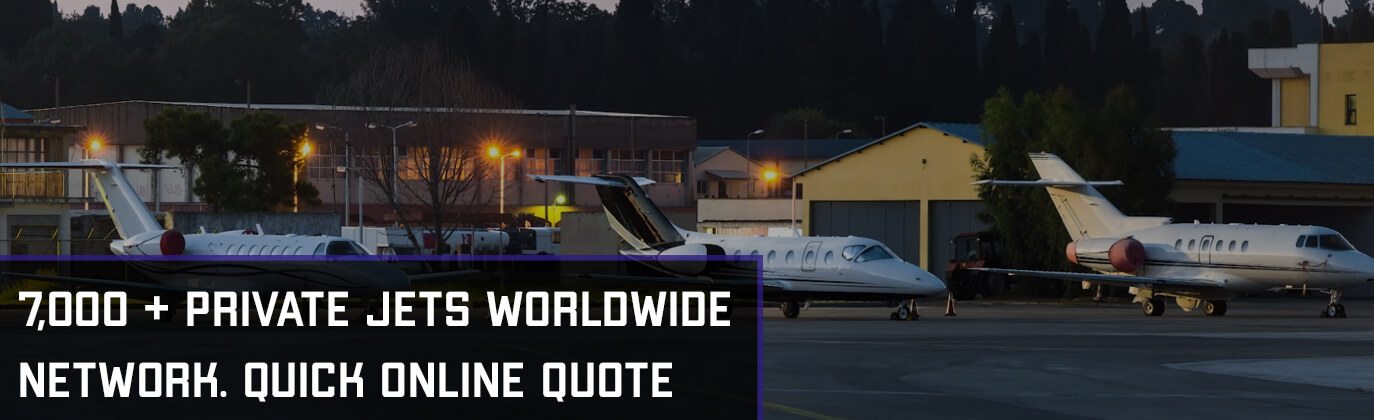
Japan admits dogs and cats, but the entry rules are among the strictest we deal with and the clock starts half a year before the flight. A trip that is decided in a month cannot take the animal.
What Japan asks for on the way in
The animal must carry an ISO microchip, fitted before the first rabies vaccination, and must have two rabies vaccinations, the first from 91 days of age and the second not earlier than 30 days after the first. A blood sample is then tested for rabies antibodies, with a result of at least 0.5 IU/ml, and the animal may arrive in Japan only after 180 days have passed from the date of the sample.
The Animal Quarantine Service at the port of entry must be notified not less than 40 days before arrival. The animal enters through one of eleven designated airports, among them New Chitose, Narita, Haneda, Kansai and Naha, and a handler's guide says that temporary import is possible only at certain airports, with advance coordination. The health certificates must be issued by the government authority of the country the animal leaves, as originals, with an inspection by a vet within 10 days before boarding. An animal that does not meet the rules can be held for up to 180 days or sent back.
Britain is not on the list of regions that Japan treats as free of rabies for a simpler procedure, so the full procedure applies. For a private flight we confirm the entry point and the paperwork in writing before the flight.
The way home is the easy half. Japan appears in the list of countries from which Britain accepts a pet on the simpler terms, which means no blood test for the return:
- A Great Britain pet health certificate;
- For a dog, a tapeworm treatment from a vet between 24 and 120 hours before arrival in Britain;
- A microchip and a rabies vaccination that are valid, with no more than five animals per traveller;
- Quarantine for up to four months if the rules are not met.
The practical consequence is that the 180 days decide the whole trip. The blood sample is taken at home, half a year before the date, the notification goes to the Japanese port 40 days before arrival, and the aircraft is booked around those two dates.
Other destinations, and the general rules for travelling with an animal on a private jet, are set out on our flying with pets guide.
Empty Legs
An empty leg is a flight the operator has to make anyway, with the cabin vacant, and so it is priced low rather than flown for nothing. The saving on this route is large in cash, and so is the catch.
Why empty legs to Japan are scarce
– Every aircraft that delivers a party to Japan has to leave again, and parking approvals are short, four nights at Haneda and 48 hours at Fukuoka, so operators usually fly it out. The westbound legs are the useful ones;
– The aircraft is seldom in the right place: a leg from Nagoya to Biggin Hill suits a client in Nagoya and not one in Tokyo, so a match needs the right city as well as the right week;
– A slot goes with the date, so a leg that moves by a day moves the slot, the parking and sometimes the permit.
Clients who offer a month instead of a day match most often, although the operator owns the date and a leg can vanish when the original booking changes. Whatever is free is listed on our empty legs page. A selection of Japanese empty legs follows, at roughly 40 percent of a fresh charter:
| Route | Aircraft | Capacity | Whole aircraft |
|---|---|---|---|
| UK (London Biggin Hill) - Japan (Tokyo) | Challenger 605 | 12 seats | £55,300 |
| Japan (Tokyo) - UK (London Luton) | Falcon 900LX | 12 seats | £68,900 |
| UK (Birmingham) - Japan (Fukuoka) | Global 6000 | 13 seats | £71,850 |
| Japan (Okinawa) - UK (London Biggin Hill) | Global 6000 | 13 seats | £72,450 |
| Japan (Nagoya) - UK (London Biggin Hill) | Global 6000 | 13 seats | £73,650 |
| UK (London Stansted) - Japan (Sapporo) | Global 6000 | 13 seats | £73,750 |
| Japan (Osaka) - UK (Southampton) | Gulfstream G550 | 16 seats | £77,000 |
Reading the empty-leg prices
– The price covers the whole aircraft, not a seat. A Gulfstream G550 from Osaka to Southampton with eight aboard comes to about £9,600 a head;
– The cost to you is flexibility: the date, often the hour, sometimes the airport. The saving looks large only because the fresh charter it is measured against is large.

Helicopter charter
In Japan the helicopter is a tool for a few specific jobs rather than a general shuttle, and the most useful fact is a negative one: the handlers' guide to Tokyo says that a helicopter link between Haneda and the city centre is not available. Narita is different, and the sightseeing flights out of Osaka are well established:
helicopter transfers to sites across the city are sold from Narita; the fee and the landing site are agreed with the booking, and the road takes one to one and a half hoursabout 25 min
no helicopter link to the city centre is listed in the handlers' guide; the road takes 15 to 40 minutes depending on trafficby road
a round trip of about an hour over Kinkaku-ji, Nijo, Ryoan-ji, Nanzen-ji and the Gion districtabout 60 minutes
helicopter transfers on request through approved operators; we confirm availability and the landing site for your dateby arrangement
A helicopter suits the first stretch out of a city and not an intercity hop, where the Shinkansen or a jet with a slot does the job better. Landing at a hotel, a private site or a resort needs the site agreed in advance, and the rotary leg is booked together with the rest of the itinerary so that the crews work to one schedule. Rain, summer thunderstorms and typhoons stop a helicopter on days when a jet still lands, so keep a car or a train in reserve.

Flights from the UK to Japan
London sends most of the traffic on this route, with Manchester, Birmingham and the Scottish airfields behind it; the price table higher up covers thirteen pairings across Tokyo, Osaka, Nagoya, Fukuoka, Sapporo and Okinawa. Our clients have access to all airports of the UK and Europe. Due to the unique partnership conditions, we can offer our clients the best prices for business aviation services. Our experts will consult you on the availability of private jets in a particular city and help you choose the best option.
List of TOP 25 business aviation airports:
| Airport | Country | ICAO | IATA |
|---|---|---|---|
 London Heathrow Airport |
England | EGLL | LHR |
| Birmingham Airport |
England | EGBB | BHX |
| London Gatwick |
England | EGKK | LGW |
| London City Airport |
England | EGLC | LCY |
| London Luton |
England | EGGW | LTN |
| Edinburgh Airport |
Scotland | EGPH | EDI |
| Leeds Airport |
England | EGNM | LBA |
| Manchester Airport |
England | EGCC | MAN |
| London Stansted |
England | EGSS | STN |
| Liverpool John Lennon Airport |
England | EGGP | LPL |
| Newcastle Airport |
England | EGNT | NCL |
| Bristol Airport |
England | EGGD | BRS |
| Glasgow Airport |
Scotland | EGPF | GLA |
| East Midlands Airport |
England | EGNX | EMA |
| Southampton Airport |
England | EGHI | SOU |
| Jersey Airport |
Channel Islands | EGJJ | JER |
| Cardiff International Airport |
Wales | EGFF | CWL |
| Inverness Airport |
Scotland | EGPE | INV |
| Bournemouth Airport |
England | EGHH | BOH |
| London Farnborough Airport |
England | EGLF | FAB |
| Oxford Airport |
England | EGTK | OXF |
| London Biggin Hill |
England | EGKB | BQH |
| Belfast Airport |
Northern Ireland | EGAA | BFS |
| Gibraltar Airport |
Gibraltar | LXGB | GIB |
| Aberdeen Airport |
Scotland | EGPD | ABZ |
Japanese charters from the booking notes: six typical trips
The six trips below are typical jobs assembled from booking notes with the details changed, so none of them is one named client or one date.
TOKYO · THE LOWEST-PRICED WAY IN
Two directors with a meeting in the capital
London Biggin Hill - Tokyo Haneda, Challenger 605 via Baku and Almaty, about 17 h 10 min · 4 pax
They had assumed that Japan needed an ultra-long-range jet. The Challenger 605 reaches Haneda with two stops, and the slot request went in the same week as the booking.
TOKYO · WHEN HANEDA SAYS NO
A delegation in the cherry blossom fortnight
London Stansted - Tokyo Narita, Gulfstream G450 via Almaty, about 15 h 50 min · 8 pax
Haneda had no daytime slot in the week they wanted, so the arrival was planned at Narita, an hour and more from the centre, with a car at the aircraft door and the hotel booked months ahead.
NAGOYA · THE RACE WEEKEND
A party for the Grand Prix at Suzuka
London Biggin Hill - Nagoya Chubu, Global 6000 via Baku, about 14 h 40 min · 7 pax
Suzuka lies about 50 km south of Nagoya. Chubu has customs round the clock and no monthly slot cycle, which made the date easier to fix than Tokyo.
SAPPORO · WINTER SNOW
A family heading for Niseko
London Stansted - Sapporo New Chitose, Global 6000 via Baku, about 14 h 45 min · 6 pax
General aviation parking at New Chitose is closed in winter, so the aircraft dropped the party and flew away, and came back for the return. The shuttle to the resort takes about two and a half hours.
FUKUOKA · THE NONSTOP
A founder visiting suppliers in Kyushu
London Biggin Hill - Fukuoka, Gulfstream G650ER nonstop, about 12 h 55 min · 6 pax
Fukuoka is the one Japanese city we plan without a landing on the way, and its single general aviation position has a 48-hour limit, so the aircraft left the day after arrival.
EMPTY LEG · HOMEWARD FROM OKINAWA
A flexible return after a long stay
Okinawa Naha - London Biggin Hill, Global 6000 empty leg, about 14 h 30 min · 5 pax
Offering a week in place of a date is what made this one work. The client paid about £72,450, roughly 40 percent of a fresh one-way charter on the same sector, and left when the aircraft was ready to leave.
Frequently asked questions about flying to Japan
1Can a private jet fly from London to Tokyo nonstop?
Not on the plans we build. The route to Tokyo is 6,655 nautical miles as planned, which is more than 85 percent of the range of a Gulfstream G650ER, so even that aircraft stops once, in Baku. A Global 6000 also stops once, a Challenger 605 twice, in Baku and Almaty. Fukuoka is the exception: a G650ER can plan the 6,295 nautical miles without landing.
2How long does a private jet take from the UK to Japan?
About 14 hours 55 minutes to Tokyo Haneda in a Global 6000 with a stop in Baku, and about 17 hours 10 minutes in a Challenger 605 with two stops, in both cases including the time on the ground. A nonstop G650ER to Fukuoka takes about 12 hours 55 minutes. Japan is nine hours ahead of Greenwich Mean Time and eight ahead of British Summer Time, so an evening departure lands in the evening or late at night of the next day, depending on the aircraft.
3How much does a private jet to Japan cost?
From about £131,700 one way from London Biggin Hill to Tokyo Haneda on a Challenger 605 with stops in Baku and Almaty. A Global 6000 with one stop costs about £178,300, and a G650ER nonstop to Fukuoka about £199,300. Handling at the stops, the Japanese permit for a charter and parking are quoted on top, and an empty leg in the right direction costs roughly 40 percent of a fresh charter.
4What do passengers need to enter Japan on a private flight?
British citizens are granted up to 90 days for tourism or business on arrival, with a further 90 days possible at an immigration office. The passport must be valid for the length of the stay and have a blank page, and each passenger registers on Visit Japan Web before departure. The handler files the passenger manifest and the advance passenger information, and a charter needs a landing permit. Medicines that contain pseudoephedrine or codeine are illegal to bring in.
5Can my dog or cat travel with me to Japan on a private jet?
Yes, with a long lead time. The animal needs an ISO microchip, two rabies vaccinations, a blood test with a result of at least 0.5 IU/ml and a wait of 180 days from the sample, and the Japanese port must be notified at least 40 days before arrival. An animal that does not meet the rules can be held for up to 180 days. Coming home, Japan is on Britain's list of countries with simpler terms, so a Great Britain pet health certificate is enough, and a dog needs a tapeworm treatment 24 to 120 hours before arrival.
6Which airports can a private jet use to enter Japan?
Tokyo Haneda, Nagoya Chubu and Osaka Kansai have customs, immigration and quarantine staffed 24 hours. Sapporo New Chitose, Okinawa Naha and Kitakyushu are staffed 24 hours by prior coordination, and Tokyo Narita is open from 06:00 to 22:59. Slots are mandatory, Haneda general aviation requests follow a monthly cycle, and parking is capped at about four nights at Haneda, 72 hours at Kansai and 48 hours at Fukuoka.