


Private Jet London to Dublin
The London to Dublin corridor carries more air traffic than any other city pair in Europe, and the business aviation flow follows it closely. For a broker that means two things worth knowing before you enquire: there is nearly always an aircraft within reach, and the choice of London airport matters more to your day than the choice of aircraft does. The flying is under an hour on almost anything.
204 - 263 nm
Distance by London field
from 55 min
Flight time
from £3,900
One way
Same clock
No time difference
The lightest border we cross from Britain
Ireland sits inside the European Union but outside Schengen, and shares the Common Travel Area with the United Kingdom. British and Irish citizens moving entirely inside that area pass no routine immigration check in either direction. Customs still applies and passengers of other nationalities need the ordinary permissions, but the practical effect on this route is that the ground time at both ends is shorter than on any other international sector we fly.
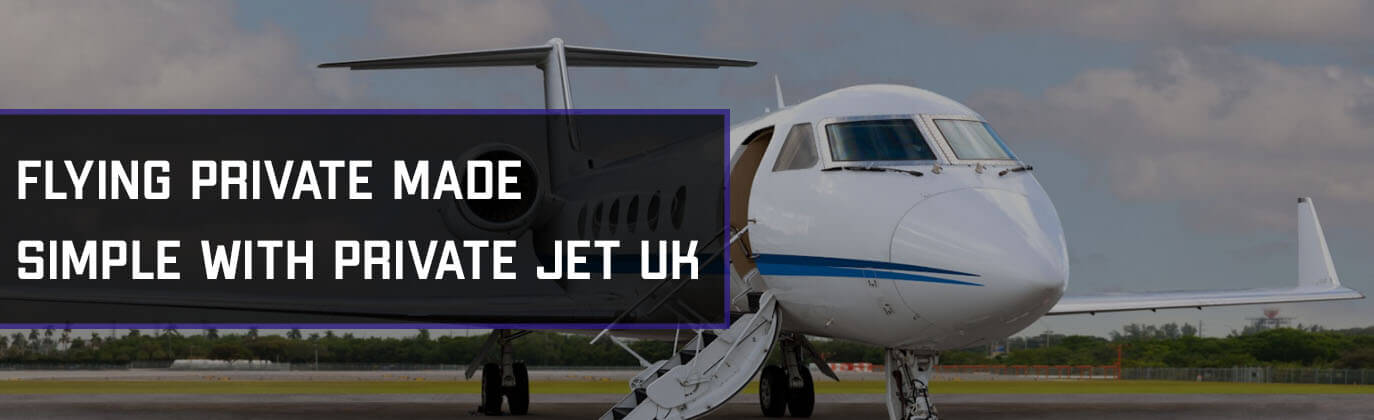
London to Dublin: prices and flight time by aircraft class
Dublin imposes no aircraft limits worth mentioning, so the class you choose is about cabin, luggage and budget rather than about what the runway will take. The day return column matters here more than on most routes, because out and back inside a working day is the standard shape of a London to Dublin booking:
| Aircraft class | Seats | Flight time | One way | Day return |
|---|---|---|---|---|
| Turboprop King Air 350, Pilatus PC-12 |
7 - 9 | about 1 h 15 min | from £3,900 | from £4,900 |
| Very light jet Citation Mustang, Phenom 100 |
4 - 5 | about 1 h 00 min | from £4,600 | from £5,600 |
| Light jet Citation CJ2+, CJ3+, Phenom 300E |
6 - 8 | about 1 h 00 min | from £5,400 | from £6,500 |
| Midsize jet Citation XLS+, Learjet 75 |
8 - 9 | about 1 h 00 min | from £7,400 | from £8,700 |
| Super-midsize Challenger 350, Citation Latitude |
8 - 9 | about 55 min | from £9,200 | from £10,800 |
| Large jet Legacy 600, Challenger 605 |
12 - 13 | about 55 min | from £11,500 | from £13,400 |
| Long-range Global 6000, Gulfstream G550 |
13 - 14 | about 55 min | from £15,000 | from £17,500 |
Why the return costs a fraction more rather than twice as much
A one-way charter on a sector this short is mostly positioning. The aircraft has to reach your London field from wherever it is based and then go somewhere afterwards, and you are paying for those legs whether you see them or not. Book the return with the outbound and the aeroplane simply waits at Dublin for the day, which costs the crew’s time and a parking fee rather than two more sectors. That is why a day return commonly adds twenty per cent to the one-way figure instead of doubling it, and why we ask about the return before quoting anything.
Two things the table does not show
– The time difference between classes is about twenty minutes across the whole range. A turboprop takes an hour and a quarter and a Global takes fifty-five minutes, so on this sector speed is not what you are buying;
– Air Passenger Duty is charged per passenger on departure from the United Kingdom and sits inside the figures above. It applies to the outbound leg only, not to the return from Dublin.
Which London airport for a Dublin flight
This is the decision that actually shapes your day, and it is worth more thought than the aircraft class. Each field below has its own page in our London section. The spread between the nearest and furthest London field is about sixty nautical miles, which is roughly ten minutes in the air. The spread in ground time between them can be an hour:
| Airport | To Dublin | What it offers on this route |
|---|---|---|
| London Oxford OXF / EGTK |
204 nm | About 70 minutes from the West End, and the closest London field to Dublin by some margin. A single dedicated business terminal, uncongested, and the sensible choice for anyone west or north of the capital |
| London Luton LTN / EGGW |
234 nm | Around 45 minutes from the City. Several competing FBOs including Signature and Harrods Aviation, and the busiest London field for private movements. Slots apply and are worth requesting early at peak hours |
| Farnborough FAB / EGLF |
239 nm | Roughly an hour from central London and entirely dedicated to business aviation, with no scheduled traffic at all. The smoothest ground experience of the London fields and priced accordingly |
| RAF Northolt NHT / EGWU |
241 nm | The closest field to Mayfair at about 30 minutes. A military airfield with limited civil slots, booked well ahead, and a strict movement cap. Worth asking about rather than assuming |
| London Stansted STN / EGSS |
254 nm | About an hour from the City with its own business terminal and Inflite handling. Takes any size of aircraft and rarely runs short of parking, which matters on a longer stay |
| London City LCY / EGLC |
258 nm | Fifteen minutes from Canary Wharf and the shortest drive of them all for the financial district. The steep approach restricts the aircraft types that may use it, and a specific crew qualification is required |
| Biggin Hill BQH / EGKB |
263 nm | Dedicated to business aviation and around 50 minutes from central London, closer for anyone in the south-east. Uncongested, with its own hotel on the field for early departures |
How we actually choose between them
Start from where you are, not from the map of Ireland. For a meeting in Canary Wharf, London City is fifteen minutes away and everything else is an hour, which outweighs its slightly longer sector. For Mayfair, Northolt is closest if a slot exists. For anyone west of London, Oxford and Farnborough are both quicker to reach than Luton and Oxford is the shorter flight besides. And for a party arriving from outside London by car, Luton and Stansted sit on the motorway network in a way the southern fields do not. The second question is what is already there: an aircraft based at Farnborough quoted for a Farnborough departure carries no positioning cost, and that frequently outweighs a shorter drive.
Two constraints worth naming
– London City restricts which aircraft may operate there because of the approach angle, and the crew needs a specific qualification for it. The list of eligible types is shorter than most clients expect, so we confirm the aircraft against the airport rather than the other way round;
– Northolt is a Royal Air Force station that accepts civil movements within a fixed annual limit. Availability is genuinely finite, and on popular dates it goes early. Where it matters to the plan we check it first rather than last.

Arriving at Dublin: the ground side
One airport handles essentially all of this traffic, and the arrival is among the quickest in Europe. What follows is the part that concerns this route; the airport in full is covered on our Dublin page.
What the arrival actually looks like
The aircraft taxis to the business aviation apron rather than a stand, and the car meets it there. There is no terminal to walk through, no baggage hall and no queue, and because the border arrangements between Britain and Ireland are as light as they are, the formalities amount to very little for British and Irish passengers. Clients report being off the aircraft and moving within ten minutes of the wheels stopping. From the apron to a meeting in the docklands is about twenty minutes, and to the Georgian centre a little more. That is the number worth comparing against a scheduled flight, rather than the fifty-five minutes in the air.
Which aircraft actually fly this route
Every class in the price table can do the sector, so the question is not what is possible but what is sensible. These are the types we put on London to Dublin most often, and the reason each gets chosen:
Turboprops, the short-notice answer
Genuinely competitive here rather than a compromise. On a sector of an hour the speed penalty is about fifteen minutes, and turboprops are frequently the aircraft still available when the jets have gone.
Light jets, the volume of the route
The default choice and the one most day trips use. Comfortable for six or seven with hand luggage, and the class with the deepest availability on this corridor at short notice.
Midsize, when the hold matters
Where a board travels with cases rather than briefcases, or where the trip runs to several days. The extra half hour of comfort is barely felt on an hour; the luggage space is.
Large cabins, and the transatlantic reason
Chosen by delegations, and rather often because London to Dublin is the first leg of something longer. An aircraft continuing to New York is sized for the Atlantic, not for the Irish Sea.
What moves the price on this route
A quote for the same aircraft on the same sector can differ by half, and none of the reasons is the distance:
an aeroplane already at your London field costs nothing to position; one coming from Scotland or the continent adds two empty sectors to a one-hour flightthe largest single factor
a day return keeps the aircraft with you rather than sending it away and bringing another backworth about a fifth
the busier London fields run to slots, and the hours everyone wants are the hours that costpeak mornings and evenings
both ends can require it, and it costs time on the ground rather than money in the air, which matters on a tight day returna real line in January
short notice can mean a premium or a bargain depending on what happens to be repositioning that daysharply, in both directions
Three levers you control
– Ask what is already positioned. On a corridor this busy the answer is often something, and it changes the figure more than any negotiation will;
– Move the departure by an hour. Avoiding the peak slot window at the London end can be worth more than dropping a class of aircraft;
– Name the airport last. Tell us where you are starting from and let us tell you which field works out cheapest, rather than fixing on one and pricing around it.
Empty legs between London and Dublin
An empty leg is a flight the operator is making anyway with nobody in the back, sold at a fraction of a fresh charter. This is the single best corridor in Europe for finding one, and the reason is arithmetic rather than luck.
aircraft rotate between the two cities several times in a day, and each rotation can leave one sector emptymost days rather than most weeks
on a route this inexpensive to begin with, that puts a private cabin inside a business travel budgethalf a fresh charter, sometimes more
legs back to London tend to appear in the morning and legs out to Dublin in the evening, mirroring the day-trip traffic in reverseboth, and unevenly
the catch, in effect: a leg surfaces when it surfaces, and the operator owns the date and the houroften two or three days
a leg can be withdrawn if the original booking moves, so this suits a window rather than an appointmentcontrol of the timing
Legs we have placed on this corridor recently, to give a sense of the figures. Dates are deliberately omitted because a leg is gone once it is taken, but the shape of the pricing holds:
| Route | Aircraft | Capacity | Whole aircraft |
|---|---|---|---|
| Dublin - London Luton | Cessna Citation Mustang | 4 seats | £1,900 |
| London Luton - Dublin | Cessna Citation CJ2+ | 6 seats | £2,300 |
| Dublin - Farnborough | Embraer Phenom 300E | 7 seats | £2,700 |
| Biggin Hill - Dublin | Cessna Citation CJ3+ | 7 seats | £2,900 |
| Dublin - London Stansted | Cessna Citation XLS+ | 8 seats | £3,600 |
| Farnborough - Dublin | Bombardier Challenger 350 | 9 seats | £4,400 |
| Dublin - London Luton | Embraer Legacy 600 | 13 seats | £5,200 |
How to read those figures
– Each price is for the whole aircraft, not per seat. A Legacy 600 at 5,200 pounds carrying thirteen works out at four hundred a head, which is the arithmetic that surprises people;
– Compare each line against the same class in the price table above. A Citation XLS+ at 3,600 pounds against a fresh charter at 7,400 is the discount in plain terms;
– The direction matters. Legs from Dublin back to London turn up most often in the morning, and legs out to Dublin in the evening, which is the day-trip traffic seen in reverse.
Why this corridor produces more of them than any other
Three separate patterns feed it. The first is sheer volume: more air traffic moves between these two cities than any other pair in Europe, and every one-way booking leaves an aeroplane somewhere it does not want to be. The second is the day-trip rhythm: an aircraft that carries a board across in the morning and waits is not repositioning, but one that drops and leaves creates a leg back to London within the hour. The third is the transatlantic pattern, where aircraft stage through Dublin for the Atlantic and arrive from one direction to leave in another. Put together, this is the one route where naming a two-day window is genuinely likely to produce something rather than a courtesy we extend without much hope. Whatever is loose this week is listed on the empty legs page.
What a charter changes on this route
The flying is under an hour whichever way you travel. What a charter changes is everything around it, and on a route this short that is where the whole difference sits:
| Scheduled | Private charter | |
|---|---|---|
| Arrival before departure | Two hours at a commercial terminal | Fifteen minutes at the business terminal |
| Security | The main hall, at whatever pace the queue moves | A private screening point, with the car alongside the aircraft at several fields |
| The border | Passport desks at both ends, with the queue that implies | Handled inside the business terminal, and light for British and Irish citizens |
| Departure time | Whatever the timetable offers | Whatever suits the meeting, including a late evening return |
| If the meeting overruns | A rebooking, or a night in Dublin | The aircraft waits, because it is yours for the day |
| Luggage | A hold, a carousel and a wait | Loaded at the steps and off the aircraft with you |
| Door to door, London to the docklands | Around four and a half hours realistically | Around two and a half |
| Privacy on the way over | A cabin shared with the flight | Yours alone, and the conversation stays aboard |
| Booking at short notice | Whatever seats remain, at whatever fare | A same-day departure is routine on this corridor |
Where a charter earns its keep on this route
From four people upwards the per-head figure on a light jet sits inside what the same number of flexible business fares cost once the ground time either side is valued at anything. Where a charter earns its place regardless of headcount is a day that has to include a return, an agenda that might overrun, or a party carrying equipment. And it earns it outright when the Dublin leg is the first part of something longer, because the aircraft that takes you across the Irish Sea is the same one that carries on afterwards.
Helicopter transfers at either end
On this route the helicopter earns its keep at the London end, where the M25 on a Friday afternoon is a problem no aeroplane can solve. At the Dublin end it opens up the golf country and the coast, which the road serves slowly. Here is where each leg stands:
the heliport in central London connects to Luton, Farnborough, Biggin Hill and Oxford, and on a bad afternoon it saves an hour of road10 to 20 minutes
the shortest leg on the list, and one where the car usually wins once the pad and the loading are countedabout 10 minutes
the K Club and the estates west of the city, where the road runs slowlyabout 20 minutes
the country houses and the links south of the capitalabout 25 minutes
Two points on rotary legs here
– Battersea to Luton removes the M25 from the equation entirely. On a Friday afternoon that single leg is worth more to the day than any saving negotiated on the aircraft;
– Irish weather grounds helicopters more readily than jets, so a car stays arranged behind every Dublin rotary booking rather than as an afterthought.
Travelling with a dog on this route
An hour in the cabin with the animal at your feet, no hold and no cargo handling. There is one rule specific to Ireland that catches owners out, and it is worth knowing before you book.
Ireland requires worming in both directions
On most European routes the tapeworm treatment governs only the journey home. Ireland is one of a small group of countries free of the parasite concerned and requires it on the way in as well, so a dog needs treating before the outbound flight and again before the return, each inside a twenty-four to one-hundred-and-twenty-hour window. Add the microchip, a rabies vaccination at least twenty-one days old and an Animal Health Certificate from an Official Veterinarian, and that is the whole of it. On a two-day trip the two worming windows can overlap awkwardly, which is the part worth planning rather than improvising.
Three practical points
– Neither airport has a veterinary practice on the field, so both appointments happen off-airport. We book the Dublin one alongside the aircraft and flag the British one at the enquiry;
– Restricted breeds are set by Irish rules that differ from the British list, so the breed is checked against the Irish position rather than the one you know from home;
– Because there is no hold, size stops being the question it is on a scheduled flight. A large dog travels exactly as a small one does.
The full requirements, including cats, ferrets and less usual species, are set out on our flying with pets guide.

What our clients say about flying to Dublin
A few words from people who have flown this route with us. Names shortened, the rest as they told it.
DAY TRIP
"Home in time to put the children to bed"
Luton to Dublin and back · Citation CJ2+ · Mark T.
“Four of us out for a morning of meetings in the docklands. Left Luton at half seven, done by lunch, back at home for the evening. The aircraft just waited for us at Dublin. I have done that trip on the airline and it eats the whole day plus an overnight. This way I was home for bedtime.”
WEEKEND WITH FRIENDS
"Golf clubs were not a problem at all"
Biggin Hill to Dublin · Citation CJ3+ · Steve and friends
“Four of us with clubs and weekend bags. I had assumed the clubs would be an issue and they were not, they went on at the steps with everything else. They did suggest we go a size up from what I first asked about, and they were right, the smaller one would have been tight.”
FAMILY VISIT
"The car came right up to the plane"
Farnborough to Dublin · Phenom 300E · Emma L.
“Travelling with a toddler and my mother, who does not walk far. No terminal, no queue, and the car met us next to the aircraft at both ends. That alone was worth it. My mother said it was the easiest flight she had taken in twenty years.”
EMPTY LEG
"Told me on Tuesday, flew on Wednesday"
Dublin to Luton · Citation CJ3+ · Caroline B.
“I said I could come home any day that week and asked them to keep an eye out. They rang on the Tuesday about an aircraft going back empty the next afternoon. Paid about a third of the normal price. It left later than I would have chosen but for that difference I did not mind.”
BUSINESS
"They moved the departure when our meeting overran"
London City to Dublin · Citation XLS+ · Richard P.
“Our Dublin meeting ran nearly an hour over. One phone call and the departure moved. On a scheduled ticket that is a rebooking and possibly a night in a hotel. The crew were still there waiting when we got back to the airport.”
WITH THE DOG
"Sorted the vet appointment for us"
Luton to Dublin · Citation CJ2+ · Helen and Toby the spaniel
“Ireland needs the worming done before you go out as well as before you come home, which I had no idea about. They told me at the first call and booked the Dublin vet for us. Toby lay under the table the whole flight. Nothing about it was stressful for him or for me.”
Frequently asked questions about London to Dublin private flights
1How much does a private jet from London to Dublin cost?
From about 3,900 GBP one way on a turboprop and 5,400 GBP on a light jet, rising to 7,400 GBP for a midsize cabin and 11,500 GBP for a large jet. A day return typically adds around a fifth rather than doubling the figure, because the aircraft waits at Dublin instead of flying home and coming back. The largest single variable is where the aircraft starts from.
2How long is the flight from London to Dublin by private jet?
Under an hour on most aircraft. A light or midsize jet takes about 60 minutes gate to gate, a large cabin around 55, and a turboprop about an hour and a quarter. The distance varies from 204 nautical miles out of Oxford to 263 from Biggin Hill, so the choice of London field changes the sector by roughly ten minutes and the drive to it by up to an hour.
3Which London airport is best for flying to Dublin?
It depends where you start. London City is fifteen minutes from Canary Wharf but restricts which aircraft may use it. Northolt is closest to Mayfair when a slot exists. Farnborough and Biggin Hill are dedicated business airports with the smoothest ground handling. Luton and Stansted suit anyone arriving by motorway, and Oxford is both the closest field to Dublin and the easiest from west of London.
4Are there empty legs between London and Dublin?
More than on any other European corridor. Aircraft rotate between the two cities several times a day, and each rotation can leave a sector empty, so legs appear most days rather than most weeks. The saving is commonly half a fresh charter or better. The trade is control: the operator owns the date and hour, so this suits a two or three day window rather than a fixed appointment.
5Do I need a passport for a private flight from London to Dublin?
For immigration purposes British and Irish citizens travelling within the Common Travel Area are not required to carry one, and the Irish aeronautical publication now states this explicitly. In practice carry a passport anyway: it is the identity document operators accept and an officer may ask you to prove citizenship. Passengers of other nationalities need the ordinary permissions for Ireland.
6Is a private jet worth it on such a short route?
It depends almost entirely on the headcount. One or two people going to a single meeting will do better on a scheduled flight and we will tell them so. From four upwards the arithmetic moves, and by eight the per-head figure sits inside what flexible business fares cost once ground time is valued. It wins regardless of headcount where the day includes a return, where the agenda might overrun, or where Dublin is the first leg of a longer trip.
Book your London to Dublin flight
Tell us the date, the number travelling and where in London you are starting from, and we will come back with a firm figure rather than a range. On this corridor that normally takes under an hour, and if something is already repositioning your way we will flag it.
Related pages
The destinations at either end, in full: private jet charter from London, private jet charter to Dublin and the wider Ireland guide.
The London departure airports: Luton, Farnborough, Biggin Hill, London City, Stansted, Oxford and RAF Northolt.
Also useful: current empty legs, flying with pets and the Cork and Shannon pages for the rest of Ireland.