


Private jet charter in British Virgin Islands
Before anyone in Britain asks how far the British Virgin Islands are, a better question is how long the runway is. The main airport, on Beef Island beside Tortola, is listed at about 4,645 feet, which is short for a jet that has just crossed the Atlantic, and that single figure decides which aircraft we offer and where it lands. Our customers have access to 6,500 jets of all types and configurations available for rent. We will help you choose the best option based on your needs and objectives. Our catalog contains the models from the largest manufacturers: Gulfstream, Dassault, Embraer, Airbus, Boeing, Bombardier, Learjet, Cessna, Beechcraft, Pilatus, HondaJet, etc. We have established partnerships with the world's largest airlines and VIP terminals, which means we can offer you favourable flight conditions and a high level of service. Our experts will manage the organization of your flight - starting with paperwork, agreements, etc., and ending with a transfer and meeting at the airport. Our company provides a full range of business aviation and concierge services. In the British Virgin Islands that means choosing between a super-midsize jet that lands on Beef Island after a stop in the Azores and a long-range jet that lands on St Thomas and hands you to a helicopter, a ferry or a turboprop for the last few miles.

At your request, the aviation consultants of Private Jets UK will help you choose the jet with the suitable technical parameters (production year, flight hours, and home base). The cost of the private jet charter in the British Virgin Islands depends on many factors, such as the model of the business jet, the number of passengers, departure and destination airports, type of flight, duration of parking, additional services, etc. Therefore, we calculate the price of each order individually taking into account your wishes. You can use an online calculator to get an instant charter quote. Please indicate your real contact details to get the final calculation.
You can calculate the cost of your flight in several ways:
- using an online calculator on the website (however, it shows only the approximate price);
- via Messenger (WhatsApp or Telegram);
- by landline or cell phone;
- via e-mail (jets@private-jets.co.uk).
Please note that the above-mentioned price is indicative only. It is calculated on this basis: a departure from Farnborough, an Embraer Praetor 600 to Terrance B. Lettsome International Airport on Beef Island with one technical stop in the Azores, and two passengers aboard. If you want to get a personal quote, just fill out the online booking form below. Our aviation consultant will make the calculation within 20 minutes, and then contact you to specify the details of the flight.
How long does it take to fly to the British Virgin Islands?
From Farnborough the straight line to Beef Island is 3,709 nautical miles, and no aircraft that fits the runway covers it in one hop with a cabin full of people. A Praetor 600 or a Challenger 350 flies it in two legs through Santa Maria in the Azores, 1,400 nautical miles and then 2,441, together 132 more than the direct line, so the detour costs very little and the stop is mostly an hour on the ground. The islands keep Atlantic Standard Time all year, four hours behind Britain in winter and five in summer. Times below are westbound, against the usual headwind, and count flying time only:
3,841 nautical miles from Farnborough in two legs, with about an hour on the ground at Santa Mariaabout 9 h 20 min plus the stop
3,841 nautical miles, the same routing in a cabin of similar sizeabout 9 h 20 min plus the stop
3,762 nautical miles from Biggin Hill, a heavy jet with the range for one hopabout 9 h 10 min
3,730 nautical miles from Farnborough, a long-range jet at its normal cruiseabout 8 h 15 min
3,584 nautical miles, the shortest crossing from any British airfield we useabout 8 h 45 min
26 nautical miles across the water in a Pilatus PC-12; the flying itself takes 10 to 15 minutesabout 35 min gate to gate
3,730 nautical miles to Farnborough from St Thomas, with the jet stream behind the aircraftabout 7 h
Why the runway matters more than the mileage
Handler data sheets for Beef Island give a single asphalt runway of about 4,645 feet and say that it limits operations to light and midsize jets. One charter directory adds that some larger jets of the Falcon 50 kind manage it, and another says the strip takes nothing above midsize. A plan to lengthen it to about 7,100 feet was announced more than once and was reported as not going ahead, so we plan on the runway as listed.
In practice the strip is rarely a problem for the landing and often a problem for the departure. A jet that arrives light after the Azores stops easily; the same jet leaving with fuel for a long leg on a hot afternoon may not. For that reason the operator's performance calculation, and not the brochure range, decides whether a super-midsize jet goes to Beef Island, and for a heavier aircraft we do not try. We confirm the aircraft, the runway and the departure plan in writing before a quote is accepted.
The exact flight time depends on the model of the business jet, as well as the speed of the tail or head wind. Our consultant will make a detailed calculation of the flight time for the chosen business jet.
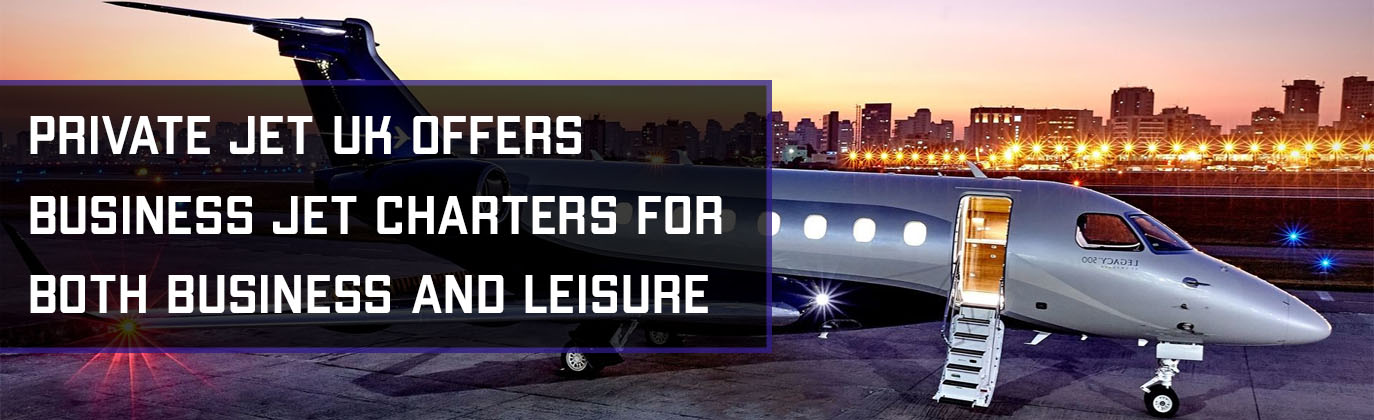
Prices for the private jet flights to the British Virgin Islands
Typical private jet charter prices from Britain to the islands, listed cheapest first. The cheaper rows are super-midsize jets that land on Beef Island after one stop in the Azores, and the dearer ones are heavy jets that fly non-stop to St Thomas in the US Virgin Islands, from where the last stretch is by helicopter, ferry or turboprop:
| Route | Aircraft | Price, one way |
|---|---|---|
| London Farnborough - Tortola (Beef Island) 3,841 nm / 7,114 km via the Azores |
Praetor 600 up to 9 |
from £60,400 |
| London Gatwick - Tortola (Beef Island) 3,858 nm / 7,145 km via the Azores |
Praetor 600 up to 9 |
from £60,700 |
| London Biggin Hill - Tortola (Beef Island) 3,870 nm / 7,167 km via the Azores |
Praetor 600 up to 9 |
from £60,850 |
| London Luton - Tortola (Beef Island) 3,874 nm / 7,175 km via the Azores |
Praetor 600 up to 9 |
from £60,900 |
| London Stansted - Tortola (Beef Island) 3,894 nm / 7,212 km via the Azores |
Praetor 600 up to 9 |
from £61,200 |
| Edinburgh - Tortola (Beef Island) 3,939 nm / 7,295 km via the Azores |
Praetor 600 up to 9 |
from £61,900 |
| Belfast - Tortola (Beef Island) 3,817 nm / 7,069 km via the Azores |
Challenger 350 up to 9 |
from £70,650 |
| London Farnborough - Tortola (Beef Island) 3,841 nm / 7,114 km via the Azores |
Challenger 350 up to 9 |
from £71,100 |
| Manchester - Tortola (Beef Island) 3,865 nm / 7,158 km via the Azores |
Challenger 350 up to 9 |
from £71,500 |
| Belfast - St Thomas 3,584 nm / 6,638 km, non-stop |
Falcon 900LX up to 12 |
from £89,800 |
| London Biggin Hill - St Thomas 3,762 nm / 6,967 km, non-stop |
Falcon 900LX up to 12 |
from £94,050 |
| London Farnborough - St Thomas 3,730 nm / 6,908 km, non-stop |
Global 6000 up to 13 |
from £101,900 |
| London Gatwick - St Thomas 3,752 nm / 6,949 km, non-stop |
Gulfstream G550 up to 16 |
from £107,300 |
Two things worth knowing about these figures
– The two routings are not the same trip. A Praetor 600 from Farnborough starts at £60,400 and puts you on the island of Tortola itself, while a Falcon 900LX from Biggin Hill is about £94,050 and a Gulfstream G650ER about £121,250 to St Thomas, and the transfer across the water is extra. The heavy jet buys time, space and a single hop. It does not buy a shorter path to your hotel, and for four people with ordinary luggage the smaller jet is the sensible choice;
– A one-way price carries the aircraft's journey home. The jet has to cross the Atlantic again whether it carries you or not, so a single outbound flight is priced close to half of a return trip and not as a bargain. A stay of ten days or two weeks booked as a return, or a flexible date that catches an empty leg, changes the arithmetic more than any negotiation can. Air Passenger Duty is charged per passenger on a departure from a British airport, by distance band, and we show it as a separate line in the quotation.
Private jet flights within the British Virgin Islands and to its neighbours
The territory is a scatter of islands, so the sectors we are asked for are short: out to Anegada, over to St Thomas and San Juan, and along the chain to Sint Maarten, St Kitts and Antigua. Virgin Gorda lies only seven nautical miles from Beef Island and is dealt with by helicopter or boat, not by a charter flight. These are the hops that follow a long-range arrival:
| Route | Aircraft | Flight time | Price, one way |
|---|---|---|---|
| Tortola - Anegada 22 nm / 41 km |
Pilatus PC-12 NGX up to 9 |
about 35 min | from £3,100 |
| Tortola - St Thomas 26 nm / 48 km |
Pilatus PC-12 NGX up to 9 |
about 35 min | from £3,100 |
| Tortola - San Juan 86 nm / 159 km |
Pilatus PC-12 NGX up to 9 |
about 50 min | from £3,100 |
| Tortola - Sint Maarten 89 nm / 165 km |
Pilatus PC-12 NGX up to 9 |
about 50 min | from £3,100 |
| Tortola - St Kitts 129 nm / 239 km |
Citation CJ4 Gen2 up to 8 |
about 45 min | from £5,950 |
| Tortola - Antigua 183 nm / 339 km |
Citation CJ4 Gen2 up to 8 |
about 55 min | from £5,950 |
Two things worth knowing about the island hops
– Several sectors here are cheaper and faster in a turboprop than in any jet, and a few are not worth a flight at all. Tortola to St Thomas is 26 nautical miles; the scheduled commuter flights and the ferries cover it, and a private charter makes sense mainly when the party has just landed from London and wants no queue. The long-range aircraft that brought you rarely makes these hops, because the island strips are too short for it;
– Every hop to another territory is an international arrival with customs and immigration at the other end. St Thomas and San Juan are United States soil, where British passengers need an approved ESTA or a visa, and Sint Maarten, St Kitts and Antigua are separate countries, so a day trip is planned like a border crossing and not like a taxi ride. Which operator may carry passengers between two airports outside its own state differs from place to place, and for regional hops we usually propose a locally based operator and confirm the permission in writing.
We can arrange the flights from any cities in the UK (England, Scotland, Wales and Northern Ireland) and European countries. Due to a large database of available business jets, we can help you find an optimal jet and crew. If you have any questions about the departure or the flight itself, you can ask them using the form below:
Prices depending on the type of business jet
We can clearly show the high dependence of the cost of the flight, on the type of aircraft - we have collected approximate data, at the price of 1 flight hour, for various types of business jets:

The cost per hour indicated in the table is preliminary and does not constitute an offer or a commercial offer. Exact prices are available from the managers of the company.
Online Calculator
If you want to make an urgent calculation of the cost of a private plane flight, use our online calculator. Just fill in all the fields of the form with a note that you are interested in a specific model of the aircraft and get the final price. NB! - the figures are sent to you by email or messenger, please carefully fill in the contact details to get the calculation.
All our calculations are as transparent as possible for you. After receiving the request, we will prepare a beautiful offer - where the costs and the final price will be clearly described. The exact price is agreed in advance and is written in the contract, so you can be sure of the final cost.
Private jets are ready to take off
Our database contains over 6,500 business jets (about 3,500 in Europe and 3,000 in the rest of the world) of different configurations and production years. The list of models is constantly updated. Unfortunately, we can't post a full list of available jets on our website due to confidentiality issues. Please contact the managers of the company for more accurate information. We will help you choose a suitable model taking into account your wishes. These are the typical choices for the British Virgin Islands:
Turboprops
The aircraft for the islands and not for the crossing. The Pilatus PC-12 and the King Air 350 sit comfortably on Beef Island and are the usual choice from St Thomas, San Juan, Sint Maarten and Antigua, and for Anegada, whose strip is listed at about 2,500 feet.
Light jets
They suit Beef Island well and the hops from the neighbouring gateways with four to six people. From Britain no light jet attempts the crossing, so we do not offer it.
Super-midsize
The class we offer for a landing on Beef Island itself. A Praetor 600 or a Challenger 350 makes the crossing with one stop in the Azores. Midsize jets such as the Citation XLS+ land there easily but cannot cross in two legs. The runway is at the upper edge of what the super-midsize jets are asked to do, so the operator confirms the performance for your date and load.
Heavy jets
A Challenger 605 or a Legacy 650 is comfortable for a family with staff, but the cabin is more than the runway on Beef Island wants. We fly this class to St Thomas or Sint Maarten and continue by a smaller aircraft.
Ultra-long range
The class that crosses in one hop, to St Thomas. A Falcon 900LX is the cheapest of these on the British run, with the Global and Gulfstream types faster and larger. None of them is a candidate for Beef Island.

Because the island hops are short and the crossing is long, a trip to the British Virgin Islands often involves two aircraft, or an aircraft and a helicopter. The first brings you from Britain and goes home or waits, and the second makes the last stretch. We name both when we quote.
How to book a private jet?
You can book a private jet flight to the British Virgin Islands in 6 easy steps:
- Flight request - indicating the route and your preferences for the model of business jet and other points.
- Coordination of flight details - our consultant will contact you to offer the possible flight options and answer all your questions.
- Commercial offer - we will send you a final offer on a specific model taking into account all your wishes.
- Signing of the contract.
- Payment for the flight and booking a business jet.
- Departure at the agreed time and date. Assistance during the whole flight.
In addition to renting the private jets and arranging the flights, we provide concierge services, premium transfer, security, exclusive catering, etc. We have learned to solve problems of any complexity, offering the service of the European level. Our experts will be happy to answer your questions and help you arrange your flight.
How to rent a business jet with a crew
5 main stages:
-

Sending an application
-

Clarification of details and search for options
-

Preparation and coordination of optimal options
-

Registration of documents. Payment of the invoice.
-

Departure on the route.
Business aviation airports in the British Virgin Islands
Only one airport in the territory has the runway and the officers for an international private flight, and its neighbours do the work of the large aircraft. Beef Island is the airfield we land on; the others are the places a bigger jet stops at, or the fields a turboprop reaches:
| Airport | Ground | How it operates |
|---|---|---|
| Terrance B. Lettsome International EIS / TUPJ |
Beef Island, joined to Tortola by the Queen Elizabeth II Bridge; about 15 km east of Road Town and roughly 15 minutes by road | The territory's only international gateway for jets, with customs and immigration in the terminal. One asphalt runway, 07/25, listed at 4,646 by 98 feet with an elevation of 16 feet, which handler sheets say limits it to light and midsize jets. Jet A is sold, fire cover is listed as category 5, approaches are visual, and slots and mandatory handling are not listed. Four handlers work on the field: Airport Services BVI, IAM Jet Centre Tortola, Signature Flight Support and Platinum Port Services. Hours need care: handler sheets give 07:00 to 21:00 local time with no night operations after 21:00, while an airport directory gives shorter weekday hours and prior permission for the rest |
| Virgin Gorda VIJ / TUPW |
Spanish Town, Virgin Gorda | A strip of about 3,100 feet, sand and gravel, with an operator list approved by the regulator. It serves commuter aircraft and on-demand island charters and is not an airport for jets |
| Auguste George NGD / TUPA |
Anegada, the northernmost island | A paved runway of about 2,500 feet served by the scheduled island carrier and by on-demand operators from Beef Island, Virgin Gorda, St Thomas, San Juan, Antigua and Sint Maarten. A turboprop airfield |
| St Thomas Cyril E. King STT / TIST |
Charlotte Amalie, US Virgin Islands, 26 nautical miles to the south-west of Beef Island | The practical gateway for heavy and ultra-long-range jets. A runway of about 7,000 feet that takes aircraft up to the Gulfstream G550 and the Challenger 604, two handlers (Signature St Thomas and Standard Aviation) and United States customs on site. Ramp space is limited and the airport is congested from December to March, so parking is requested with the flight |
| San Juan Luis Munoz Marin SJU / TJSJ |
Puerto Rico, 86 nautical miles to the west of Beef Island | A large United States airport and the busiest connecting point for scheduled island flights into Tortola and Virgin Gorda. We use it when the aircraft or the party comes from the American side |
| Sint Maarten Princess Juliana SXM / TNCM |
89 nautical miles to the east of Beef Island | A large international airport outside the United States, which is the reason to choose it over St Thomas for a party that wants to avoid a US entry. The last stretch to Tortola is a turboprop or a helicopter |
| Antigua V. C. Bird ANU / TAPA |
183 nautical miles to the south-east of Beef Island | Another airport outside the United States that takes every aircraft type, and the southern gateway for a party that carries on down the chain |
Four points settle most arrivals before a quote goes out:
Beef Island: performance first
We ask the operator for a landing and departure calculation for your aircraft, load and date before anything is promised. The strip is short, the afternoons are hot, and a transatlantic fuel load on departure is the hard case.
Daylight and the 21:00 line
Handler sheets list no night operations after 21:00 local time. A crossing that runs late in the Azores can leave a jet unable to land, so the departure from Britain is planned to arrive in the afternoon, not the evening.
St Thomas: ramp space and December to March
Peak traffic runs from December into March and the apron is small, so the handler and the parking request go in with the flight details. Customs there are American, whatever the next hop.
Two clearances for a two-island arrival
A party that lands at St Thomas and then crosses to Tortola passes through United States entry first and British Virgin Islands entry second, each with its own form and its own officers. We tell every passenger which documents go with which stop.
Customs on Beef Island and the clock on your wrist
Handler sheets for Beef Island show customs and immigration in the terminal. The published hours do not agree: a directory entry shows weekday opening from about 08:30 to 16:30 local time and prior permission outside it, while the handlers publish 07:00 to 21:00. We settle the officers' availability with the handler and in writing before the aircraft leaves Britain, and an arrival at the edge of the day is agreed in advance. All times here are local time in the islands.
Arriving from Britain: passports, customs and what to carry
The British Virgin Islands are a British Overseas Territory, not part of the United Kingdom, and they run their own immigration and customs. A private flight from London arrives as an international flight, and everyone on board clears immigration and customs at the first British Virgin Islands airport it reaches.
your passport must be valid for the whole of the stay; British citizens may visit without a visa for up to one month and receive an entry stamp, and extensions of up to six months are granted by the Chief Immigration Officerevery passenger, children included
officers may ask for evidence of funds, accommodation and plans to leave, so an address for the stay and the aircraft's departure plan are carriedin the papers
all travellers complete an online embarkation card, which can be filled in up to 72 hours before arrival; the paper form has been replacedonline, before the flight
a small environmental and tourism levy is paid on arrival, and air passengers pay a departure tax of about £40, which on a private flight is shown by the handlerask the handler
prohibited, taxed or dutiable goods are declared; plants, agricultural products and animals need a permit, and cash or cheques above about £7,500 are declareddeclare when in doubt
The St Thomas route and the way home
If the jet lands in St Thomas, the first entry is into the United States. British citizens need an approved ESTA or a visa for that, with a passport valid for the stay, and the check must be done before departure from Britain, not at the airport. After that the party crosses to Tortola by helicopter, turboprop or ferry and enters the British Virgin Islands. The ferry from Charlotte Amalie takes about 45 minutes to West End and about an hour to Road Town, runs in daylight only, with the last departures typically around half past four or five in the afternoon, which is why a late arrival at St Thomas often means a night there.
Coming home is a flight into Britain from outside the country. A General Aviation Report goes to the border authorities not earlier than 48 hours and not later than two hours before departure, and British and Irish citizens need no electronic travel authorisation, while most other nationalities do.

Which airport for which part of the British Virgin Islands
The airport is settled by one address: a villa above Cane Garden Bay, a berth at a marina on Tortola's south coast, a resort on Virgin Gorda or a beach bar on Anegada. These are the usual pairings:
the capital and most of the island's hotels, villas and marinas are about 15 minutes from the airport by road over the Queen Elizabeth II Bridge, with taxis at the terminalBeef Island
under 15 minutes by helicopter from Beef Island, or a ferry from Trellis Bay beside the airport; the strip on the island itself is for small aircraftBeef Island, then helicopter or boat
a private resort at the eastern end of Virgin Gorda with its own heliport, reached by helicopter from Beef Island or St Thomas, or by a ferry of about 35 minutes from Trellis Bay, and with customs and immigration handled on siteBeef Island or St Thomas, then helicopter
a flat coral island to the north with a 2,500-foot airstrip; the usual route is a turboprop from Beef Island, or a boatBeef Island, then turboprop
reached by ferry or charter boat from Tortola; the same goes for Peter IslandBeef Island, then boat
89, 183 and 86 nautical miles away, the usual gateways for a party that continues on a regional tour or comes in from the American sidetheir own airports, then onward
The British Virgin Islands: what our clients go for
Boats first. The territory has been a sailing destination for a long time, with sheltered water, steady trade winds and anchorages a few miles apart, and much of the demand we see for jets is a crew, an owner or a charter party joining a yacht. Guests often fly in at the weekend for a week's charter, and the same aircraft or another one takes the previous party home.
The shore side is the second reason. Tortola is the largest island and holds the capital, Road Town, most of the hotels and the marinas. Virgin Gorda has the granite boulders and pools called The Baths and a handful of resorts, among them Oil Nut Bay at its eastern end. Anegada, low and ringed with reef, is known for its long beaches and its lobster. Jost Van Dyke is a small island with beach bars and a well-known New Year party.
Behind the visitors lies a small society. The territory counts about 39,000 people on some 153 square kilometres, with more than fifty islands and cays, about sixteen of them inhabited. English is the official language and the US dollar is the currency. Tourism supplies roughly two-fifths of economic output, and financial services, chiefly company registration, bring in more than half of government income, so part of the traffic through the airport is business and not holiday.
Hurricane Irma, which struck in early September and damaged Tortola badly, is mentioned here for one reason: a hurricane is the single event that closes an airport for days, and it explains our advice on dates later in this page.
The year in the British Virgin Islands: charter season and hurricane months
The islands have a long dry high season, a short shoulder at each end of it, and a hurricane season that takes up the autumn:
the high season, with full charter fleets, full ferry timetables and almost no rain; March is the busiest month, and highs stay around 29 degreespeak
crowds thin and prices drop, and June is a quiet transition month; highs rise to about 31 degrees in Juneshoulder
the Atlantic hurricane season, which peaks from August to October; September has the fewest visitors, and some charters, hotels and beach bars reduce their hours or closelow season, hurricane risk
the trade winds keep the temperature within a narrow band, and the sea stays warm enough to swim in every monthsteady
The best weeks are also the dearest weeks
Christmas, Old Year's Night and the spring regatta are the dates when demand is highest, and the apron at St Thomas fills together with the one on Beef Island. The figures on this page describe an ordinary week, with a Falcon 900LX from Biggin Hill to St Thomas at £94,050 one way, and a holiday week is booked as early as the dates are known. In hurricane months a storm can close an airport and delay recovery for some time, so we keep dates flexible and avoid tight connections.
The British Virgin Islands calendar: Easter, the regatta and the festivals
The dated events fall into two groups, sailing and island culture, and several of them fill the airport apron and the ferries together:
What a festival does to a flight plan
The spring regatta and the New Year weeks bring owners, crews and guests in the same days, so the apron on Beef Island is full and a heavier jet is parked at St Thomas or Sint Maarten. We book the parking with the flight, name the aircraft that will take you home, and warn clients whose plans are loose that a dated event is the worst week to ask for an aircraft at short notice.
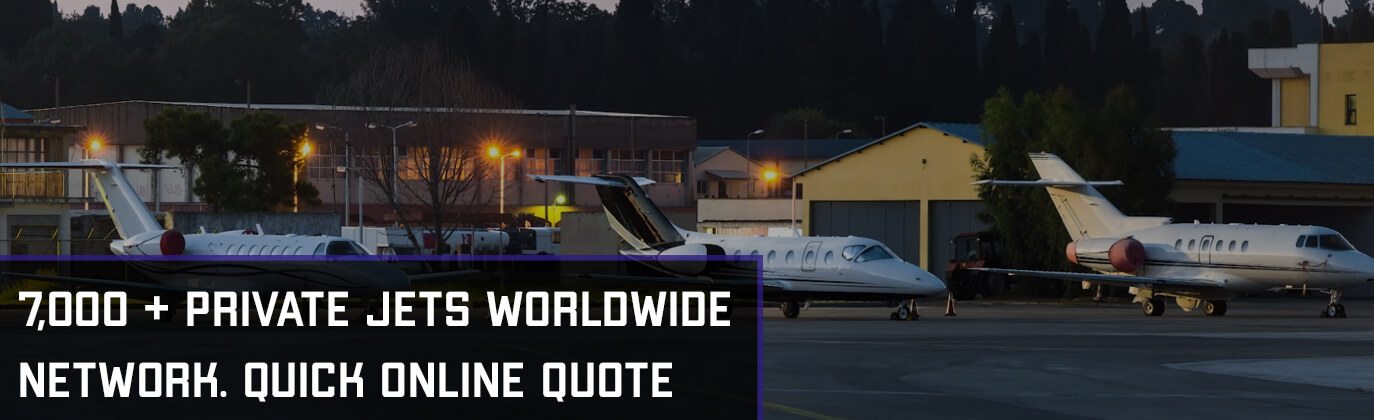
Flying to the British Virgin Islands with a dog or a cat
A dog or cat travels in the cabin, and the paperwork is neither the European set nor an American one. The territory issues an import licence for each animal, the British export certificate is checked against it, and the order in which the steps are taken matters more than the list.
The one fact to read before you book
The British Virgin Islands require an import licence from the Department of Agriculture in Tortola, and the Veterinary Division must be told the date of arrival at least 24 hours ahead. Each animal travels with a British export health certificate completed by an Official Veterinarian, who examines it not more than 48 hours before export, and the animal must have lived in Great Britain for at least six months or since birth. The certificate is typically valid for seven days. The government guidance we have is old, so the licence conditions are re-confirmed with the Veterinary Division for each animal.
On the way home the rule is British. The islands are a listed territory, so the animal returns with a Great Britain pet health certificate, and a dog must be treated against tapeworm by a vet no less than 24 hours and no more than 120 hours before landing in Britain. An animal without the right paperwork can be held in quarantine for up to four months.
- A licence from the Department of Agriculture, applied for well before the date and carried with the certificate;
- A dog vaccinated against parvovirus, distemper, hepatitis, parainfluenza and leptospirosis, with the date of each vaccination recorded, and a cat vaccinated against panleukopenia, rhinotracheitis, calicivirus and feline leukaemia;
- Treatment against internal and external parasites within 96 hours before export, noted on the certificate, plus an ISO microchip and a current rabies vaccination, which the destination typically asks to see;
- Entry through Terrance B. Lettsome International Airport on Beef Island, the airport listed for animals arriving by air;
- For a dog, the tapeworm treatment described above, timed so that the dog lands back in Britain inside the window.
A dog or cat that lands first at St Thomas enters the United States, which has its own rules for dogs and its own officers, so we normally keep an animal on the aircraft that lands on Beef Island and do not route it through US soil without checking. Wolf hybrids and early-generation Savannah and Bengal cats are listed as excluded by one source, and we tell the handler in advance and confirm in writing the airport and the paperwork for the animal.
Requirements for birds, rabbits and the less usual species, along with the countries where the timeline runs to months, are set out on our flying with pets guide.
Empty Legs
An empty leg is a repositioning flight with nobody aboard, offered at a fraction of the usual price. The islands produce more than most places, because a charter there is one-way by nature and the aircraft has to cross an ocean to get home or to find its next client.
Where empty legs to and from the islands come from
– The start of the high season in December and the weeks after Christmas, when aircraft cross from Britain with a full cabin and head home empty, or are sent out empty to collect guests travelling the other way;
– The end of the high season, from April into May, when aircraft that spent the winter in the Caribbean are sent back to Europe or up to Florida, and the legs are offered at the last minute;
– The festival and regatta weeks, when a heavy jet arrives with an owner's party, parks at St Thomas or on another island and flies home empty a day or two later.
A client who can offer a few days has a far better chance of a match, though the operator owns the date and a leg can disappear when the original booking changes. Legs from the Caribbean often point to Florida and Puerto Rico as well as to Britain and Europe, so a flexible destination helps too. Whatever is free is listed on our empty legs page. A selection of empty legs on the British Virgin Islands runs follows:
| Route | Aircraft | Capacity | Whole aircraft |
|---|---|---|---|
| Tortola - UK (London Farnborough) | Praetor 600 | 9 seats | £25,350 |
| UK (London Gatwick) - Tortola | Praetor 600 | 9 seats | £25,500 |
| Tortola - UK (London Luton) | Praetor 600 | 9 seats | £25,600 |
| UK (Belfast) - Tortola | Challenger 350 | 9 seats | £29,650 |
| St Thomas - UK (Belfast) | Falcon 900LX | 12 seats | £37,700 |
| UK (London Biggin Hill) - St Thomas | Falcon 900LX | 12 seats | £39,500 |
| St Thomas - UK (London Farnborough) | Global 6000 | 13 seats | £42,800 |
| UK (London Gatwick) - St Thomas | Gulfstream G550 | 16 seats | £45,050 |
How to read those figures
– Each price is for the whole aircraft rather than per seat. A Falcon 900LX leg of £37,700 with eight aboard works out at about £4,710 a head, and the whole leg costs about two-fifths of a fresh one-way charter on the same sector;
– Empty legs on these routes are less regular than those on a busy European corridor and cluster around the season dates, so an open date helps more than anything. A leg to St Thomas also needs the transfer to Tortola, which is not part of the price.

Helicopter charter
The helicopter is how a party that has landed at St Thomas, or on Beef Island, reaches a resort that has no road. Caribbean Buzz Helicopters flies airport transfers between Beef Island and St Thomas and runs flights to the heliport at Oil Nut Bay on Virgin Gorda from Beef Island, St Thomas and San Juan, with customs and immigration handled on site at the resort. Signature's data sheet puts the hop from Beef Island to Virgin Gorda at under fifteen minutes. We price each movement separately and the operator confirms the route:
from Beef Island to the resorts of the east; the shortest transfer on the listabout 10 min
the flat island to the north, which a turboprop also servesabout 20 min
the transfer between the American gateway and the British sideabout 20 min
the longest regular transfer, for parties that arrive on the American sideabout 55 min
The times are straight-line estimates at a cruise of about 115 knots, plus the time to start up and land. A pilot may choose another route for weather, and the operator confirms the times for your date.
Two points on Caribbean rotary legs
A landing away from an airport or a listed heliport, whether at a villa, a beach bar or a boat, needs a landing site agreed in advance, and a landing that crosses between territories brings customs and immigration with it. In the high season the seats go first, so the helicopter and the jet are best booked as one trip.

Flights from the UK to the British Virgin Islands
We fly this corridor from every British airfield in the list below, and the price table higher up covers thirteen of those pairings. Our clients have access to all airports of the UK and Europe. Due to the unique partnership conditions, we can offer our clients the best prices for business aviation services. Our experts will consult you on the availability of private jets in a particular city and help you choose the best option.
List of TOP 25 business aviation airports:
| Airport | Country | ICAO | IATA |
|---|---|---|---|
 London Heathrow Airport |
England | EGLL | LHR |
| Birmingham Airport |
England | EGBB | BHX |
| London Gatwick |
England | EGKK | LGW |
| London City Airport |
England | EGLC | LCY |
| London Luton |
England | EGGW | LTN |
| Edinburgh Airport |
Scotland | EGPH | EDI |
| Leeds Airport |
England | EGNM | LBA |
| Manchester Airport |
England | EGCC | MAN |
| London Stansted |
England | EGSS | STN |
| Liverpool John Lennon Airport |
England | EGGP | LPL |
| Newcastle Airport |
England | EGNT | NCL |
| Bristol Airport |
England | EGGD | BRS |
| Glasgow Airport |
Scotland | EGPF | GLA |
| East Midlands Airport |
England | EGNX | EMA |
| Southampton Airport |
England | EGHI | SOU |
| Jersey Airport |
Channel Islands | EGJJ | JER |
| Cardiff International Airport |
Wales | EGFF | CWL |
| Inverness Airport |
Scotland | EGPE | INV |
| Bournemouth Airport |
England | EGHH | BOH |
| London Farnborough Airport |
England | EGLF | FAB |
| Oxford Airport |
England | EGTK | OXF |
| London Biggin Hill |
England | EGKB | BQH |
| Belfast Airport |
Northern Ireland | EGAA | BFS |
| Gibraltar Airport |
Gibraltar | LXGB | GIB |
| Aberdeen Airport |
Scotland | EGPD | ABZ |
British Virgin Islands charters from the booking notes: six typical trips
Six typical jobs put together from booking notes with the particulars changed, so none describes one named client or date.
CHRISTMAS · A FAMILY OF SIX
Ten days at a villa on Tortola
Farnborough - Tortola via the Azores, Praetor 600, about 9 h 20 min plus the stop · 6 pax
The family left on the Saturday before Christmas and the aircraft stopped at Santa Maria for fuel and an hour on the ground, arriving on Beef Island in the afternoon with daylight to spare. The jet went to St Thomas to wait out the holiday and the return was booked as a separate one-way a week and a half later.
SPRING REGATTA · AN OWNER
A non-stop crossing and a helicopter to the boat
Biggin Hill - St Thomas, Falcon 900LX, about 9 h 10 min · 4 pax
The owner wanted no stop and a heavy cabin, so the jet landed at St Thomas, where the party cleared United States entry on an approved ESTA. A helicopter took them across to Beef Island and the yacht, and the jet stayed on the American side for the week.
VIRGIN GORDA · A RESORT STAY
Four guests and a short hop east
Beef Island - Oil Nut Bay, helicopter, about 10 min · 4 pax
The party had landed on Beef Island from London and went straight to the resort by helicopter, where customs and immigration were handled on site, so the party never joined a queue at the terminal.
ANEGADA · A LOBSTER LUNCH
Four guests and a flat island
Tortola - Anegada, Pilatus PC-12 NGX, about 35 min · 4 pax
The party flew over in the morning, ate on the beach and came back before the light went, since the strip is short and daylight is the safe margin.
WITH THE DOG · A LICENCE FIRST
A couple, a labrador and a month in the sun
Farnborough - Tortola via the Azores, Praetor 600, about 9 h 20 min plus the stop · 2 pax + dog
The import licence was requested three weeks ahead and the Official Veterinarian completed the certificate to match it, within 48 hours of the flight. A local vet gave the tapeworm treatment the day before the flight home, inside the window of 24 to 120 hours.
EMPTY LEG · THE END OF THE SEASON
A flexible return to Belfast
Tortola - Belfast, Challenger 350 empty leg, about 7 h 45 min plus the stop · 3 pax
The client gave us a window of four days instead of a date, which is what makes these work, and paid about £29,650, well under half of a fresh one-way charter on the same sector, for a Thursday departure.
Frequently asked questions about flying to the British Virgin Islands
1How long does it take to fly to the British Virgin Islands by private jet?
About 9 hours 10 minutes non-stop from a London airfield to St Thomas in a Falcon 900LX, and about 9 hours 20 minutes in a Praetor 600 to Beef Island plus about an hour on the ground in the Azores. The way home is shorter with the jet stream behind the aircraft. The islands are four hours behind Britain in winter and five in summer.
2How much does a private jet to the British Virgin Islands cost?
From about £60,400 one way from Farnborough in a Praetor 600 with a stop in the Azores, landing on Beef Island. A Falcon 900LX non-stop from Biggin Hill to St Thomas is about £94,050, and a Gulfstream G650ER about £121,250, with the transfer to Tortola extra. Air Passenger Duty is charged per passenger on a departure from a British airport and is shown as a separate line in the quotation.
3Which airports do private jets use in the British Virgin Islands?
Terrance B. Lettsome International (EIS, TUPJ) on Beef Island is the only international gateway, with customs and immigration in the terminal and four handlers. Its runway of about 4,645 feet limits it to light and midsize jets, so heavy and ultra-long-range jets normally land at St Thomas (STT) or Sint Maarten (SXM) and continue by turboprop, helicopter or ferry.
4What are the passport and customs rules for a private flight from Britain to the British Virgin Islands?
British citizens need no visa for a visit of up to one month, and the passport must be valid for the whole stay. All travellers complete an online embarkation card up to 72 hours before arrival. Prohibited, taxed or dutiable goods are declared. A landing at St Thomas is a United States entry, for which British citizens need an approved ESTA or a visa.
5Can I take my dog or cat on a private jet to the British Virgin Islands?
Yes, with an import licence from the Department of Agriculture, a certificate completed by an Official Veterinarian within 48 hours before export, and notice to the Veterinary Division at least 24 hours before arrival. On the way home a dog needs a tapeworm treatment between 24 and 120 hours before landing in Britain.
6When is the best time to fly to the British Virgin Islands, and how early should I book?
Early December to late May is the high season, with March the busiest month. The Atlantic hurricane season runs from June to November and peaks from August to October, when some charters and hotels reduce their hours. Book as early as the dates are known for Christmas, Old Year's Night and the spring regatta.