


Charter an Israel IAI-1124 Westwind II


- Availability: Available for rent
Request aircraft information
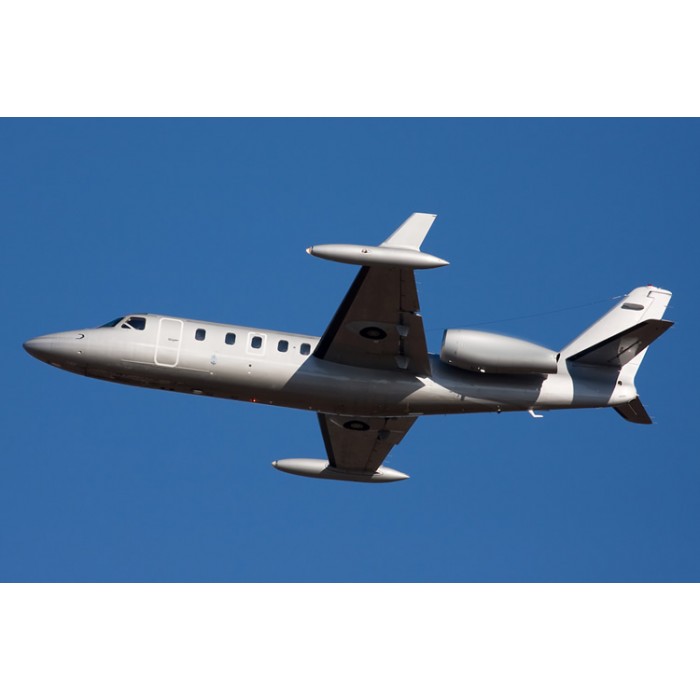
The Israel IAI-1124 Westwind II is the final and most refined variant of the IAI Westwind family - a business jet whose lineage begins with the Aero Commander 1121 Jet Commander, first flown on January 27, 1963. Wikipedia confirmed the programme "was bought by Israel Aircraft Industries (IAI) in 1968, which stretched it slightly into the 1123 Westwind, and then re-engined it with Garrett TFE731 turbofans into the 1124 Westwind." The Westwind II (model 1124A) was introduced in 1980 as the definitive production variant, with Quantum Jets confirming that it "features the distinctive mid-wing configuration with engines mounted high and far back on the fuselage to keep noise away from the cabin" and the addition of winglets on the tip tanks for improved fuel efficiency and range. IAI built its last Westwind in 1987 after a total of 442 Jet Commander and Westwind aircraft were produced across both the US and Israel, before production switched to the IAI 1125 Astra. Wikipedia confirmed the aircraft's Garrett (later Honeywell) TFE731 turbofan engines were a significant upgrade over the original General Electric CJ610 turbojet powerplants - improving fuel efficiency and increasing available thrust. Quantum Jets confirmed the Westwind II "represents foundational Israeli aerospace heritage and the predecessor to the entire Astra/G100 platform lineage" - a line that eventually became the Gulfstream G100 after Gulfstream acquired IAI's executive jet division in 2001.
The Israel IAI-1124 Westwind II is a light-to-midsize business jet accommodating up to 7 or 8 passengers in a pressurised cabin measuring 4.72 m (15.5 ft) long, 1.46 m (4.8 ft) wide and 1.49 m (4.9 ft) high. FlyCraft confirmed the typical interior as "a four-seat club and a three-seat, side-facing divan, with a galley/refreshment centre and a full-width lavatory." Quantum Jets confirmed seats-full range of 2,096 nm (3,881 km) at long-range cruise and a service ceiling of 45,000 ft (13,716 m). The Westwind II is a vintage aircraft produced between 1980 and 1987; examples on the charter market will typically have been retrofitted with modern GPS and ADS-B Out avionics. Charter prices start from approximately £2,800 per flight hour. For a full overview of aircraft categories, see our private jet price guide or browse the complete fleet.

Why charter the Israel IAI-1124 Westwind II?
- 45,000 ft (13,716 m) service ceiling - higher than most light and midsize jets in the charter market; the Westwind II routinely cruises above commercial airline traffic and most turbulence, with a climb rate of 3,200 feet per minute confirmed by Jet Advisors. Jet Advisors confirmed the Westwind II service ceiling of 45,000 ft and "a rate of climb of 3,200 feet per minute." Wikipedia confirmed the 45,000 ft ceiling applies "with passengers" - not a reduced ferry-only figure. This ceiling places the Westwind II above the standard FL350 or FL410 of most charter-market light jets, above the cruise altitudes of most commercial airliners, and at a level where turbulence is significantly reduced on European sector weather. For a charter client comparing light jets at similar hourly rates, the Westwind II's 45,000 ft capability is an operational differentiator available in few aircraft at this price point;
- Distinctive mid-wing configuration with engines mounted high on the rear fuselage - structurally unique in the current charter market; the engine position keeps exhaust noise away from the cabin, and the mid-wing provides an unobstructed lower-fuselage view from passenger windows unavailable in conventional low-wing jets. Quantum Jets confirmed the Westwind II "features the distinctive mid-wing configuration with engines mounted high and far back on the fuselage to keep noise away from the cabin." Wikipedia confirmed this mid-wing design traces directly to the original Aero Commander 1121 Jet Commander of 1963, making it one of the oldest surviving business jet configurations in active charter use. The high rear-fuselage engine mounting means exhaust noise passes over and behind the cabin rather than through the fuselage walls, producing a quieter passenger environment than some contemporary rear-engined designs with lower-mounted nacelles;
- Two Honeywell TFE731-3-1G turbofan engines at 3,700 lbf (16.5 kN) each - the same TFE731 engine family that powers the Hawker 800XP, Learjet 45 and Falcon 20; a well-supported engine with 4,200-hour inspection intervals and Honeywell global MRO network. Grokipedia confirmed the Westwind II is "powered by two Honeywell TFE731-3-1G turbofan engines, each providing 16.5 kN (3,700 lbf) of thrust." FlyCraft confirmed "the inspection interval is 4,200 hours." The TFE731 is one of the most widely deployed small turbofan engines in business aviation, confirmed by Quantum Jets as "one of the most successful small business jet engine programs." For charter clients considering the operational reliability of a vintage aircraft, the TFE731 powerplant provides broad MRO coverage and parts availability that older turbojet-powered aircraft of the same era cannot match;
- Winglets added in the 1980 Westwind II upgrade - an aerodynamic refinement that increased range and fuel efficiency versus the original Westwind I; the Westwind II is the only variant with winglets as standard, making it the longest-range and most fuel-efficient version of the 1124 family. Wikipedia confirmed the 1124A Westwind II incorporated "winglets on the wing tip tanks" as the primary external distinction from the 1124 Westwind I. Quantum Jets confirmed this translated to the Westwind II's 2,096 nm seats-full range versus shorter range on the earlier Westwind I. The winglets - mounted on the existing tip tanks that were a feature of all 1124 series aircraft - reduced induced drag at cruise, the same aerodynamic principle that Aviation Partners later applied to the Boeing BBJ family. For a charter client choosing between Westwind variants, the II designation specifically indicates the improved winglet-equipped aircraft;
- 442 total aircraft produced across the Jet Commander and Westwind family from 1965 to 1987; predecessor to the entire IAI Astra / Gulfstream G100 platform; Gulfstream acquired IAI's executive jet division in 2001, providing continued factory-lineage parts and engineering support for surviving Westwind II aircraft. Wikipedia confirmed "442 were produced until 1987" across all Jet Commander and Westwind variants combined. Quantum Jets confirmed "Gulfstream acquired IAI's executive jet division in 2001 and provides parts and engineering support for the Westwind family through this acquisition." For a vintage aircraft produced between 1980 and 1987, the Gulfstream parts support network provides a level of manufacturer-lineage backing unusual for an aircraft of this age. Specialty operators and Westwind-specific MRO facilities further support the type in Europe and the US;
- Entry-level charter pricing for a pressurised jet with 2,096 nm range, 45,000 ft ceiling and seven-passenger capacity - the Westwind II offers the performance envelope of a midsize jet at a price point closer to a light jet, making it one of the most cost-efficient options for 4 to 7 passengers on European and short-haul sectors. FlyCraft confirmed charter rates starting at approximately $3,500 per hour. At 7 passengers at £2,800/hr, the per-person cost on a London to Geneva sector (approximately 1 hour 20 minutes) is approximately £530 per person - approaching the boundary between private and premium commercial travel. For smaller groups of 3 to 4 passengers on Paris, Amsterdam or Edinburgh day trips, the Westwind II delivers a genuine pressurised jet experience at one of the lowest available charter rates in the fleet.

Charter cost - Israel IAI-1124 Westwind II prices from UK airports
The Westwind II is one of the most affordable pressurised jets available in the charter market, reflecting its vintage production run (1980-1987) and relatively compact cabin. Hourly rates run from approximately £2,800 to £3,500 per flight hour depending on the specific aircraft, operator, and sector. On shorter European sectors, quoted prices include positioning fees, handling charges and minimum booking time, so the all-in cost will typically exceed the hourly rate multiplied by block time alone. Indicative one-way prices from UK airports:
- London to Paris - from £5,500 (7 passengers, approximately 1 hour 10 minutes);
- London to Amsterdam - from £5,200 (7 passengers, approximately 55 minutes);
- London to Edinburgh - from £5,000 (7 passengers, approximately 1 hour);
- London to Geneva - from £6,500 (7 passengers, approximately 1 hour 25 minutes);
- London to Dublin - from £4,800 (7 passengers, approximately 55 minutes);
- London to Madrid - from £8,500 (7 passengers, approximately 2 hours 15 minutes);
- London to Guernsey - from £4,200 (7 passengers, approximately 45 minutes).
Empty Leg flights appear on repositioning routes. See our Empty Legs page for current availability.

Ideal routes for the Israel IAI-1124 Westwind II
The Westwind II performs best on short-to-medium European sectors where its entry-level pricing, 45,000 ft ceiling and 7-passenger capacity deliver genuine value for small groups. Its seats-full range of 2,096 nm covers all UK domestic routes and the entire near-Continent; Dubai and transatlantic sectors are outside its practical range:
- UK domestic and Channel Islands (30 to 90 minutes). London to Edinburgh, London to Dublin, London to Belfast and London to Guernsey are all well within range. For groups of 4 to 7 flying on UK sectors, the Westwind II delivers a private jet experience - private terminal, flexible departure, no airport queues - at some of the lowest available charter rates in the fleet. The 45,000 ft ceiling is particularly useful on UK sectors where weather at lower altitudes frequently forces turboprop and lighter jet traffic to hold or divert;
- UK to near-Continent day trips (1 to 2.5 hours). Paris, Amsterdam, Geneva and Madrid are all within single-sector reach. The Westwind II's 436-knot maximum cruise confirmed by FlyCraft means Geneva in under 1 hour 30 minutes and Paris in under 1 hour 15 minutes from London. For a same-day corporate return - London to Paris for a morning meeting and back by early evening - the Westwind II provides the speed and flexibility of a private jet at an hourly rate that makes the economics viable for groups as small as 3 to 4 passengers;
- Small corporate groups of 3 to 7 where per-person cost efficiency is the primary brief. At 7 passengers at £2,800/hr on London to Amsterdam (approximately 55 minutes), the per-person all-in cost including positioning is approximately £850 - comparable to a business class commercial airline return on the same route, with the benefit of a private terminal, flexible scheduling and no airport queues. For corporate charters where the group is too small to justify a larger midsize jet but where a turboprop is not appropriate, the Westwind II occupies the correct price point;
- Leisure travel to ski resorts and short European leisure destinations (1 to 2 hours). Geneva for the Alps, Guernsey for Channel Islands leisure, and similar short-sector leisure routes suit the Westwind II's cabin format - a four-seat club plus three-seat divan with galley and lavatory, adequate for groups travelling for a weekend or a week. The side-facing divan confirmed by FlyCraft gives the Westwind II a slightly more informal, lounge-style seating option than a strictly facing-seats light jet;
- Sectors up to 2,096 nm (3,881 km) where maximum range is required. The Westwind II's seats-full range covers southern Spain (approximately 900 nm), the Canary Islands (approximately 1,600 nm from London), Marrakech (approximately 1,350 nm) and parts of Scandinavia. For charter clients who need to reach destinations beyond the typical 800 nm European cluster, the Westwind II's 2,096 nm range exceeds that of many light jets at a comparable charter rate. Note: Dubai (approximately 3,000 nm) and transatlantic destinations significantly exceed the Westwind II's practical range and require a different aircraft type.

Cabin and in-flight experience
The Westwind II cabin measures 4.72 m (15.5 ft) in length, 1.46 m (4.8 ft) in width and 1.49 m (4.9 ft) in height - a compact but pressurised environment typical of light-to-midsize jets of the early 1980s. The cabin height of 1.49 m means the aircraft is not a stand-up cabin: passengers will need to be seated or stoop when moving through the interior. Grokipedia confirmed total cabin volume of "8.41 m3 (297 cu ft)." FlyCraft confirmed the standard interior as "a four-seat club and a three-seat, side-facing divan, across from which is a galley/refreshment centre; a full-width lavatory is also a cabin feature." The typical 7-passenger configuration leaves the interior relatively comfortable for European sector durations of 1 to 2.5 hours. The mid-wing, high-rear-engine configuration means engine noise passes above and behind the cabin rather than through the fuselage walls, producing a quieter environment than some comparably-priced rear-engined light jets. Most Westwind II aircraft on the charter market have been retrofitted with modern avionics: Quantum Jets confirmed "most surviving aircraft have been retrofitted with modern GPS systems, ADS-B Out compliance modifications, and sometimes Garmin G500 or similar glass-panel retrofits." Baggage capacity totals 1.39 m3 (49 cu ft) across internal and external compartments confirmed by Grokipedia.
Technical specifications
| Manufacturer | Israel Aircraft Industries (IAI), Israel |
| Origin | Aero Commander 1121 Jet Commander (USA, 1963); acquired by IAI 1968 |
| Westwind II introduced | 1980 (winglets, improved wing section) |
| Production | 1980-1987; 442 total Jet Commander and Westwind family |
| Aircraft class | Light-to-midsize business jet |
| Engines | 2 x Honeywell TFE731-3-1G turbofan, 3,700 lbf (16.5 kN) each |
| Engine inspection interval | 4,200 hours |
| Maximum cruise speed | 436 ktas (807 km/h / Mach 0.76) |
| Long-range cruise speed | 424 ktas (785 km/h) |
| Range (seats full) | 2,096 nm (3,881 km) |
| Range (ferry / optimum) | up to 2,536 nm (4,697 km) |
| Service ceiling | 45,000 ft (13,716 m) |
| Rate of climb | 3,200 ft/min |
| MTOW | 10,659 kg (23,500 lb) |
| Passengers | Typically 7; up to 8 |
| Cabin length | 4.72 m (15.5 ft) |
| Cabin width | 1.46 m (4.8 ft) |
| Cabin height | 1.49 m (4.9 ft); not a stand-up cabin |
| Cabin volume | 8.41 m3 (297 cu ft) |
| Baggage capacity | 1.39 m3 (49 cu ft) total; 0.25 m3 internal + 1.13 m3 external |
| Wingspan | 13.65 m (44.8 ft) |
| Aircraft length | 15.93 m (52.3 ft) |
| Aircraft height | 4.81 m (15.8 ft) |
| Wing configuration | Mid-wing with tip tanks and winglets (Westwind II) |
| Avionics | Collins FMS90 FMS; dual Collins VHF-20A; dual VIR-30A; typically retrofitted with GPS and ADS-B Out |
| Successor | IAI 1125 Astra (1987); Gulfstream G100 (via IAI acquisition 2001) |

Israel IAI-1124 Westwind II vs similar aircraft
- Westwind II vs Learjet 35. The Learjet 35 is a direct contemporary light jet also produced from the mid-1970s into the 1980s, with comparable range (approximately 2,300 nm), up to 8 passengers and similar hourly charter rates of approximately £2,500-3,000/hr. The Westwind II counters with a 45,000 ft ceiling matching the Learjet 35's altitude capability, a slightly wider cabin (1.46 m vs Learjet 35's 1.45 m), and the distinctive mid-wing configuration that positions engine noise above and behind the passenger cabin. The Learjet 35 counters with marginally higher top speed, a larger installed base in the European charter market, and wider parts availability. Both aircraft represent vintage 1980s business jets at the entry end of the charter market; the choice between them typically comes down to specific aircraft condition and operator rather than a clear performance differentiator;
- Westwind II vs Cessna Citation Excel. The Citation Excel is a modern light-to-midsize jet at approximately £3,500-4,500/hr, with a stand-up cabin (1.73 m height vs Westwind II's 1.49 m), range of approximately 1,800 nm and up to 8 passengers. The Westwind II counters with a significantly lower hourly rate (£2,800 vs £3,500-4,500/hr), a higher service ceiling (45,000 ft vs Citation Excel's 45,000 ft - equal), and greater range (2,096 nm vs approximately 1,800 nm). The Citation Excel counters with a stand-up cabin throughout, a more modern production run with contemporary avionics as standard, and greater availability in the UK charter market. For charter clients where cabin height is not a priority on shorter European day trips, the Westwind II delivers comparable performance at a lower hourly rate;
- Westwind II vs Hawker 800XP. The Hawker 800XP is a midsize jet at approximately £4,000-5,000/hr with a stand-up cabin of 1.75 m height, range of approximately 2,800 nm and up to 8 passengers. The Westwind II counters with a substantially lower hourly rate (£2,800 vs £4,000-5,000/hr), making it the appropriate choice when budget is the primary brief and cabin stand-up height is not required. The Hawker 800XP counters with 700 nm greater range (2,800 nm vs 2,096 nm), a full stand-up cabin throughout, a more contemporary avionics suite as standard, and a significantly larger cabin volume. For charter clients who need the full stand-up cabin experience, greater range, or a more modern interior, the Hawker 800XP is the step up from the Westwind II category.

Frequently asked questions - Israel IAI-1124 Westwind II charter
How much does it cost to charter an Israel IAI-1124 Westwind II?
Charter rates start from approximately £2,800 per flight hour, making the Westwind II one of the most affordable pressurised jets available for charter in the UK. London to Paris (approximately 1 hour 10 minutes) costs from £5,500 all-in for up to 7 passengers. London to Geneva (approximately 1 hour 25 minutes) costs from £6,500. On shorter sectors, quoted prices include positioning fees and minimum booking time, so the all-in cost will typically exceed the hourly rate multiplied by block time alone. Contact Private Jets UK for a personalised quote.
How many passengers can fly on a Westwind II?
The Westwind II typically accommodates 7 passengers in its standard configuration - a four-seat club arrangement plus a three-seat side-facing divan, with a galley and full-width lavatory. FlyCraft confirmed the maximum as 8 passengers in some configurations, with up to 10 in a high-density layout. For most charter bookings, 7 passengers represents the comfortable working capacity with luggage for a European day trip or short-stay itinerary.
What is the range of the Westwind II and where can it fly non-stop from London?
Quantum Jets confirmed the Westwind II's seats-full range as 2,096 nm (3,881 km), with FlyCraft confirming ferry range up to 2,536 nm (4,697 km) in optimum configuration. From London, non-stop destinations include all UK domestic airports, Paris, Amsterdam, Geneva, Madrid, Dublin, Guernsey, the Canary Islands (approximately 1,600 nm) and Marrakech (approximately 1,350 nm). Dubai (approximately 3,000 nm) and transatlantic destinations (3,450+ nm) are outside the practical range of this aircraft and require a different type.
Is the Westwind II a stand-up cabin?
No. The cabin height of 1.49 m (4 ft 11 in) means passengers cannot stand upright inside the Westwind II. This is typical of light and early midsize business jets of the 1980s era. On European sector durations of 1 to 2.5 hours this is rarely a practical issue, but clients who require a stand-up cabin throughout should consider a larger aircraft such as the Hawker 800XP or Cessna Citation Excel.
Is the Westwind II a modern aircraft?
The Westwind II was produced between 1980 and 1987, making all surviving examples at least 37 years old. Quantum Jets confirmed that "most surviving aircraft have been retrofitted with modern GPS systems, ADS-B Out compliance modifications, and sometimes Garmin G500 or similar glass-panel retrofits." Gulfstream's acquisition of IAI's executive jet division in 2001 provides continued parts and engineering support for the type. Charter clients should confirm the specific aircraft's avionics fit and maintenance status with the operator at the time of booking.
