


Charter a McDonnell Douglas DC-8-72


- Availability: Available for rent
Request aircraft information
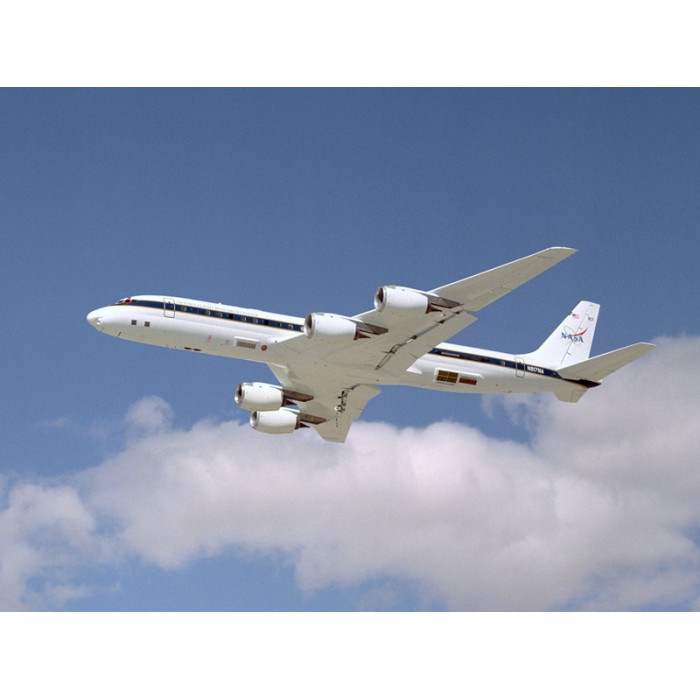
The McDonnell Douglas DC-8-72 is a VIP conversion of the Douglas DC-8-62 - a four-engine long-range narrow-body jetliner first produced in 1958 and one of the foundational aircraft of the commercial jet age. Wikipedia confirmed the DC-8 "entered service with Delta Air Lines on September 18, 1959" and that "a total of 556 DC-8s were built between 1959 and 1972." The DC-8-62 variant, on which the -72 is based, was the dedicated long-range model of the family, with Wikipedia confirming it "could seat up to 189 passengers over 5,200 nautical miles with a larger wing for a MTOW up to 350,000 lb (159 t)." The -72 designation refers to a 1982 re-engining programme in which the original Pratt and Whitney JT3D turbofans were replaced by CFM International CFM56-2 high-bypass turbofans in new nacelles built by Grumman Aerospace. Wikipedia confirmed the CFM56-2 engines are "up to 23% more fuel-efficient than the JT3D" and made the Series 70 aircraft "roughly 70% quieter than the 60 Series." ProCharter confirmed the DC-8-72 certification "was completed in September 1982" and that "a total of 110 60-series Super DC-8s were converted by the time the program ended in 1988." ProCharter confirmed DC-8-72s have operated in VIP passenger configuration, and the aircraft.com market listing VP-BHS confirms a fully-equipped VIP DC-8-72 with master suite, shower, bedroom, satellite communications and polar route certification.
The McDonnell Douglas DC-8-72 in VIP charter configuration is a rare and exceptional aircraft: a four-engine long-range narrowbody capable of carrying 30 to 35 passengers in a cabin measuring 42.47 m (139.3 ft) long, 3.48 m (11.4 ft) wide and 2.19 m (7.2 ft) high. Aircraft.com confirmed VIP-configured DC-8-72s accommodate "30-36 passengers / beds for up to 7 people" with bedroom, shower, satellite communications and polar route certification. Range in VIP configuration is approximately 4,830 nm (8,950 km) on a conservative estimate, with aircraft.com VIP listings confirming up to 5,900 nm (11,000 km) with full fuel. The DC-8-72 is powered by four CFM International CFM56-2C5 engines at 22,000 lbf (97.9 kN) each. Charter prices start from approximately £18,000 per flight hour. For context across all aircraft categories, see our private jet price guide or browse the complete fleet.

Why charter the McDonnell Douglas DC-8-72?
- 42.47 m (139.3 ft) of pressurised cabin - the longest narrowbody private cabin of any aircraft in the charter market, accommodating 30 to 35 passengers with a master bedroom suite, shower room, dedicated dining area, conference zone and multiple lounge areas simultaneously. Aircraft.com confirmed the VIP DC-8-72 cabin length of "42.49 m / 139.40 ft" with bedroom, shower and "almost unrestricted baggage allowance." Jecobra confirmed the cabin width of 11 ft 6 in (3.51 m) and height of 7.2 ft (2.19 m), giving a full stand-up interior across the entire length of the aircraft. At 42.47 m, the DC-8-72 cabin is approximately 30% longer than the Boeing BBJ3's 32.7 m and approximately 75% longer than the BBJ1's 24.13 m. For a charter client requiring 30 to 35 passengers in a residential-quality cabin with bedroom, shower and dining room simultaneously operational, the DC-8-72 has no comparable narrowbody equivalent in the charter market;
- Four CFM International CFM56-2C5 engines at 22,000 lbf (97.9 kN) each; Wikipedia confirmed the CFM56-2 is "roughly 70% quieter than the 60 Series JT3D" and "up to 23% more fuel-efficient"; ETOPS restrictions do not apply to four-engine aircraft; Stage III noise certified. Wikipedia confirmed the DC-8 Series 70 aircraft became "at the time of their introduction, the world's quietest four-engined airliner" when the CFM56-2 was fitted. The four-engine configuration provides four-fold propulsion redundancy and exempts the aircraft from ETOPS overwater restrictions, enabling direct polar and oceanic routings. Aircraft.com confirmed a VIP DC-8-72 is "certified for polar routes" - allowing great-circle routing over the Arctic to reduce sector times on London to North America and London to Asia missions. Jecobra confirms Stage III noise certification as standard on the DC-8-72, making it compatible with the noise requirements of most major international airports;
- Approximately 4,830 to 5,900 nm range in VIP configuration - London to New York non-stop, London to Dubai non-stop, London to Johannesburg within range; 14.5 hours maximum endurance with full fuel confirmed by aircraft.com. Aircraft.com confirmed a VIP DC-8-72 with "25 passengers and full fuel load" demonstrates "14.5 hours range" with "almost unrestricted baggage allowance." Aircraft.com VIP listings confirm "Range: 11,000 km / 5,900 nm" for full-fuel VIP operations. At the conservative 4,830 nm estimate from HTML specifications, London to New York (approximately 3,450 nm) and London to Dubai (approximately 3,000 nm) are both comfortably within single-sector range. This places the DC-8-72 in the same intercontinental charter class as the BBJ family but with dramatically more cabin space at comparable range;
- Beds for up to 7 people; master suite with private shower; satellite communications (SATCOM); wireless entertainment system; fully-equipped galleys; mid-cabin bar - a full residential and working environment for groups of 25 to 35 on ultra-long sectors of up to 14.5 hours. Aircraft.com confirmed the VIP DC-8-72 specification: "30-36 passengers / beds for up to 7 people / Shower / Bedroom / Wireless entertainment / Certified for polar routes / Almost unrestricted baggage allowance." Jecobra confirmed the galley configuration as "mid-cabin bar, fully-equipped galleys and bar" with "master and aft lavatory." The SATCOM installation confirmed by aircraft.com provides continuous satellite voice and data communications throughout intercontinental flights, including over polar routes and oceanic sectors where ground-based communications systems are unavailable. For a group of 25 to 35 passengers on a 12 to 14 hour intercontinental sector, the DC-8-72 provides a level of on-board residential completeness that no purpose-built business jet can replicate;
- An aircraft of historic significance: the DC-8 was produced from 1958 to 1972 and was the direct competitor to the Boeing 707; the DC-8-62 introduced the enlarged wing and relocated engines that made ultra-long-range narrowbody operations possible; 556 total DC-8s built; examples continue in active service with NASA and cargo operators in 2025. Wikipedia confirmed the DC-8-62 "first flew on April 27, 1966" and entered service "in April 1967" with the longer range than any previous DC-8 variant. Simple Flying confirmed as of 2025 that DC-8s remain in active service. The DC-8-72 re-engining gave existing DC-8-62 airframes a new operational life from 1982, combining the original aircraft's structural strength with modern CFM56 fuel efficiency. For charter clients who appreciate aviation heritage, the DC-8-72 represents one of the last opportunities to fly in a converted 1960s commercial jet airliner in a fully equipped VIP configuration;
- The DC-8-72 occupies a unique position in the group charter market: between the BBJ family (narrowbody VIP jets with up to 54 passengers) and full commercial charter airliners; the only four-engine narrowbody VIP aircraft in the charter market capable of carrying 30 to 35 passengers with bedroom, shower and intercontinental range simultaneously. ProCharter confirmed the DC-8-72 in VIP configuration is actively used for "private aircraft" operations alongside NASA research and cargo roles. At 30 to 35 passengers with a master suite, the DC-8-72 provides the residential-quality cabin of a BBJ (19 typical VIP passengers) at nearly double the group capacity. For corporate groups and government delegations requiring intercontinental range, residential facilities and 30+ passenger capacity in a single aircraft, the DC-8-72 is a uniquely capable platform with no direct equivalent in the current charter market.

Charter cost - McDonnell Douglas DC-8-72 prices from UK airports
The DC-8-72 operates at a price point reflecting its four-engine configuration, commercial airline crew requirements, the rarity of VIP-configured examples and its exceptional cabin volume and range. Hourly rates run from approximately £18,000 to £28,000 per flight hour depending on the specific aircraft, operator, route and configuration. At 30 passengers at £18,000/hr, the per-person cost is £600 per flight hour - directly competitive with commercial first class on the same long-haul routes with a completely private aircraft, no airport queues, a private bedroom and shower, and flexible departure times. On shorter European sectors, quoted prices include positioning fees, handling charges and minimum booking time, so the all-in cost will typically exceed the hourly rate multiplied by block time alone. Indicative one-way prices from UK airports:
- London to New York - from £145,000 (30 passengers, VIP configuration, approximately 8 hours non-stop);
- London to Dubai - from £126,000 (30 passengers, approximately 7 hours non-stop);
- London to Madrid - from £48,000 (30 passengers, approximately 2 hours 15 minutes);
- London to Paris - from £38,000 (30 passengers, approximately 1 hour 20 minutes);
- London to Amsterdam - from £35,000 (30 passengers, approximately 55 minutes);
- London to Geneva - from £42,000 (30 passengers, approximately 1 hour 25 minutes);
- London to Edinburgh - from £32,000 (30 passengers, approximately 1 hour 10 minutes).
Empty Leg flights appear on repositioning routes. See our Empty Legs page for current availability.

Ideal routes for the McDonnell Douglas DC-8-72
The DC-8-72's natural mission combines maximum cabin volume with intercontinental range: sectors long enough to justify a bedroom, shower and residential cabin, with a group large enough to require more than 20 passengers. It performs best on:
- UK to North America non-stop (7 to 9 hours). New York (approximately 3,450 nm), Miami (approximately 4,400 nm) and Dallas (approximately 4,700 nm) are within single-sector range. For a group of 25 to 35 on a transatlantic mission, the DC-8-72's 42.47 m cabin allows all functional zones - dining room, bedroom suite, shower, conference area, lounge - to operate simultaneously and independently throughout the flight. At 14.5 hours maximum endurance confirmed by aircraft.com, the DC-8-72 can reach destinations beyond the continental US non-stop;
- UK to Middle East non-stop (6 to 7.5 hours). Dubai, Abu Dhabi, Doha and Riyadh non-stop from any UK departure airport. Government and corporate delegations of 25 to 35 people travel with bedroom, shower, satellite communications and full galley catering across all cabin zones simultaneously. The four-engine configuration and polar route certification allow optimised routing to reduce sector times where applicable;
- Government, diplomatic and VIP group missions requiring 30+ passengers with full residential facilities. The DC-8-72 in VIP configuration is one of the very few aircraft in the charter market capable of carrying 30 or more passengers in a single aircraft with a master bedroom suite, private shower, satellite communications and beds for multiple passengers simultaneously. For government delegations, royal party travel, or major corporate events where the entire group must travel together with residential-level on-board facilities, the DC-8-72 provides a capability that no purpose-built business jet can replicate;
- Ultra-long endurance sectors where 14.5 hours range and polar route certification are required. Aircraft.com confirmed the DC-8-72's "14.5 hours range" with full fuel - an endurance capability that covers virtually any city-pair in the northern hemisphere non-stop and reaches southern hemisphere destinations with a single refuelling stop. The polar route certification confirmed by aircraft.com enables great-circle routing over the Arctic for faster transit on London to Asia-Pacific sectors;
- Large leisure group charters of 25 to 35 passengers where per-person economics are the primary brief on intercontinental routes. At 30 passengers on London to New York at £145,000, the per-person cost is approximately £4,833 - comparable to commercial first class on the same route with a completely private aircraft. The Avro Business Jet covers European group charters at lower cost; the DC-8-72 is the choice when the route is intercontinental and the group exceeds 25 passengers.

Cabin and in-flight experience
The DC-8-72 VIP cabin measures 42.47 m (139.3 ft) in length, 3.48 m (11.4 ft) in width and 2.19 m (7.2 ft) in height - a full stand-up interior across its entire length. Aircraft.com confirmed the VIP cabin specification: bedroom, private shower, beds for up to 7 passengers, wireless entertainment, satellite communications (SATCOM) and fully-equipped galleys. Jecobra confirmed the galley arrangement as "mid-cabin bar, fully-equipped galleys and bar" with "master and aft lavatory." The cabin width of 3.48 m is comparable to the BBJ family (3.53 m) but the length of 42.47 m - more than 10 m longer than the BBJ3's 32.7 m - provides cabin volume and zone separation that no 737-based aircraft can match. Every VIP DC-8-72 is individually completed; the aircraft.com listing VP-BHS specifies "stunning paint, beautiful interior" as part of the aircraft description, reflecting the individual investment in each completed example. The four CFM56-2C5 engines produce the quietest operation of any DC-8 variant, confirmed by Wikipedia as "the world's quietest four-engined airliner" at time of introduction in 1982.
Technical specifications
| Manufacturer | Douglas Aircraft Company / McDonnell Douglas (Long Beach, California) |
| Base airframe | Douglas DC-8-62 (first flew April 27, 1966) |
| DC-8-72 conversion certified | September 1982 |
| Conversion programme | 110 DC-8 Series 60s converted to Series 70 (1982-1988); new CFM56-2 nacelles by Grumman Aerospace |
| Aircraft class | VIP narrowbody airliner / ultra-long-range group charter |
| Engines | 4 x CFM International CFM56-2C5, 22,000 lbf (97.9 kN) each |
| Noise standard | FAA Stage III certified; approx. 70% quieter than JT3D-powered DC-8-62 |
| Fuel efficiency | Up to 23% more fuel-efficient than original JT3D engines |
| Cruise speed | 448 ktas (830 km/h) |
| Range (VIP, conservative) | 4,830 nm (8,950 km) |
| Range (full fuel) | up to 5,900 nm (11,000 km) |
| Maximum endurance | 14.5 hours |
| Service ceiling | 42,000 ft (12,802 m) |
| MTOW | 151,953 kg (335,000 lb) |
| Polar route certification | Yes (confirmed on VIP examples) |
| Passengers (VIP config) | 30-35 typical; up to 36 |
| Beds | Up to 7 |
| Cabin length | 42.47 m (139.3 ft) |
| Cabin width | 3.48 m (11.4 ft) |
| Cabin height | 2.19 m (7.2 ft); full stand-up throughout |
| Wingspan | 45.23 m (148.4 ft) |
| Aircraft length | 47.98 m (157.4 ft) |
| Aircraft height | 12.92 m (42.4 ft) |
| Avionics | Dual Collins ADF-60A; dual Honeywell FZ-500 Pro Line; dual Universal UNS-1F GPS/FMS; triple Litton LTN-92 IRS; Collins TCAS-4000; Collins TWR-850 weather radar; SATCOM |
| Total DC-8s built | 556 (1959-1972); 110 converted to Series 70 (1982-1988) |

McDonnell Douglas DC-8-72 vs similar aircraft
- DC-8-72 vs Boeing BBJ3. The BBJ3 is the largest 737-based Boeing Business Jet at approximately £16,000/hr with a 32.7 m cabin, 1,120 sq ft floor area, range of approximately 5,200 nm and typical VIP configuration of 20-25 passengers. The DC-8-72 counters with a 42.47 m cabin (30% longer than the BBJ3), 30-35 passenger capacity (versus BBJ3's 20-25), four-engine redundancy (versus BBJ3's twin), polar route certification, and up to 5,900 nm full-fuel range. The BBJ3 counters with greater production volume (7 delivered versus DC-8-72 VIP examples being rarer), a more modern original airframe (1999 onwards versus 1966-1972 DC-8-62 base), and typically a more refined modern interior. For groups requiring maximum narrowbody cabin length and 30+ passenger VIP capacity on intercontinental missions, the DC-8-72 is the larger platform at a comparable range;
- DC-8-72 vs Airbus A318 Elite. The A318 Elite is a modern VIP narrowbody at £12,000/hr with a range of 4,000-4,200 nm and a typical layout of 18-19 passengers with 15 sleeping berths. The DC-8-72 counters with a cabin 42.47 m versus A318 Elite's approximately 22 m, 30-35 passengers versus 18-19, four-engine configuration versus twin, and up to 5,900 nm range versus 4,200 nm. The A318 Elite counters with a lower hourly rate (£12,000 vs £18,000/hr), a significantly more modern airframe (Airbus A318 entered service 2003), and wider availability in the charter market. For groups of under 20 on sectors within 4,200 nm, the A318 Elite is the more cost-efficient and more readily available platform. For groups of 25 to 35 on intercontinental sectors, the DC-8-72 provides substantially greater cabin space and longer range;
- DC-8-72 vs Avro Business Jet. The Avro Business Jet is the European group charter specialist at approximately £6,000/hr with a cabin of 17.81 m, capacity of 40-46 passengers and range limited to 1,151 nm. The DC-8-72 counters with a 42.47 m cabin (2.4x longer), intercontinental range (4,830-5,900 nm versus 1,151 nm) and four-engine configuration. The Avro counters with a significantly lower hourly rate (£6,000 vs £18,000/hr), greater passenger capacity (up to 46 versus DC-8-72's 35), London City Airport certification and far greater availability in the UK charter market. For European group charters of 30 to 46 passengers on sectors within 1,151 nm, the Avro Business Jet is the appropriate and substantially lower-cost platform. For intercontinental group missions of 25 to 35 requiring residential cabin facilities, the DC-8-72 is the only comparable option.

Frequently asked questions - McDonnell Douglas DC-8-72 charter
How much does it cost to charter a McDonnell Douglas DC-8-72?
Charter rates start from approximately £18,000 per flight hour. London to New York non-stop (approximately 8 hours) costs from £145,000 for 30 passengers in VIP configuration - approximately £4,833 per person, comparable to commercial first class on the same route with a completely private aircraft, private bedroom and shower. London to Dubai non-stop (approximately 7 hours) costs from £126,000. On shorter European sectors, all-in costs include positioning fees and minimum booking time. Contact Private Jets UK for a personalised quote.
How many passengers can fly on a DC-8-72 in VIP configuration?
Aircraft.com confirmed VIP-configured DC-8-72s accommodate "30-36 passengers" with "beds for up to 7 people." Jecobra confirms a maximum capacity of 33 passengers in a specific VIP layout. The typical booking range is 25 to 35 passengers in a mixed residential and executive configuration. At 30 to 35 passengers, the per-person economics on intercontinental sectors are directly competitive with commercial first class fares.
Can a DC-8-72 fly non-stop from London to New York?
Yes. With a conservative VIP range of 4,830 nm and full-fuel range up to 5,900 nm confirmed by aircraft.com, London to New York (approximately 3,450 nm) is well within non-stop capability. Aircraft.com confirmed "14.5 hours range" with full fuel, providing reserve capacity beyond the New York sector. London to Dubai (approximately 3,000 nm) is also within non-stop range. The DC-8-72's polar route certification enables optimised Arctic routing to reduce sector times on transatlantic and North America missions.
Is the DC-8-72 a safe aircraft to charter?
The DC-8-72 is certified to FAA Stage III noise standards following the 1982 CFM56-2 re-engining programme. VIP-configured examples are maintained to the standards required for private charter operations under applicable aviation authority approvals. The CFM56-2 engine family is fully supported by CFM International (a GE/Safran joint venture). Charter clients should confirm the specific aircraft's maintenance status, certificates and operator approvals with Private Jets UK at the time of booking, as with any charter aircraft.
What makes the DC-8-72 different from the Boeing BBJ or Airbus ACJ?
The fundamental difference is cabin length: the DC-8-72's 42.47 m cabin is approximately 30% longer than the BBJ3 (32.7 m) and 75% longer than the BBJ1 (24.13 m). This allows the DC-8-72 to accommodate 30 to 35 passengers with a master bedroom suite, shower, dining room, conference area and lounge all simultaneously operational - without any zone needing to convert between functions during the flight. The four-engine configuration also provides operational advantages over twin-engine narrowbodies including no ETOPS restrictions and four-fold propulsion redundancy on oceanic and polar routes.
