


Charter a Piper Cheyenne
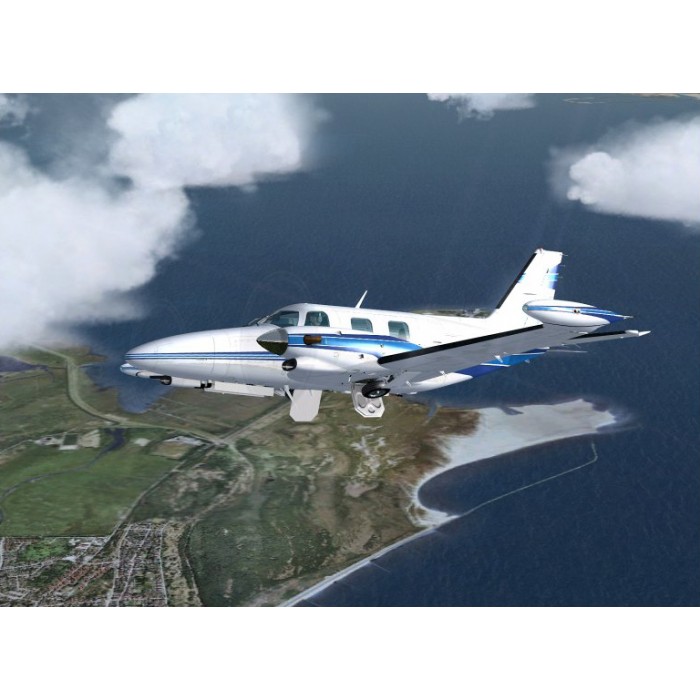


- Availability: Available for rent
Request aircraft information
The Piper Cheyenne is the aircraft that gave piston-twin operators their first accessible route into pressurised turboprop performance - a twin-engine turboprop development of the Piper PA-31 Navajo that combined the familiar Navajo airframe with Pratt and Whitney Canada PT6A turboprop engines, a pressurised cabin and wingtip fuel tanks. The prototype first flew on 29 August 1969; FAA certification was granted on 3 May 1972; and the first production aircraft entered service in 1974. Business Air News confirmed 525 Cheyenne II aircraft were built before production ended in 1983, with GlobalAir documenting 355 of these remaining in active operation. The original Cheyenne (later renamed Cheyenne II, PA-31T-620) used PT6A-28 engines at 620 shp each. In 1978 Piper introduced the lower-cost Cheyenne I (PA-31T1) with PT6A-11 engines at 500 shp and a $100,000 lower price point. The stretched Cheyenne IIXL (PA-31T2, from 1979) added a two-foot fuselage extension and PT6A-135 engines at 750 shp. Across all PA-31T variants, approximately 823 aircraft were built in total.
The Piper Cheyenne II is a pressurised twin-engine turboprop - pressurised, unlike the Aztec and Baron 58 that preceded it in the Piper piston-twin line. AOPA confirmed the Cheyenne's "maximum speed at optimum altitude is advertised as 283 KTAS" with range and payload figures "very comparable to the King Airs." The pressurised cabin maintains comfortable altitude to the 35,800 ft certified ceiling, providing weather avoidance and passenger comfort unavailable in the unpressurised piston alternatives at lower charter rates. Charter prices start from approximately £900 per flight hour. For the full fleet see our private jet price guide or browse our complete fleet.

Why charter the Piper Cheyenne?
- Pressurised cabin at 35,800 ft ceiling - weather avoidance and comfort unavailable in any piston twin at comparable charter rates. The Piper Cheyenne II is pressurised - a fundamental operational advantage over the Piper Aztec and Baron 58 at comparable or slightly higher charter rates. Jettly confirmed the Cheyenne "sits in a practical sweet spot - faster and more capable than piston twins, yet significantly less expensive per hour than most light jets." The 35,800 ft (10,925 m) service ceiling provides access to flight levels above all commercial airline traffic and above virtually all European weather systems. This pressurised ceiling capability means the Cheyenne can fly above weather that forces the Aztec and Baron 58 to divert around or descend through, reducing total sector time and passenger discomfort on winter European crossings;
- PT6A-28 turboprop engines at 620 shp each - the same reliable PT6A family as the King Air 200; 283 kt maximum cruise; turboprop fuel efficiency. AOPA confirmed the Cheyenne II's maximum cruise speed of 283 KTAS at optimum altitude. Centurion Jets confirmed approximately 285 kt cruise with PT6A-28 engines at 620 shp each. The PT6A-28 is from the same Pratt and Whitney Canada PT6A family that powers the King Air 200 (PT6A-42) and King Air 90 (PT6A-135A) - one of the most comprehensively supported turboprop engine families in aviation history. Fuel burn of approximately 75.5 gph (planephd) is higher than the Piper Aztec's 31 gph but provides significantly faster cruise and the pressurised cabin performance. For charter clients transitioning from piston twins, the PT6A-28 brings the reliability and parts depth of the King Air engine family at Cheyenne charter rates;
- 2,000-foot runway capability; King Air-comparable range-payload numbers; pressurised turboprop at piston-twin-adjacent rates. GlobalAir confirmed the Cheyenne II "can take off and land on 2,000-foot runways." AOPA confirmed "range-versus-payload numbers very comparable to the King Airs." Planephd confirmed best range of 1,336 nm with a typical pre-owned value of $659,000 - approximately half the value of a comparably performing King Air C90GTi. This low acquisition cost directly influences charter rates: the Cheyenne II is available at approximately £900 to £1,100/hr, below the King Air 90 at £900 to £1,300/hr, for a pressurised turboprop with comparable range and cruise. For charter clients who want pressurised turboprop performance at the lowest available turboprop rate, the Cheyenne II is the entry point;
- PA-31T family of three variants - Cheyenne I (500 shp), Cheyenne II (620 shp), Cheyenne IIXL (750 shp; stretched fuselage) - matching performance to mission. Business Air News confirmed the Cheyenne I (PA-31T1, from 1978) uses PT6A-11 engines at 500 shp for a lower-cost, somewhat slower option. The Cheyenne IIXL (PA-31T2, from 1979) stretches the fuselage by two feet and installs PT6A-135 engines at 750 shp for higher performance. When chartering, the specific variant determines cruise speed, payload and range. The Cheyenne II (PT6A-28, 620 shp) is the most commonly available in the European charter market and provides the best balance of performance and rate. Confirm the PA-31T variant before booking as specifications differ meaningfully across the family;
- 355 active Cheyenne IIs; 68% fleet retention; anti-corrosion construction; structurally sound 40-year-old airframe. GlobalAir confirmed 355 Cheyenne II aircraft remain in active operation from 525 built - a 68% retention rate reflecting the type's structural durability. AOPA confirmed "for an aging airplane, the Cheyennes have remarkably few major maintenance problems or airworthiness directives. Structurally, they have weathered well over the years. Corrosion of the airframe has been rare, thanks to Piper's use of extensive anti-corrosion treatments and epoxy primers." The anti-corrosion construction quality that Piper incorporated into the Cheyenne during the 1970s remains a recognised factor in the fleet's longevity;
- Commuter airliner pedigree - T-1020 and T-1040 variants served regional airlines; robust commercial operational history. The Piper PA-31T airframe served as the basis for the T-1020 and T-1040 commuter airliner variants that operated in regional airline service across North America and internationally. This commercial airline heritage - with the higher utilisation, maintenance standards and dispatch reliability requirements of scheduled operations - validates the Cheyenne airframe's robustness beyond typical general aviation use. For charter clients who want a turboprop with commercial airline service history at the lowest available pressurised turboprop rate, the Cheyenne's commuter heritage provides an additional trust credential.
Charter cost - Piper Cheyenne prices from UK airports
Hourly rates run from approximately £900 to £1,200 - the entry point for pressurised turboprop charter, above the unpressurised piston twins (Aztec at £600/hr; Baron 58 at £700/hr) and broadly comparable to the King Air 90, reflecting the Cheyenne II's pressurised cabin, 283 kt cruise and 35,800 ft ceiling at lower acquisition cost than the King Air series. For groups of 4 to 6 on short and medium European missions where a pressurised cabin is required but King Air rates are above budget, the Cheyenne II provides the most economical pressurised turboprop option.
Indicative one-way prices from UK airports:
- London to Edinburgh - from £1,080 (5 passengers, approximately 1 hour);
- London to Paris - from £1,080 (5 passengers, approximately 1 hour);
- London to Geneva - from £1,440 (5 passengers, approximately 1 hour 30 minutes);
- London to Nice - from £2,160 (5 passengers, approximately 2 hours);
- Edinburgh to Amsterdam - from £1,260 (5 passengers, approximately 1 hour 20 minutes);
- London to Dublin - from £1,080 (5 passengers, approximately 1 hour);
- Manchester to Nice - from £2,160 (5 passengers, approximately 2 hours 10 minutes).
Empty Leg flights appear on repositioning routes. See our Empty Legs page for current availability.

Ideal routes for the Piper Cheyenne
Best matched to short and medium European missions where a pressurised turboprop at entry-level turboprop rates serves groups of 4 to 6 within 1,000 nm:
- Short European sectors (1 to 2 hours) where pressurisation is required at the lowest available turboprop rate. For charter clients who need pressurised cabin comfort - either for health reasons, winter Alpine crossings or consistent above-weather cruise - but whose budget does not extend to King Air 200 or light jet rates, the Cheyenne II is the appropriate choice. Paris, Geneva, Amsterdam and Nice are all within 1 to 2 hours at 283 kt. The pressurised cabin provides consistent passenger comfort that the Aztec and Baron 58 cannot match on these sectors;
- Sectors between 500 and 1,000 nm where 283 kt cruise and 35,800 ft ceiling provide King Air-comparable performance. AOPA confirmed the Cheyenne's performance "very comparable to the King Airs" in range and payload. London to Nice (approximately 840 nm), London to Madrid (approximately 900 nm) and Edinburgh to Marrakech (approximately 1,400 nm at lighter loads) are achievable within the Cheyenne II's envelope. The 35,800 ft ceiling provides weather avoidance above all commercial traffic on these medium European sectors;
- Groups of 4 to 6 where the pressurised cabin and turboprop speed justify a step up from piston twins. For corporate groups who have been flying the Aztec (150 kt, unpressurised) or Baron 58 (200 kt, unpressurised) and want meaningfully better cruise speed and pressurised comfort without stepping to full King Air rates, the Cheyenne II is the upgrade path. At 283 kt and pressurised, the Cheyenne II is approximately 90 kt faster than the Aztec on the same sector and provides the cabin pressure that makes 2-hour-plus European crossings comfortable for all passengers;
- 2,000-foot runway missions combining short-field capability with pressurised turboprop performance. GlobalAir confirmed the Cheyenne II's 2,000-foot takeoff and landing capability. This short-field performance combined with a pressurised cabin creates a combination that competitors struggle to match at comparable rates: the King Air 90 requires longer runway lengths at full load, and the Baron 58 and Aztec are unpressurised. For charter clients whose destination airfield is short but whose mission requires pressurisation, the Cheyenne is the practical solution;
- Budget-priority pressurised turboprop missions where Cheyenne II rates are below comparable King Air rates. Planephd confirmed a pre-owned Cheyenne II value of approximately $659,000 versus the King Air C90GTi at over $1.4 million. This acquisition cost difference drives Cheyenne II charter rates approximately 10 to 20% below comparable King Air 90 rates on comparable missions. For clients who specify "pressurised turboprop" but whose ceiling is below King Air 90 rates, the Cheyenne II fills the gap.

Cabin and in-flight experience
The Piper Cheyenne II cabin measures 3.30 m (10.8 ft) long, 1.53 m (5.0 ft) wide and 1.35 m (4.4 ft) high. GlobalAir confirmed 22 ft³ of internal baggage storage. The standard configuration seats six to seven passengers: four individual seats in a club-four arrangement plus a side-facing seat on the starboard fuselage. The cabin is pressurised to the 35,800 ft service ceiling, providing consistent cabin altitude on all sectors. Large windows provide natural light throughout the cabin. The Cheyenne II is not a stand-up cabin - the 1.35 m height requires seated positions throughout - but at this class of aircraft and charter rate, the pressurised environment is the defining comfort upgrade over piston alternatives.
Avionics vary by aircraft and refurbishment; the original Cheyenne used King Silver Crown panel-mounted avionics. Atlantic Jet Partners confirmed many active Cheyennes have been updated with Garmin GNS 530 GPS and S-TEC autopilot systems. Two PT6A-28 engines at 620 shp each; Hartzell three-blade constant-speed propellers; wingtip fuel tanks (30 gal each) standard on the Cheyenne II. Total fuel capacity 308 gal standard, 390 gal with optional extended tip tanks.
- Cabin. 3.30 m x 1.53 m x 1.35 m; pressurised to 35,800 ft; not stand-up;
- Layout. Club-4 + side-facing seat = 6-7 standard; 22 ft³ internal baggage;
- Pressurisation. Yes - key upgrade over Aztec and Baron 58 at comparable rates;
- Engines (Cheyenne II). 2 x PT6A-28 (620 shp each; Hartzell 3-blade propellers);
- Fuel. 308 gal standard; 390 gal with extended tip tanks; 75.5 gph burn;
- Short-field. 2,000 ft takeoff and landing capability;
- Avionics. Varies; original King Silver Crown; many updated to Garmin GNS 530 + S-TEC autopilot.
Technical specifications
| Manufacturer | Piper Aircraft, Vero Beach, Florida |
| First flight (prototype) | 29 August 1969 |
| FAA certification | 3 May 1972 |
| Cheyenne II production | 1974-1983; 525 built; 355 active |
| PA-31T variants | Cheyenne I (PT6A-11, 500 shp); Cheyenne II (PT6A-28, 620 shp); Cheyenne IIXL (PT6A-135, 750 shp, +2 ft fuselage); ~823 total |
| Aircraft class | Twin-engine pressurised turboprop |
| Engines (Cheyenne II) | 2 x Pratt and Whitney Canada PT6A-28 (620 shp each; Hartzell 3-blade) |
| Max cruise speed | 283 kt / 524 km/h (at optimum altitude) |
| Economy cruise | ~175-212 kt / 325-393 km/h (lower altitude) |
| Service ceiling | 35,800 ft / 10,925 m |
| Pressurised | Yes (key differentiator vs Aztec and Baron 58) |
| Range (max) | 1,160-1,336 nm / 2,148-2,474 km |
| Range (full seats) | ~720 nm / 1,333 km |
| Fuel burn | ~75.5 gph |
| Runway | 2,000 ft takeoff and landing |
| MTOW | 11,200 lb / 5,080 kg |
| Cabin length | 3.30 m (10.8 ft) |
| Cabin width | 1.53 m (5.0 ft) |
| Cabin height | 1.35 m (4.4 ft) |
| Passengers | 6-7 standard; pressurised throughout |
| Baggage | 22 ft³ internal |
| Fuel capacity | 308 gal standard; 390 gal with tip tank extensions |
| Wingspan | 14.53 m (47.7 ft) |
| Aircraft length | 13.23 m (43.4 ft) |
| Aircraft height | 4.50 m (14.8 ft) |

Piper Cheyenne vs similar aircraft
- Piper Cheyenne II vs Piper Aztec. The Aztec is unpressurised (ceiling 18,944 ft); the Cheyenne II is pressurised to 35,800 ft. The Cheyenne II cruises at 283 kt versus the Aztec's 150 kt - nearly twice the speed. Charter rates for the Cheyenne II run approximately 50% above the Aztec (£900/hr vs £600/hr). For any mission where pressurisation is required or sectors exceed 90 minutes, the Cheyenne II is the appropriate step up. The Aztec's advantage remains the 820-foot takeoff roll (vs Cheyenne's 2,000 ft) and lowest available twin-engine rate on very short missions;
- Piper Cheyenne II vs King Air 90 (C90GTi). The King Air C90GTi is a pressurised turboprop at comparable or slightly higher rates (£900 to £1,300/hr vs Cheyenne II's £900 to £1,200/hr). The King Air 90 provides 275 kt cruise (comparable to Cheyenne's 283 kt), 30,000 ft ceiling (vs Cheyenne's 35,800 ft - Cheyenne higher), Collins Pro Line 21 avionics and single-pilot certification. The Cheyenne II counters with a higher service ceiling, lower pre-owned acquisition cost and King Air-comparable range and payload at slightly lower rates. For clients who specifically require Pro Line 21 avionics or the King Air brand, the King Air 90 is the choice; for maximum pressurised ceiling at the lowest available turboprop rate, the Cheyenne II delivers it;
- Piper Cheyenne II vs Cheyenne IIXL. The Cheyenne IIXL (PA-31T2) stretches the fuselage by two feet for additional passenger legroom and uses PT6A-135 engines at 750 shp (vs 620 shp on the II). Charter rates for the IIXL run approximately 10 to 15% above the standard Cheyenne II. For groups of 7 where the additional legroom from the stretched fuselage is valued, the IIXL is the appropriate choice; for 5 to 6 passengers the standard Cheyenne II provides equivalent performance at lower rates.

Frequently asked questions - Piper Cheyenne charter
How much does it cost to charter a Piper Cheyenne?
Charter rates run from approximately £900 to £1,200 per flight hour. London to Edinburgh costs from £1,080 for 5 passengers. London to Geneva costs from £1,440. London to Nice costs from £2,160. All quotes from Private Jets UK are fully itemised with no hidden charges.
Is the Piper Cheyenne pressurised?
Yes - the Piper Cheyenne II is a pressurised aircraft, unlike the Piper Aztec and Beechcraft Baron 58 at comparable or lower charter rates. The pressurised cabin operates to the 35,800 ft service ceiling, providing consistent cabin altitude and passenger comfort on European sectors. This pressurisation is the defining upgrade argument for the Cheyenne II over piston twin alternatives.
What is the difference between the Cheyenne I, Cheyenne II and Cheyenne IIXL?
The Cheyenne I (PA-31T1) uses PT6A-11 engines at 500 shp for lower cost and slightly lower performance. The Cheyenne II (PA-31T-620) uses PT6A-28 engines at 620 shp for 283 kt cruise - the most commonly available variant in charter. The Cheyenne IIXL (PA-31T2) stretches the fuselage by two feet and installs PT6A-135 engines at 750 shp for higher performance and more passenger legroom. Confirm the specific variant before booking as cruise speed and passenger capacity differ.
How does the Piper Cheyenne compare to the King Air 90?
Both are pressurised twin-engine turboprops at broadly comparable charter rates. The King Air C90GTi has 275 kt cruise (comparable to Cheyenne's 283 kt), a lower 30,000 ft ceiling (vs Cheyenne's 35,800 ft), Collins Pro Line 21 avionics and single-pilot certification. The Cheyenne II has a higher ceiling, AOPA-confirmed King Air-comparable range and payload, and typically lower charter rates reflecting lower acquisition cost. For Pro Line 21 avionics and King Air single-pilot operations the C90GTi is preferable; for maximum pressurised ceiling at lower rates the Cheyenne II delivers it.
Is the Piper Cheyenne still in production?
No - production of the Cheyenne II ended in 1983 after 525 aircraft were built. The Cheyenne I ended around the same period. The larger Cheyenne III and IV (PA-42 series, different airframe) were produced until 1984. Piper does not currently manufacture any Cheyenne variant. GlobalAir confirmed 355 Cheyenne IIs remain in active operation; Lycoming PT6A-28 engine support and parts availability continue through Pratt and Whitney Canada's global service network.

