


Charter a Piper Aztec
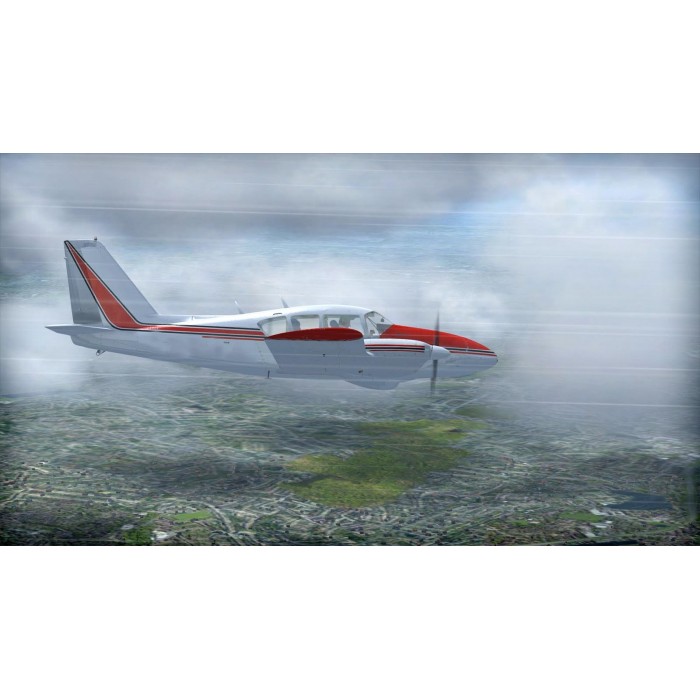


- Availability: Available for rent
Request aircraft information
The Piper Aztec is one of the most celebrated light twin-piston aircraft in general aviation history - a design that began as the Twin Stinson in 1952, entered production as the Apache in 1954 and evolved into the Aztec PA-23-250 in 1959, remaining in production until 1982. AOPA confirmed approximately 4,800 PA-23-250 Aztecs were built across the A through F variants. The Aztec B (from 1961) established the profile most associated with the name: a longer pointed nose housing a second baggage compartment, a sixth seat and the Lycoming IO-540-C4B5 fuel-injected engines at 250 hp each that remained the standard powerplant through the final F variant. Wikipedia confirmed a special UK market Aztec variant was produced with reduced maximum takeoff weight to meet British aviation requirements - the Aztec has had a specific connection to British operations throughout its production life. Production ended in 1982; the aircraft is no longer manufactured. Piper designated the US Navy variant U-11A, with 20 aircraft delivered.
The Piper Aztec is a twin-engine piston aircraft - not a turboprop and not a jet - powered by two Lycoming IO-540-C4B5 engines at 250 hp each in the normally aspirated version, or Lycoming TIO-540-C1A turbocharged engines in the Turbo Aztec variants. AOPA confirmed an 820-foot takeoff roll and 1,250 feet to clear a 50-foot obstacle - short-field performance that made the Aztec a favourite in remote and demanding operations. With a maximum cargo payload of 1,600 lb, the Aztec has served cargo, mail, air ambulance and charter roles across six decades. Charter prices start from approximately £600 per flight hour. For the full fleet see our private jet price guide or browse our complete fleet.

Why charter the Piper Aztec?
- 820-foot takeoff roll; 1,250 feet to clear a 50-foot obstacle; 70 kt VMC - exceptional short-field twin for grass strips and remote airfields. AOPA confirmed the Aztec's "superior short-field performance: 820-foot takeoff roll, 1,250 feet to clear a 50-foot obstacle, 1,250 feet to clear the same obstacle coming back, and 850-foot landing roll" as one of the type's defining characteristics. The minimum control speed of 70 kt (VMC 80 mph) is among the lowest for any twin-piston aircraft, providing a wide safety margin in single-engine operations. These performance figures make the Aztec capable of operations from grass strips, private estate airfields, Highland Scottish approaches and European mountain airfields that larger twin-engine aircraft cannot use. For charter clients who need to reach a destination with a 1,000 to 2,000-foot runway, the Aztec is one of the few twin-engine IFR-certified options available;
- 1,600 lb payload capacity - exceptional for twin-piston class; fills all seats and tanks without exceeding MTOW on standard variants. AOPA confirmed the Aztec's "1,600-pound cargo payload had made it a favourite both at home and abroad in mail, cargo, and air ambulance applications." This payload capacity - prodigious for a light twin - means the Aztec can carry five passengers with full baggage and adequate fuel for most short-sector missions without payload restrictions. AOPA confirmed "you could fill the tanks, seats (with 170-pound FAA-standard people), and baggage compartments and still not reach the maximum certificated takeoff weight of 5,200 pounds in the normally aspirated D." This full-payload flexibility makes the Aztec a more practical short-sector aircraft than many light twins where passenger and fuel loads conflict;
- Two baggage compartments - nose and aft; 40+ ft³ combined; twin-aisle access for a light twin; six-seat capacity from 1961 onwards. AOPA confirmed "the Aztec B, introduced in 1962, established the Aztec profile most pilots are familiar with, adding a sixth seat and a long, blunt nose housing a second baggage compartment" and that Piper offered more than 40 cubic feet of combined baggage volume across both compartments. The forward nose compartment is accessible on the ground; the aft compartment is located behind the rear seating. For a piston aircraft at the lowest charter rate, this dual-compartment configuration provides baggage flexibility that single-compartment competitors cannot match. Each compartment carries up to 150 lb;
- Lycoming IO-540-C4B5 fuel-injected engines - the most reliable flat-six piston in general aviation; 250 hp each; TIO-540 turbo version reaches 24,000 ft at 217 kt. The Lycoming IO-540 family is confirmed by aviation maintenance records as one of the most widely supported piston engines in general aviation globally. The fuel-injected IO-540-C4B5 at 250 hp provides smooth power delivery and reliable operation across the Aztec's 150 kt cruise envelope. The turbocharged TIO-540-C1A variant - the Turbo Aztec - enables 217 kt cruise at 24,000 ft, providing meaningful weather avoidance capability and faster cruise on longer sectors. AOPA confirmed the Turbo Aztec "sped up to 250 mph (217 KIAS) at 24,000 feet." The rate of climb is 1,490 fpm for the normally aspirated E variant and 1,530 fpm for the turbo at full load;
- US Navy U-11A operator; UK-specific variant produced; air ambulance and mail service history; 4,800+ built 1959-1982; 40+ year design longevity. Wikipedia confirmed 20 Aztecs delivered to the US Navy as U-11A aircraft, reflecting military confidence in the type. A specific UK-market Aztec variant was produced with reduced MTOW to meet British certification requirements - the Aztec has been an integral part of British general aviation operations for decades. The Aztec served in mail, cargo, air ambulance and air taxi roles on every continent, including Antarctic support operations. Air Charter Advisors confirmed the Aztec has "a lasting impact on general aviation since its introduction in the early 1950s" and the type remains a respected charter platform in markets where its low operating cost and short-field capability are the priorities;
- Lowest charter rate of any twin-engine aircraft on the private-jets.co.uk fleet; entry-level twin-engine at £600/hr. Air Charter Advisors confirmed charter rates starting at $1,000 per hour for the Piper Aztec - the lowest available twin-engine charter rate in the market. For groups of 3 to 5 on very short UK regional sectors under 400 nm where minimum cost and twin-engine safety are the only requirements, the Aztec provides the lowest available price point. At £600 to £800/hr the Piper Aztec is approximately 15% below the Baron 58 rate and 35% below the King Air 90 rate, with comparable cabin dimensions for small groups on short sectors.
Charter cost - Piper Aztec prices from UK airports
Hourly rates run from approximately £600 to £800 - the lowest available for a twin-engine aircraft, reflecting the Aztec's piston engine configuration, vintage design era and smaller cabin dimensions versus the Baron 58 and King Air series. For groups of 3 to 4 on short UK regional sectors under 400 nm, the Piper Aztec provides the most economical twin-engine option in the private charter market.
Indicative one-way prices from UK airports:
- London to Edinburgh - from £720 (4 passengers, approximately 1 hour 30 minutes);
- London to Paris - from £780 (4 passengers, approximately 1 hour 30 minutes);
- London to Geneva - from £1,200 (4 passengers, approximately 2 hours 15 minutes);
- Edinburgh to Inverness - from £600 (4 passengers, approximately 40 minutes);
- London to Amsterdam - from £780 (4 passengers, approximately 1 hour 30 minutes);
- London to Dublin - from £720 (4 passengers, approximately 1 hour 20 minutes);
- Manchester to Belfast - from £660 (4 passengers, approximately 45 minutes).
Empty Leg flights appear on repositioning routes. See our Empty Legs page for current availability.

Ideal routes for the Piper Aztec
Best matched to very short UK regional and European missions under 400 nm where minimum twin-engine charter rates, short-field access and the Aztec's exceptional payload flexibility serve groups of 3 to 5:
- Very short UK regional sectors (30 to 90 minutes) where the lowest available twin-engine rate is the priority. Edinburgh to Inverness, Manchester to Belfast, London to Cardiff and similar sub-60-minute UK hops are ideally suited to the Aztec's economy and short-field capability. At £600/hr the Aztec provides twin-engine safety for budget-constrained corporate groups on routes too short to justify turboprop or jet rates. The 820-foot takeoff roll enables departures from private strips and small regional airfields where no other twin-engine charter option is available;
- Short European day trips (1 to 1.5 hours) to Paris, Amsterdam, Brussels and Dublin where minimum budget is the binding constraint. London to Paris (approximately 210 nm at 150 kt = 84 minutes), London to Amsterdam (approximately 250 nm = 100 minutes) and London to Dublin (approximately 220 nm = 88 minutes) are all within the Aztec's practical single-leg range at comfortable payload. For 3 to 4 passengers where the £600-780 sector cost is the selection criterion and 30 minutes of additional flight time versus a light jet is acceptable, the Aztec provides meaningful charter cost savings;
- Remote and private airfield access where the 820-foot takeoff roll enables operations from grass strips. The Piper Aztec's short-field performance and low VMC of 70 kt make it accessible to private estate runways, Highland Scottish grass strips, island approaches and small European airfields that Baron 58 and King Air operators cannot always match. AOPA confirmed the Aztec "became a favourite at home and abroad in mail, cargo, and air ambulance applications" partly because of these access credentials. For charter clients whose destination has a strip under 2,000 ft, the Aztec is often the only twin-engine option in the fleet;
- Turbo Aztec (TIO-540) variant for longer sectors requiring 24,000 ft weather avoidance capability. The Turbo Aztec with TIO-540-C1A engines cruises at 217 kt (250 mph) at 24,000 ft - providing meaningful weather avoidance at close to double the cruise altitude of the normally aspirated version's 18,944 ft ceiling. For winter crossings of the Alps, summer convective weather avoidance and sectors where forecast weather requires 20,000+ ft altitude, the Turbo Aztec provides this at the same low charter rate. Confirm the specific variant (normally aspirated or turbo) with the operator before booking;
- Air ambulance, cargo and flexible-configuration missions where the 1,600 lb payload and dual baggage compartments enable mission flexibility. The Aztec's 1,600 lb cargo payload and configurable six-seat cabin - where seats can be removed for additional cargo capacity - make it a natural platform for air ambulance, freight and flexible-load missions. Air Charter Advisors confirmed the Aztec "has found favour among private pilots, air taxi operators, and charter services for its versatility in various mission profiles, including transportation of passengers, cargo, and medical evacuation." For charter clients requiring configuration flexibility at the lowest available twin-engine rate, the Aztec is the option.

Cabin and in-flight experience
The Piper Aztec cabin measures 3.30 m (10.8 ft) long, 1.35 m (4.4 ft) wide and 1.36 m (4.5 ft) high - compact but well-configured for 4 to 5 passengers. The standard six-seat layout includes four individual seats in two rows plus two forward seats; the rear seats can be removed to create cargo space. AOPA noted "removable armrests for the middle and front seat rows" as a comfort feature on the D and E variants, and described the cabin as offering "already luxurious accommodations" by the standards of the period. Two baggage compartments (pointed nose and aft behind seating) provide over 40 ft³ combined, each rated to 150 lb. The aircraft is approved for day and night VFR and IFR operations when equipped per FAR 91 or FAR 135. The Aztec is not pressurised in any production variant - the one PA-41P Pressurized Aztec concept aircraft (1974) was abandoned and donated to the Piper Aviation Museum in Lock Haven, Pennsylvania. Avionics vary widely by aircraft; many active Aztecs carry Garmin GNS 530 GPS, S-TEC autopilot and ADS-B.
- Cabin. 3.30 m x 1.35 m x 1.36 m; six seats; not pressurised; IFR certified;
- Layout. 6 seats; rear seats removable for cargo; 5 passengers standard charter;
- Baggage. Nose compartment + aft compartment; 40+ ft³ combined; 150 lb per compartment;
- Engines (standard). 2 x Lycoming IO-540-C4B5 (250 hp each; fuel-injected; normally aspirated);
- Engines (turbo). 2 x Lycoming TIO-540-C1A (250 hp; turbocharged; 24,000 ft; 217 kt);
- Payload. 1,600 lb cargo; full seats + tanks + baggage within MTOW on standard variants;
- Short-field. 820 ft takeoff roll; 1,250 ft to clear 50-ft obstacle; 850 ft landing roll.
Technical specifications
| Manufacturer | Piper Aircraft, Lock Haven / Vero Beach, Florida |
| First flight (prototype) | 2 March 1952 (as PA-23 Apache); 1959 as Aztec PA-23-250 |
| Production | 1959-1982; ~4,800 PA-23-250 Aztecs built (A through F) |
| Variants | Aztec A-F (normally aspirated); Turbo Aztec B-F (TIO-540); UK-market MTOW-reduced variant |
| Aircraft class | Light twin-engine piston (not turboprop; not jet; not pressurised) |
| Engines (standard) | 2 x Lycoming IO-540-C4B5 (250 hp each; fuel-injected) |
| Engines (turbo) | 2 x Lycoming TIO-540-C1A (250 hp; turbocharged) |
| Cruise speed (standard) | 150 kt / 278 km/h |
| Cruise speed (turbo at 24,000 ft) | 217 kt / 250 mph |
| Climb rate | 1,490 fpm (standard E); 1,530 fpm (turbo E) |
| Service ceiling (standard) | 18,944 ft / 5,775 m |
| Service ceiling (turbo) | 24,000+ ft |
| VMC | 70 kt (80 mph) - very low; wide single-engine safety margin |
| Takeoff roll | 820 ft |
| Landing roll | 850 ft |
| Range | ~1,100-1,320 nm / ~2,000-2,445 km (with optional extra tanks) |
| Payload | 1,600 lb cargo; full seats + fuel + baggage within MTOW |
| MTOW (standard) | 5,200 lb / 2,360 kg |
| MTOW (UK variant) | 4,995 lb / 2,266 kg |
| Pressurisation | None (PA-41P concept abandoned 1974) |
| Cabin length | 3.30 m (10.8 ft) |
| Cabin width | 1.35 m (4.4 ft) |
| Cabin height | 1.36 m (4.5 ft) |
| Passengers | 5 (charter); 6 maximum (incl. co-pilot seat in owner-operated) |
| Baggage | Nose + aft compartments; 40+ ft³ combined; 150 lb per compartment |
| Wingspan | 11.34 m (37.2 ft) |
| Aircraft length | 9.52 m (31.2 ft) |
| Aircraft height | 3.15 m (10.3 ft) |

Piper Aztec vs similar aircraft
- Piper Aztec vs Beechcraft Baron 58. The Baron 58 is the natural step up - approximately 20 to 30% higher charter rates (£700/hr vs £600/hr), a longer cabin (1.07 m width, dedicated club-four layout), London City certification (G58), and Garmin G1000 NXi avionics on the G58. The Aztec counters with a lower rate, an 820-foot takeoff roll (vs Baron 58's approximately 1,600 ft), a higher payload at 1,600 lb (vs Baron 58's 5,400 lb MTOW with higher structural weight), dual nose-and-aft baggage compartments and the ability to reach very short private strips that the Baron 58 cannot access at comparable performance. For any mission where short-field access under 1,200 ft is required, the Aztec has an operational advantage the Baron 58 cannot match;
- Piper Aztec vs King Air 90 (C90GTi). The King Air C90GTi is a twin turboprop at £900/hr versus the Aztec's £600/hr - 50% more expensive. The King Air 90 provides 275 kt cruise (vs 150 kt), 30,000 ft ceiling (vs 18,944 ft), Collins Pro Line 21 avionics and pressurised-equivalent comfort at altitude. The Aztec counters with a significantly lower rate, shorter runway access and lower fuel burn. For groups where budget is the only criterion and the mission is under 400 nm, the Aztec saves 33% versus the King Air 90 at equivalent short-sector performance;
- Piper Aztec normally aspirated vs Turbo Aztec. The Turbo Aztec with TIO-540 engines provides 217 kt cruise at 24,000 ft (vs 150 kt at 18,944 ft) with better hot-and-high takeoff performance. Charter rates are typically comparable since both variants are operated from the same ageing fleet. For sectors over 300 nm or winter Alpine crossings where ceiling matters, the Turbo Aztec is the appropriate choice; for short UK regional hops the standard variant's lower engine complexity is an advantage.

Frequently asked questions - Piper Aztec charter
How much does it cost to charter a Piper Aztec?
Charter rates run from approximately £600 to £800 per flight hour. London to Edinburgh costs from £720 for 4 passengers. London to Paris costs from £780. London to Geneva costs from £1,200. All quotes from Private Jets UK are fully itemised with no hidden charges.
Is the Piper Aztec a jet or turboprop?
Neither - the Piper Aztec is a twin-engine piston aircraft powered by Lycoming IO-540-C4B5 engines at 250 hp each (normally aspirated) or Lycoming TIO-540-C1A turbocharged engines in the Turbo Aztec. It is not pressurised, not a turboprop and not a jet. The piston engine configuration is why charter rates are the lowest available for any twin-engine aircraft.
How many passengers can fly on a Piper Aztec?
Five in charter configuration. The aircraft has six seats total (four passenger seats plus two forward seats), but in charter operations one forward seat is occupied by the pilot, leaving five passenger positions. AOPA confirmed the Aztec's rear seats can be removed to create cargo space when passenger numbers are lower, allowing the 1,600 lb payload capacity to be applied to freight or baggage instead.
What makes the Piper Aztec's short-field performance exceptional?
AOPA confirmed an 820-foot takeoff roll and 850-foot landing roll for the normally aspirated Aztec E - among the shortest for any IFR-certified twin-engine aircraft. The minimum control speed (VMC) of 70 kt (80 mph) is also very low, providing a wide safety margin for single-engine operations. These figures open access to short grass strips, private estate runways and small regional airfields that most twin-engine charter aircraft cannot use at equivalent loads.
Is the Piper Aztec still in production?
No - production of the Piper Aztec ended in 1982 after approximately 4,800 PA-23-250 Aztecs were built across the A through F variants. The aircraft is no longer manufactured. Pre-owned Aztecs are valued at approximately $250,000 to $375,000 according to Air Charter Advisors. Lycoming IO-540 engine parts and overhaul services remain widely available globally.

