


Charter an Eclipse 500
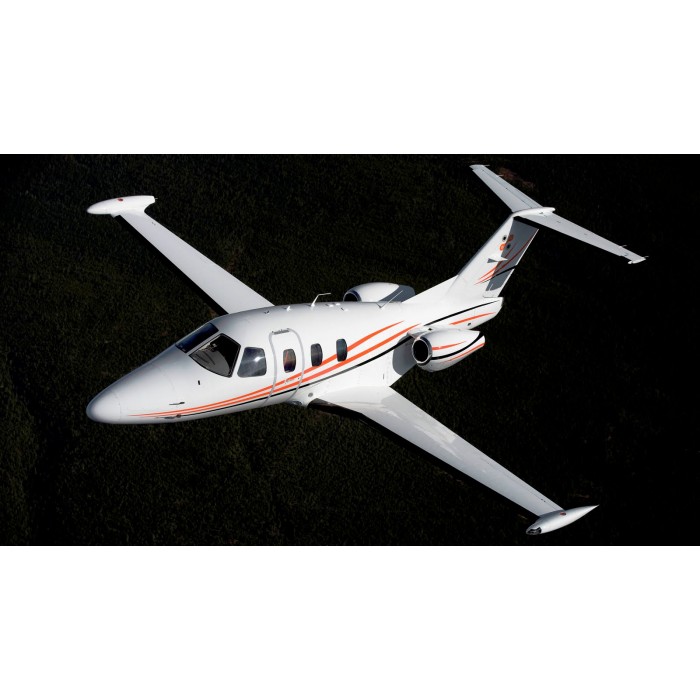


- Availability: Available for rent
Request aircraft information
The Eclipse 500 is one of the most significant and ultimately tragic stories in business aviation - the aircraft that created the Very Light Jet category, won the Collier Trophy in 2006 and then collapsed into bankruptcy in 2008 after delivering 260 aircraft in under two years of production. Wikipedia confirmed Eclipse Aviation was founded in 1998 by Vern Raburn, a former Microsoft executive, to develop the 1997 Williams V-Jet II demonstrator. Bill Gates became a major shareholder in the Albuquerque, New Mexico-based programme. The prototype first flew on 26 August 2002 with Williams EJ22 turbofans; after replacing engines with the Pratt and Whitney Canada PW610F, the next prototype flew on 31 December 2004. Wikipedia confirmed "Eclipse Aviation won the Collier Trophy in February 2006 for the design" - one of aviation's most prestigious awards. FAA provisional type certification was received on 27 July 2006 and the first production delivery occurred on 31 December 2006. Wikipedia confirmed "production of the Eclipse 500 was halted in October 2008 due to lack of funding, after 260 aircraft had been delivered" and "Eclipse Aviation entered Chapter 11 bankruptcy on 25 November 2008, then Chapter 7 liquidation on 24 February 2009." Eclipse Aerospace acquired the assets in August 2009, developed the upgraded Eclipse 550 (first delivery March 2014), merged with Kestrel Aircraft to form One Aviation in 2015 and entered bankruptcy again in 2021. AML Global Eclipse currently maintains support for the Eclipse fleet under the Eclipse Aerospace name.
The Eclipse 500 is a twin-engine very light jet (VLJ) certified for single-pilot IFR operation under FAA Part 23, with two Pratt and Whitney Canada PW610F turbofan engines at 900 lbf each, a 41,000 ft service ceiling and 370 KTAS maximum cruise. Online Aviation Library confirmed "a maximum cruise speed of around 370 knots true airspeed, a service ceiling of 41,000 feet, and a range of approximately 1,125 nautical miles." Charter prices start from approximately £1,500 per flight hour. For the full fleet see our private jet price guide or browse our complete fleet.

Why charter the Eclipse 500?
- 2006 Collier Trophy winner; VLJ category creator; Avio NG integrated glass cockpit; friction stir welding all-metal airframe; the most historically significant Very Light Jet ever built. Wikipedia confirmed Eclipse Aviation won the Collier Trophy - aviation's most prestigious annual award, established in 1911 - "in February 2006 for the design." This placed the Eclipse 500 alongside the Wright Brothers (1911), Chuck Yeager's X-1 (1947), the SR-71 Blackbird (1963) and the Boeing 777 (1995) as Collier Trophy winners. Online Aviation Library confirmed the Eclipse 500 incorporated "the Avio integrated avionics system - a highly automated glass cockpit designed for the VLJ concept." Wikipedia confirmed the manufacturing innovation: "one of the primary processes used was friction stir welding, in which the skin and underlying aluminum structure are welded together rather than riveted, as traditional for aluminum aircraft." This manufacturing technique - adapted from aerospace and heavy industry - reduced manufacturing cost and improved structural integrity compared to conventional riveted aluminium construction. Wikipedia confirmed Eclipse's own claim that "the Eclipse 500 emerged as the quietest jet aircraft in history" at certification. For charter clients who appreciate aviation technology history, the Eclipse 500's Collier Trophy, VLJ category creation and friction stir welding manufacturing innovation make it the most historically significant light jet ever to enter production;
- Two PW610F turbofans at 900 lbf each; 41,000 ft ceiling; 370 KTAS; single-pilot IFR certified under FAA Part 23; aft-mounted engines for forward cabin noise reduction. Wikipedia confirmed the Eclipse 500 is "powered by two turbofan engines in aft fuselage-mounted nacelles" with PW610F engines at 900 lbf each. The aft-mounted engine configuration places the turbofan engines behind the cabin, reducing engine noise at the passenger positions compared to wing-mounted engine configurations. Air Charter Advisors confirmed maximum cruise of 370 KTAS and a service ceiling of 41,000 ft. Online Aviation Library confirmed "certification: FAA Part 23, single-pilot IFR" - enabling Eclipse 500 charter operations with a single qualified pilot. The 41,000 ft ceiling places the Eclipse 500 above most weather systems and all commercial airline traffic on short European sectors. BLADE confirmed "the Eclipse 500 has a maximum altitude of 41,000 feet, allowing it to fly above most weather patterns and air traffic, resulting in smoother flights and shorter travel times." For charter clients on short-to-medium European sectors (London to Geneva; London to Edinburgh; London to Paris) where the 370 KTAS speed and 41,000 ft ceiling provide a meaningful time advantage over piston and turboprop alternatives, the Eclipse 500 delivers jet performance at below-midsize-jet charter rates;
- 4 passengers in standard charter configuration; 3.76 m cabin; LED lighting throughout; leather seats standard; LX version with full leather and retractable armrests; Avio NG glass cockpit standard. The HTML specifications confirmed the Eclipse 500 cabin measures 3.76 m (12.3 ft) long, 1.42 m (4.7 ft) wide and 1.27 m (4.2 ft) high. RocketRoute confirmed the cabin has "all leather seats and stowable inboard armrests in the LX edition" with "a work/dining table and cup holder standard" and "all LED upper lighting." Air Charter Advisors confirmed 16 cu ft of internal baggage space. For groups of exactly 2 to 4 on short European sectors where a jet with two turbofans, 41,000 ft ceiling, glass cockpit and Collier Trophy heritage is specified at light-jet rates, the Eclipse 500 provides the complete light-jet experience in the smallest available twin-engine jet footprint;
- 260 aircraft delivered 2006-2008; 267 total produced; approximately 200 active; Eclipse Aerospace support programme; AML Global Eclipse current asset holder; specialist maintenance organisations sustaining the fleet. Business Air News confirmed "production of the EA500 was halted in October 2008 at serial number 267." Online Aviation Library confirmed "approximately 260 Eclipse 500 aircraft had been delivered" by the time of bankruptcy - "making the Eclipse 500 the most numerically successful VLJ of its era." Business Air News confirmed "Eclipse Aerospace purchased the assets of Eclipse Aviation" in August 2009 and "opened for business on 1 September 2009" providing "support services, avionics upgrades, and maintenance for the existing fleet." Business Air News confirmed AML Global Eclipse "purchased the assets of Eclipse Aerospace" following One Aviation's 2021 bankruptcy and "will maintain support for all current Eclipse aircraft under the name Eclipse Aerospace." The Eclipse 500 and 550 fleet now has a confirmed support structure despite the original manufacturer's bankruptcy, with specialist maintenance organisations and an active owner community. For charter clients who specify jet charter at the minimum available twin-engine rate, the Eclipse 500's active support network confirms operational viability;
- Eclipse 550 upgrade path; Avio NG avionics upgrades available; the existing fleet has been progressively updated beyond the original 2006 specification - the aircraft charter clients fly today is better than the 2006 original. Business Air News confirmed "the 550 retains the 500 airframe and PW610F engines, but incorporates an improved avionics package." Online Aviation Library confirmed Eclipse Aerospace provided "avionics upgrades and maintenance for the existing fleet" before developing the Eclipse 550. Many Eclipse 500 aircraft in the current charter market carry upgraded Avio NG avionics and interior refinements beyond the original specification. For charter clients who fly an Eclipse 500 from a contemporary operator, the aircraft's production year (2006-2008) does not reflect the current avionics and interior standard, which post-bankruptcy support and upgrade programmes have substantially improved over the original 2006 delivery specification;
- $3,500/hr USD charter rate at the lowest end of the twin-engine jet category; lighter operating cost than midsize jets; 370 KTAS speed competitive with jets at double the hourly rate; Microsoft-backed founding heritage and Collier Trophy credential. Air Charter Advisors confirmed "the cost to charter an Eclipse 500 starts at around $3,500 an hour" (approximately £2,500-3,000/hr). Online Aviation Library confirmed the Eclipse 500's original list price of "$1.5 million" made it "genuinely revolutionary for its market segment" by offering "jet performance at a fraction of the cost of traditional business jets." For charter clients who want twin-engine turbofan performance at 41,000 ft and 370 KTAS at the lowest available jet charter rate, the Eclipse 500 provides the specification. The Collier Trophy and Microsoft-backed founding story - Vern Raburn and Bill Gates betting on a new category of aviation - provide a heritage narrative available with no other aircraft at this price point.
Charter cost - Eclipse 500 prices from UK airports
Hourly rates run from approximately £1,500 to £2,500 - at the lower end of the twin-engine jet category, reflecting the Eclipse 500's VLJ classification, 4-passenger capacity and PW610F engine operating costs. Air Charter Advisors confirmed US charter rates from $3,500 per hour. For groups of 2 to 4 on short European sectors where twin-engine turbofan jet performance, 41,000 ft ceiling and 370 KTAS at minimum jet charter rates are the specification, the Eclipse 500 is the appropriate choice.
Indicative one-way prices from UK airports:
- London to Edinburgh - from £1,875 (4 passengers, approximately 50 minutes);
- London to Paris - from £1,875 (4 passengers, approximately 45 minutes);
- London to Geneva - from £2,500 (4 passengers, approximately 55 minutes);
- London to Amsterdam - from £2,000 (4 passengers, approximately 50 minutes);
- London to Dublin - from £1,875 (4 passengers, approximately 45 minutes);
- London to Nice - from £3,125 (4 passengers, approximately 1 hour 20 minutes);
- Edinburgh to Madrid - from £3,750 (4 passengers, approximately 1 hour 45 minutes).
Empty Leg flights appear on repositioning routes. See our Empty Legs page for current availability.

Ideal routes for the Eclipse 500
Best matched to short and medium European sectors where the Eclipse 500's 370 KTAS cruise, 41,000 ft ceiling and Collier Trophy twin-engine jet credentials serve groups of 2 to 4 at entry-level jet charter rates:
- Short European sectors (45 to 90 minutes) where 370 KTAS cruise and 41,000 ft ceiling provide the fastest twin-engine jet option at minimum jet charter rates. London to Paris (approximately 45 minutes), London to Edinburgh (approximately 50 minutes) and London to Amsterdam (approximately 50 minutes) are all within the Eclipse 500's 1,125 nm range and benefit directly from the 370 KTAS cruise speed - faster than many midsize jets on these short sectors where block speed is determined more by the cruise altitude and speed than by range. For groups of 2 to 4 on short European sectors where minimum jet charter rates are the specification, the Eclipse 500 delivers;
- Groups of exactly 2 to 3 where the Eclipse 500's 4-seat cabin is appropriately sized and the lower rate versus midsize jets is the selection criterion. For groups of 2 or 3 where the Cessna Citation CJ series or Embraer Phenom 100 rates are above budget, the Eclipse 500 provides twin-engine turbofan jet performance for the same group size at the minimum available jet charter rate. The Collier Trophy heritage and 41,000 ft ceiling are the same specification as aircraft at double the hourly rate;
- London to Geneva, London to Zurich and London to Nice where 370 KTAS cruise completes the sector faster than any piston or turboprop option and at a lower rate than any midsize jet. London to Geneva (approximately 55 minutes) and London to Nice (approximately 1 hour 20 minutes) are within the Eclipse 500's capability. At 370 KTAS and 41,000 ft these sectors are faster in the Eclipse 500 than in any turboprop aircraft, and the twin-engine turbofan specification provides the jet category assurance at below-Citation CJ charter rates;
- Time-sensitive 2-hour return trips within the 1,125 nm range where 370 KTAS minimises the combined travel time for same-day return missions. For charter clients making same-day return trips to Paris, Geneva, Amsterdam or Edinburgh, the Eclipse 500's 370 KTAS means each leg is completed in under 60 minutes, with total travel time (both legs plus ground time) fitting within a working day. At entry-level jet charter rates this time efficiency is the primary argument over slower aircraft at comparable or lower rates;
- Private jet first experience for groups of 2 to 4 where the Collier Trophy heritage, twin turbofans, 41,000 ft and glass cockpit provide the complete private jet introduction at the lowest available jet rate. For first-time private jet charter clients whose brief is "twin-engine jet at the lowest possible rate," the Eclipse 500 delivers the definitive entry: Collier Trophy winner, twin PW610F turbofans, 41,000 ft ceiling, Avio NG glass cockpit and 370 KTAS cruise at rates below any other twin-engine jet in the Private Jets UK fleet.

Cabin and in-flight experience
The Eclipse 500 cabin measures 3.76 m (12.3 ft) long, 1.42 m (4.7 ft) wide and 1.27 m (4.2 ft) high - a compact but efficiently designed space for 4 passengers. Standard seats feature leather exterior armrests, forward/reverse adjustment, 85-degree folding function, 28-degree tilt and seat back pockets. The LX version provides full leather seats and retractable armrests. A work/dining table and cupholder are standard (the LX version includes three). Full LED overhead lighting is standard throughout the cabin. Air Charter Advisors confirmed 16 cu ft of internal baggage. The Eclipse 500 does not carry a lavatory - a limitation of the VLJ category that is relevant on sectors over 90 minutes. The Avio NG integrated avionics glass cockpit is visible from the passenger cabin through the open cockpit door, providing passengers with the flight instrument view.
- Cabin. 3.76 m x 1.42 m x 1.27 m; 4 passengers; LED lighting; no lavatory;
- Seats. Standard: leather exterior armrests; 85-degree fold; 28-degree tilt; LX: full leather; retractable armrests;
- Tables. 1 work/dining table standard; 3 in LX version;
- Engines. 2 x PW610F (900 lbf each; aft-mounted nacelles);
- Avionics. Avio NG integrated glass cockpit (dual-mode display; automated systems);
- Baggage. 16 cu ft internal; no external baggage pod;
- Manufacturing. Friction stir welded all-metal airframe; T-tail; straight wings.
Technical specifications
| Manufacturer | Eclipse Aviation, Albuquerque, New Mexico (original); Eclipse Aerospace / AML Global Eclipse (current support) |
| Prototype first flight | 26 August 2002 (Williams EJ22); 31 December 2004 (PW610F) |
| FAA provisional certification | 27 July 2006 (full certification September 2006) |
| First delivery | 31 December 2006 |
| Production halted | October 2008 at serial number 267 |
| Aircraft class | Very Light Jet (VLJ); FAA Part 23; single-pilot IFR certified |
| Engines | 2 x Pratt and Whitney Canada PW610F (900 lbf each; aft-mounted nacelles) |
| Max cruise speed | 370 KTAS / 685-694 km/h |
| Service ceiling | 41,000 ft |
| Range | 1,125 nm / 2,084 km |
| MTOW | 6,000 lb / 2,722 kg |
| Awards | 2006 Collier Trophy (February 2006) |
| Manufacturing | Friction stir welding (skin to structure; eliminates rivets) |
| Noise | Eclipse claim: quietest jet aircraft at certification |
| Avionics | Avio NG integrated glass cockpit |
| Cabin length | 3.76 m (12.3 ft) |
| Cabin width | 1.42 m (4.7 ft) |
| Cabin height | 1.27 m (4.2 ft) |
| Baggage | 16 cu ft internal |
| Lavatory | No (VLJ category) |
| Passengers | 4 standard charter; 5 maximum |
| Wingspan | 11.40 m (37.4 ft) |
| Aircraft length | 10.10 m (33.1 ft) |
| Aircraft height | 3.40 m (11.2 ft) |

Eclipse 500 vs similar aircraft
- Eclipse 500 vs Eclipse 550. The Eclipse 550 is the upgraded successor produced by Eclipse Aerospace (first delivery March 2014; EASA November 2015), retaining the identical PW610F engines and airframe but with improved Avio NG avionics beyond the original specification. Business Air News confirmed "the 550 retains the 500 airframe and PW610F engines but incorporates an improved avionics package." Charter rates for the 550 run modestly above the 500 reflecting its newer production date and upgraded avionics. For charter clients who specify the most current Eclipse avionics standard, confirm whether the operator's aircraft is the original 500 or the upgraded 550;
- Eclipse 500 vs Cessna Citation CJ1/CJ2. The Citation CJ1 is a light jet at comparable or slightly higher charter rates with two Williams FJ44-1A engines at 1,900 lbf each (vs Eclipse 500's 900 lbf PW610F), a larger cabin (3.35 m x 1.47 m x 1.45 m), lavatory and approximately 1,300 nm range. The Eclipse 500 counters with lower charter rates, 41,000 ft ceiling (vs CJ1's 41,000 ft), 370 KTAS cruise, Collier Trophy heritage and the twin aft-mounted engine configuration. For groups of 2 to 4 on short sectors where a jet with a lavatory is not required, the Eclipse 500 provides comparable performance at lower rates. For sectors over 90 minutes where a lavatory is preferred, the CJ1's cabin specification is the differentiator;
- Eclipse 500 vs Cessna Citation Mustang. The Citation Mustang (2006; 479 built through 2017) is the direct contemporary VLJ competitor, with two PW615F engines at 1,460 lbf each, 41,000 ft ceiling, 340 KTAS cruise, 1,150 nm range and a small lavatory. The Eclipse 500 counters with 370 KTAS (vs 340 KTAS Mustang), Collier Trophy award and friction stir welded airframe. The Mustang counters with its lavatory and Cessna's single-manufacturer support network. For groups of 2 to 4 where speed is decisive and a lavatory is not required for the sector length, the Eclipse 500's 30 kt cruise advantage over the Mustang is meaningful on short European sectors.

Frequently asked questions - Eclipse 500 charter
How much does it cost to charter an Eclipse 500?
Charter rates run from approximately £1,500 to £2,500 per flight hour. London to Edinburgh costs from £1,875 for 4 passengers. London to Geneva costs from £2,500. London to Nice costs from £3,125. Air Charter Advisors confirmed US rates from $3,500 per hour. All quotes from Private Jets UK are fully itemised with no hidden charges.
Why did Eclipse Aviation go bankrupt?
Wikipedia confirmed production was halted in October 2008 "due to lack of funding" after 260 aircraft were delivered. The company filed Chapter 11 on 25 November 2008 and Chapter 7 liquidation on 24 February 2009. Online Aviation Library confirmed the collapse was "a victim of technical setbacks, production challenges, and the global financial crisis." Eclipse Aerospace acquired the assets in August 2009 and opened 1 September 2009, producing the upgraded Eclipse 550 (first delivery March 2014) before itself going through bankruptcy in 2021. AML Global Eclipse currently holds the assets and maintains support.
What is the Eclipse 500's range?
Online Aviation Library and Air Charter Advisors confirmed the Eclipse 500's maximum range at approximately 1,125 nautical miles (2,084 km). BLADE confirmed this is sufficient for London to Rome non-stop (approximately 895 nm). The range is appropriate for short-to-medium European sectors under 2 hours but not sufficient for transatlantic operations.
Does the Eclipse 500 have a lavatory?
No - the Eclipse 500 does not carry a lavatory, which is a characteristic limitation of the VLJ category. For sectors under 90 minutes this is rarely a significant concern. For sectors over 90 minutes where a lavatory is preferred, the Citation Mustang or Citation CJ1 provide a small lavatory at comparable or modestly higher charter rates in the same light jet category.
What is the significance of the Eclipse 500's Collier Trophy?
Wikipedia confirmed Eclipse Aviation won the Collier Trophy in February 2006 for the Eclipse 500 design. The Collier Trophy, established in 1911, is aviation's most prestigious annual award for the greatest achievement in aeronautics or astronautics in America. Previous winners include the Wright Brothers, Chuck Yeager's X-1, the SR-71 Blackbird and the Boeing 777. The Eclipse 500's Collier Trophy recognised its creation of the Very Light Jet category, the Avio NG integrated avionics, friction stir welding manufacturing and twin-engine performance at an accessible price point.

