


Charter a Cirrus SR22
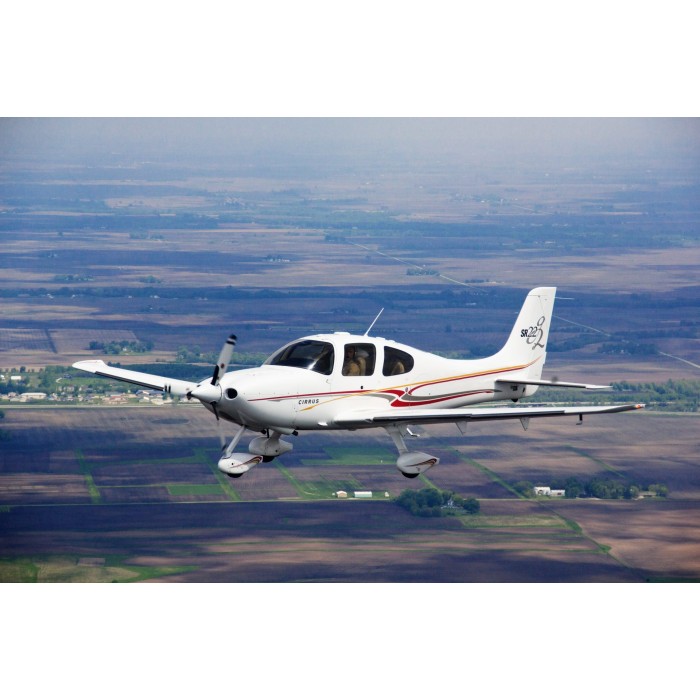


- Availability: Available for rent
Request aircraft information
The Cirrus SR22 is the world's best-selling single-engine piston aircraft - confirmed in production continuously since 2001, with Cirrus Aircraft announcing completion of the 11,000th SR-series aircraft in December 2025. FAA type certification was received in October 2000; deliveries began in 2001 as the G1; and the current generation is the SR22 G7 (announced January 2024) and SR22 G7+ (announced May 2025, the first piston aircraft in history with FAA-certified autonomous emergency landing). The SR22's defining innovations - a whole-aircraft ballistic parachute (CAPS), composite airframe, side-yoke controls and an all-glass cockpit from day one - set the standard for general aviation in the 2000s and remain unmatched in the single-engine piston category today. Cirrus skipped the G4 designation entirely: the company's Chinese ownership, which acquired Cirrus in 2011, considers four an unlucky number, moving directly from G3 to G5 in 2013.
The Cirrus SR22 is a single-engine piston aircraft powered by the Continental IO-550-N at 310 hp - not a twin, not a turboprop and not a jet. E3 Aviation confirmed the CAPS whole-aircraft parachute has achieved 148 documented deployments with 297 survivors as of May 2026. Wikipedia confirmed insurance premiums for CAPS-equipped aircraft run 15 to 25% lower than comparable aircraft without the system. The SR22T turbocharged variant adds a Continental TSIO-550-K at 315 hp and extends the service ceiling to 25,000 ft, enabling flight above weather on longer sectors. Charter prices start from approximately £400 per flight hour. For the full fleet see our private jet price guide or browse our complete fleet.

Why charter the Cirrus SR22?
- CAPS whole-aircraft parachute - 148 documented deployments; 297 survivors as of May 2026; 15-25% lower insurance premiums; the only certified production piston aircraft with a whole-aircraft emergency parachute. The Cirrus Airframe Parachute System is the defining safety innovation of the SR22 - a solid rocket motor extracts a ballistic parachute from the airframe that lowers the entire aircraft at approximately 17 feet per second descent rate. E3 Aviation confirmed 148 documented deployments and 297 survivors as of May 2026, including a 2021 midair collision over Denver in which the SR22 pilot deployed CAPS and made a safe off-airport parachute-assisted landing while the other aircraft landed safely under its own control. Wikipedia confirmed that insurance premiums for CAPS-equipped aircraft run 15 to 25% lower than comparable aircraft without the system, reflecting actuarial confirmation of the safety value. Aircraft Insider confirmed the fatal accident rate for SR22 pilots with CAPS-aware training "runs about half the comparable high-performance piston single fleet." The psychological benefit matters operationally: Cirrus-trained pilots use CAPS as an active decision tool rather than a last resort, enabling earlier deployment decisions in deteriorating situations;
- Garmin Perspective Touch+ (G7); 35% larger touchscreens; GFC 700 autopilot with VNAV; synthetic vision; ADS-B; Safe Return autoland (G7+) - the most advanced glass cockpit in a certified piston single. Wikipedia confirmed the SR22 G7 (January 2024) introduced "Cirrus Perspective Touch+ flight deck with 35% larger instrument touch screens, a contextualised 3D taxi guide, stick shaker functions for the side-yokes to warn of an approaching stall condition, a new flap airspeed protection system, an automatic fuel selection system, a pushbutton engine start interface." The GFC 700 autopilot provides altitude preselect, vertical navigation (VNAV), coupled approaches and envelope protection. The G7+ (May 2025) adds the Safe Return emergency autoland - the first FAA-certified autonomous landing system in any piston aircraft. A single button on the headliner activates Safe Return; the SR22 then finds the nearest suitable airport, communicates with ATC and lands autonomously. For charter clients who value the most current avionics and safety systems available in a piston single, no production aircraft exceeds the SR22 G7+ at any price in this category;
- 183 kt cruise; 1,169 nm range; Continental IO-550-N 310 hp; world's best-selling single-engine aircraft for two decades; 11,000+ SR-series delivered. Jettly confirmed the SR22's 183 kt (339 km/h) cruise speed at 75% power with best economy at 165 kt burning 13.5 gph. Aviation Week confirmed the SR22's maximum range of 1,169 nm (2,165 km). Cirrus confirmed 11,000+ SR-series deliveries by December 2025. The SR22 outsells every other single-engine piston aircraft in production - its combination of speed, safety, avionics and the CAPS parachute has created a category of its own. E3 Aviation confirmed "Cirrus delivered more SR-series aircraft in 2024 than any other piston single manufacturer, by a wide margin." Pre-owned values from $180,000 (early G1) to over $750,000 (late G6) reflect the fleet's depth and resale strength that directly supports charter availability across Europe and North America;
- Seven generations over 24 years; G3 Garmin Perspective (2007); G5 MTOW increase and 5th seat (2013); G6 drag reduction (2017); G7 Touch+ (2024); G7+ Safe Return autoland (2025) - continuous improvement at each generation. E3 Aviation documented the generation progression: G1 (Avidyne Entegra glass, CAPS standard); G2 (refined airframe); G3 (new wing spar, Garmin Perspective); G5 (MTOW to 3,600 lb, 5th seat jumpseat, LED lights, Beringer brakes); G6 (Perspective+, Spectra LED, drag reduction fairings providing approximately 5 kt more cruise speed and 10% better fuel efficiency); G7 (Touch+, stick shaker, flap protection, 3D SafeTaxi, pushbutton start, more legroom, ambient lighting); G7+ (Safe Return autoland). Confirming the generation before charter booking determines avionics standard, CAPS rocket condition and available features. G5 and later are recommended for current avionics; G6 and later for the full Perspective+ experience;
- SR22T turbocharged variant - Continental TSIO-550-K 315 hp; 213 kt cruise; 25,000 ft ceiling; built-in oxygen; 1,021 nm range - meaningfully different above 10,000 ft. Aviation Week confirmed the SR22T maximum cruise of 213 kt (a 30 kt advantage over the normally aspirated SR22) and a range of 1,021 nm at max power, 763 nm average. GlobalAir confirmed the SR22T's 25,000 ft service ceiling versus 17,500 ft for the normally aspirated SR22. The turbocharged engine maintains power at altitude where the IO-550-N progressively loses output. The SR22T G7 listed at $969,900 (2024; Wikipedia). For charter on sectors requiring above-weather cruise at 20,000 to 25,000 ft - mountain crossings, winter weather avoidance, longer European sectors - the SR22T provides this at piston single rates. Built-in oxygen is standard on the T variant. Confirm whether the specific charter aircraft is the normally aspirated SR22 or the turbocharged SR22T before booking, as ceiling, cruise speed and range differ materially;
- Lowest charter rate in the Private Jets UK fleet; entry point to private aviation; ideal for pilot-owner charters and groups of 2 to 4 on short sectors. The Cirrus SR22's single-engine piston configuration produces the lowest operating cost and charter rate of any aircraft in the Private Jets UK fleet. For groups of 2 to 4 on short UK regional and European sectors under 400 nm, the SR22 provides private aircraft access at the minimum available rate. The 13.5 gph fuel burn at economy cruise is the lowest of any aircraft in our fleet. CollectAirs confirmed GTS models command premiums in charter due to air conditioning and TKS de-ice options. For first-time private charter clients whose priority is experiencing private aviation at minimum cost, the SR22 is the entry point.
Charter cost - Cirrus SR22 prices from UK airports
Hourly rates run from approximately £400 to £600 - the lowest in the Private Jets UK fleet, reflecting the SR22's single-engine piston configuration, 4-seat cabin and lower acquisition cost. For groups of 2 to 4 on very short sectors under 300 nm, the SR22 provides private aviation access at minimum rate.
Indicative one-way prices from UK airports:
- London to Edinburgh - from £480 (3 passengers, approximately 1 hour 45 minutes);
- London to Paris - from £480 (3 passengers, approximately 1 hour 30 minutes);
- Edinburgh to Inverness - from £400 (3 passengers, approximately 45 minutes);
- London to Amsterdam - from £480 (3 passengers, approximately 1 hour 30 minutes);
- London to Dublin - from £480 (3 passengers, approximately 1 hour 20 minutes);
- Manchester to Belfast - from £420 (3 passengers, approximately 50 minutes);
- London to Geneva - from £900 (3 passengers, approximately 2 hours 15 minutes).
Empty Leg flights appear on repositioning routes. See our Empty Legs page for current availability.

Ideal routes for the Cirrus SR22
Best matched to very short UK regional and European missions under 400 nm where the lowest available private charter rate, CAPS whole-aircraft parachute safety and current Garmin avionics serve groups of 2 to 4:
- Very short UK regional sectors (30 to 90 minutes) at the minimum available private aircraft rate. Edinburgh to Inverness, London to Belfast, Manchester to Leeds and sub-60-minute UK hops are ideal for the SR22 at £400-480/hr. For groups of 2 to 3 where cost minimisation is the only criterion, no aircraft in the Private Jets UK fleet provides a lower rate. The short-field takeoff distance of approximately 2,135 ft enables operations from smaller UK regional airfields;
- Short European day trips (1 to 1.5 hours) to Paris, Amsterdam and Dublin for 2 to 3 passengers at entry-level charter rates. London to Paris (approximately 210 nm at 183 kt = 69 minutes), London to Amsterdam (approximately 250 nm = 82 minutes) and London to Dublin (approximately 220 nm = 72 minutes) are all within the SR22's comfortable range. At 3 passengers the per-person cost for London to Paris is approximately £160 - the minimum available private aircraft rate for this sector;
- SR22T turbocharged operations for above-weather cruise at 20,000-25,000 ft on mountain crossings or winter sectors. For sectors where above-weather cruise is required - Alpine crossings to Geneva or Nice in winter, high-altitude Mediterranean sectors in summer - the SR22T's 25,000 ft ceiling and 213 kt cruise provide meaningful weather avoidance capability at piston single rates. The built-in oxygen and turbocharged engine maintain performance at altitude where the normally aspirated SR22 cannot operate safely. Confirm the SR22T specifically before booking if ceiling above 17,500 ft is required;
- First-time private charter clients who want the private aviation experience at minimum cost. The SR22 represents the entry point into private aviation in the UK charter market. The Garmin Perspective avionics (G3 and later), CAPS safety system and comfortable 4-seat cabin provide the essential private aviation experience at rates approximately 30 to 40% below the Piper Seneca V and 50% below the Baron 58. For clients evaluating private charter for the first time, the SR22 provides the most economical introduction to the category;
- Pilot-owner charters and club charters where the owner is the pilot and up to 3 passengers join the flight. The Cirrus SR22 is specifically designed for the owner-pilot market: single-pilot IFR certification, CAPS safety system, side-yoke controls and Glass cockpit make it accessible to appropriately qualified single pilots flying for personal and business travel. The SR22 community is one of the largest and most supportive in general aviation, with Cirrus's own training programme (CSIP) providing standardised type-specific instruction.

Cabin and in-flight experience
The Cirrus SR22 cabin measures 3.3 m (10.8 ft) long, 1.24 m (4.1 ft) wide and 1.27 m (4.2 ft) high - four seats standard, with a small fifth jumpseat added at G5 (from 2013) for a child or flight bag. CollectAirs confirmed the cabin is not pressurised - cabin altitude equals actual flight altitude, requiring supplemental oxygen above 12,500 ft for extended operations. GTS-trimmed aircraft include air conditioning, making the SR22 more comfortable for summer European charter. Aft baggage compartment is rated to 130 lb with additional space behind the rear seats. Aviation Week confirmed the G7 provides "more legroom for all occupants, redesigned interior panels with dimmable task lights and ambient accent lighting, illuminated cupholders, powered headset jacks, lighted USB-C ports within each passenger's reach." The side-yoke flight control is a distinctive handling feature: a hybrid between traditional yoke and sidestick that provides good ergonomics for both single-pilot operations and passenger comfort.
- Cabin. 3.3 m x 1.24 m x 1.27 m; 4 seats standard; 5th small jumpseat from G5; not pressurised;
- Baggage. Aft compartment 130 lb; additional behind rear seats;
- Engine (SR22). Continental IO-550-N (310 hp; normally aspirated; 13.5 gph economy cruise);
- Engine (SR22T). Continental TSIO-550-K (315 hp; turbocharged; 25,000 ft; built-in O2);
- Avionics (G7). Garmin Perspective Touch+ (touchscreen; GFC 700 autopilot; VNAV; synthetic vision; 3D SafeTaxi; stick shaker; ADS-B);
- Safety (all). CAPS whole-aircraft ballistic parachute (148 deployments; 297 survivors May 2026); 10-year repack required;
- G7+ addition. Safe Return Emergency Autoland - first FAA-certified autonomous landing in a piston aircraft;
- Insurance. 15-25% lower premiums vs comparable aircraft without CAPS.
Technical specifications
| Manufacturer | Cirrus Aircraft, Duluth, Minnesota (owned by CAIGA since 2011) |
| FAA type certification | October 2000 |
| Production | 2001-present; 11,000+ SR-series delivered by December 2025 |
| Current generation | SR22 G7 (January 2024); SR22 G7+ (May 2025; Safe Return autoland) |
| Aircraft class | Single-engine piston (not twin; not turboprop; not pressurised) |
| Engine (SR22) | Continental IO-550-N (310 hp; normally aspirated; 3-blade Hartzell composite) |
| Engine (SR22T) | Continental TSIO-550-K (315 hp; turbocharged; 25,000 ft ceiling) |
| Cruise speed (SR22) | 183 kt / 339 km/h at 75% power |
| Cruise speed (SR22T) | 213 kt max at altitude |
| Service ceiling (SR22) | 17,500 ft / 5,334 m (not pressurised) |
| Service ceiling (SR22T) | 25,000 ft / 7,620 m (built-in oxygen) |
| Range (SR22) | 1,169 nm / 2,165 km maximum |
| Range (SR22T) | 1,021 nm / 1,890 km maximum |
| Fuel burn | 13.5 gph economy cruise (SR22); lowest in Private Jets UK fleet |
| MTOW (G5 and later) | 3,600 lb / 1,633 kg |
| CAPS | Whole-aircraft ballistic parachute; 148 deployments; 297 survivors (May 2026) |
| Insurance | 15-25% lower premiums vs comparable aircraft without CAPS |
| Cabin length | 3.3 m (10.8 ft) |
| Cabin width | 1.24 m (4.1 ft) |
| Cabin height | 1.27 m (4.2 ft) |
| Pressurised | No; oxygen required above 12,500 ft |
| Passengers | 4 standard; 5 with G5+ jumpseat (child/small adult only) |
| Baggage | 130 lb aft compartment; additional behind rear seats |
| Wingspan | 11.68 m (38 ft 4 in) |
| Aircraft length | 7.92 m (26 ft) |
| Aircraft height | 2.72 m (8.9 ft) |

Cirrus SR22 vs similar aircraft
- Cirrus SR22 vs Piper Seneca V. The Piper Seneca V is a twin-engine aircraft - two engines, counter-rotating propellers, no critical engine. The SR22 is single-engine. For groups who specify twin-engine safety redundancy, the Seneca V at £500/hr is the appropriate choice over the SR22 at £400/hr. The SR22 counters with the CAPS whole-aircraft parachute (which many charter clients accept as equivalent or superior redundancy), Garmin G1000 equivalent avionics on G7 aircraft and the world-best-selling pedigree. For 2 to 3 passengers on short sectors where twin-engine requirement is not specified, the SR22 at £400/hr is the lowest available rate;
- Cirrus SR22T vs Piper Cheyenne II. The Piper Cheyenne II is a pressurised twin turboprop at £900/hr with 283 kt cruise and 35,800 ft ceiling. The SR22T at £400-500/hr provides 213 kt cruise and 25,000 ft ceiling unpressurised at less than half the rate. For 2 to 3 passengers on short European sectors where budget is the constraint and twin-engine or pressurisation are not required, the SR22T provides above-weather cruise capability at the minimum available rate;
- Cirrus SR22 G7 vs Cirrus Vision Jet SF50. The Cirrus Vision Jet SF50 is the single-engine jet version of the same Cirrus lineage - same CAPS philosophy, single Williams FJ33-5A turbofan, 28,000 ft pressurised ceiling and 311 kt cruise at significantly higher charter rates. The SR22 provides 183 kt and 17,500 ft at piston single rates. The Vision Jet provides jet speed and pressurised ceiling at light-jet rates. For groups of 4 to 5 on sectors where speed or pressurised cabin is required, the Vision Jet is the Cirrus step up; for minimum-cost short sectors the SR22 remains the entry point.

Frequently asked questions - Cirrus SR22 charter
How much does it cost to charter a Cirrus SR22?
Charter rates run from approximately £400 to £600 per flight hour - the lowest in the Private Jets UK fleet. London to Edinburgh costs from £480 for 3 passengers. London to Paris costs from £480. London to Geneva costs from £900. All quotes from Private Jets UK are fully itemised with no hidden charges.
What is the CAPS parachute on the Cirrus SR22?
CAPS is the Cirrus Airframe Parachute System - a whole-aircraft ballistic parachute deployed by a solid rocket motor that extracts a parachute from the airframe, lowering the entire aircraft at approximately 17 feet per second. E3 Aviation confirmed 148 documented deployments and 297 survivors as of May 2026. Wikipedia confirmed insurance premiums for CAPS-equipped aircraft run 15 to 25% lower than comparable aircraft. The system requires repacking every 10 years at approximately $15,000-$20,000.
What is the difference between the Cirrus SR22 and SR22T?
The SR22 uses a Continental IO-550-N at 310 hp (normally aspirated) with a 17,500 ft service ceiling. The SR22T uses a Continental TSIO-550-K at 315 hp (turbocharged) with a 25,000 ft ceiling, 213 kt maximum cruise (vs 183 kt), built-in oxygen and extended range capability. The SR22T costs approximately $100,000 more new. For sectors crossing mountainous terrain, requiring above-weather cruise at 20,000+ ft or where faster speed is needed, the SR22T is the appropriate variant.
What are the Cirrus SR22 generations?
G1 (2001; Avidyne glass, CAPS standard); G2 (2004; refined airframe); G3 (2007; Garmin Perspective, new wing spar); G5 (2013; MTOW to 3,600 lb, 5th seat, LED lights - note: Cirrus skipped G4 as the company's Chinese ownership considers four unlucky); G6 (2017; Perspective+, drag reduction fairings, approximately 5 kt more cruise); G7 (January 2024; Perspective Touch+, stick shaker, 3D SafeTaxi, pushbutton start, more legroom); G7+ (May 2025; Safe Return Emergency Autoland - first piston aircraft with FAA-certified autonomous landing).
Is the Cirrus SR22 pressurised?
No - the SR22 and SR22T are both unpressurised. Cabin altitude equals actual flight altitude. Supplemental oxygen is required above 12,500 ft for extended operations. The SR22T's 25,000 ft ceiling requires built-in oxygen that is standard on the T variant. For pressurised private aircraft access, the Piper Cheyenne II (£900/hr) is the lowest-cost pressurised option in the Private Jets UK fleet.

